










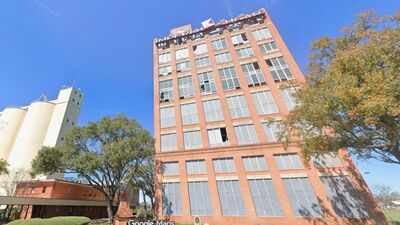
After more than two decades of vacancy, failed redevelopment plans and gradual deterioration, Sugar Land’s historic Imperial Sugar Char House is finally set to receive the rescue many residents have waited years to see. The Sugar Land City Council approved a $15 million preservation project on October 20, according to Chron, with work expected to begin later this year and finish in 2028.The Char House, built in 1925, is one of the most recognisable remnants of the Imperial Sugar refinery that helped shape the identity of Sugar Land, Texas. The building has stood empty since the refinery closed in 2003, and repeated efforts to bring the surrounding Imperial Historic District back to life never made it past the planning stage. Now the city has taken direct control of the landmark’s future and committed real money to keeping it standing.
A building tied to Sugar Land’s story
The Char House was constructed during the height of Imperial Sugar’s influence, when the refinery was not only a major employer but also the reason the community became known as Sugar Land. The building formed part of a larger industrial campus that processed and stored sugar, and its distinctive presence has long made it a symbol of the city’s origins.When the refinery portion of the campus closed in 2003, the Char House entered a long period of uncertainty. The property remained vacant for more than 20 years, and the city says the building began to deteriorate during that time. Local police also reported issues with trespassing, despite warnings, patrols and arrests around the site.For preservation supporters, the concern was never simply about saving an old industrial structure. The Char House represents a physical link to the workers, families and businesses that built Sugar Land around the sugar industry. Mayor Carol K. McCutcheon described it as more than an iconic building, calling it a connection to the community’s history and origins, as per the report.
Why earlier plans failed
The site’s troubles were not caused by a lack of interest. Developers repeatedly proposed ways to redevelop the Imperial Historic District, but financing and market conditions repeatedly got in the way. The most ambitious plan arrived in 2023, when PUMA Development announced a $1 billion mixed-use redevelopment for the 20-acre district, it was reported.That proposal promised a dramatic transformation, with residential units, retail space, offices and restaurants planned across the historic site. It appeared to offer the kind of large-scale investment that could have revived the Char House and the land around it. But the developer ultimately abandoned the project after failing to secure financing, leaving the historic building in the same vulnerable condition it had occupied for years.The pattern illustrates a familiar challenge in historic preservation. Old industrial buildings can be expensive to repair, difficult to adapt and complicated to insure. Developers may see their potential, but banks and investors can hesitate when the cost of stabilising a century-old structure competes with newer construction elsewhere.In Sugar Land’s case, the city eventually decided that waiting for another private redevelopment plan carried too much risk. Officials acquired the larger Imperial Historic District in June 2025, giving the municipality control over the property and allowing it to begin addressing the building’s condition directly.
What the $15 million project includes
The approved project is not a full commercial redevelopment, at least not yet. Instead, it focuses on stabilising and protecting the Char House so that it can survive long enough for a future use to be developed. The city says the work will prepare the building for eventual redevelopment and adaptive reuse.The preservation plan includes a new permanent roof, structural repairs to the exterior walls and rear liquor gallery, selective steel and masonry repairs, mechanical and electrical improvements, and restoration of the building’s windows. The city’s iconic Imperial signage will also be restored and returned to its historic location on the building.Those repairs matter because water intrusion, weakened walls and failing mechanical systems can quickly turn a vacant historic building into a safety hazard. A new roof and structural work can prevent further decay, while restored windows and improved electrical systems make future occupation more realistic. The city also says the work is designed to keep the building eligible for future historic tax credits, which could make redevelopment more financially viable later.A groundbreaking is expected on November 5, with construction mobilisation planned for December. The city estimates that the preservation work will be completed by March 2028.
What could happen next
The city has not yet announced a final tenant or a complete redevelopment plan for the restored building. However, officials say the Char House could eventually accommodate office, commercial, retail or restaurant uses as broader plans for the Imperial Historic District move forward.That flexibility is important. A restored industrial building can serve many purposes, from a restaurant or event space to offices or small commercial units. The key is that the city is first protecting the structure rather than allowing it to deteriorate further while developers wait for the right economic conditions.For residents, the project represents a shift from uncertainty to action. After years of watching proposals appear and disappear, they will soon see crews on site, scaffolding around the building and visible progress toward saving a landmark that has defined Sugar Land for a century.
A second chance for a landmark
The Char House has survived longer than many expected. It outlasted the closure of the refinery, more than 20 years of vacancy and the collapse of a billion-dollar redevelopment proposal. Now, with $15 million approved and construction scheduled through 2028, it may finally receive the care needed to become part of Sugar Land’s future as well as its past.The project will not solve every question about the wider Imperial Historic District, and the city will still need to determine how best to use the restored space. But for now, the focus is on preservation. Sugar Land is investing in the idea that some buildings are worth saving, not only because of what they once were, but because of what they can still become.