


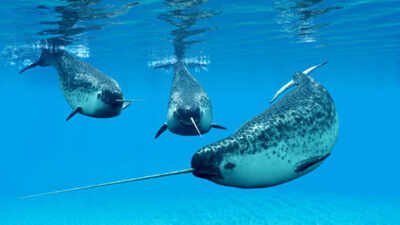
A narwhal can grow a single 10-feet tooth through its upper lip; scientists used 3D X-rays and 3 particle accelerators to discover how nature's only straight tusk stays straight

A narwhal can grow a single 10-feet tooth through its upper lip; scientists used 3D X-rays and 3 particle accelerators to discover how nature’s only straight tusk stays straight

An international team of biologists, chemists and physicists has used sophisticated 3D X-ray technology to investigate the tooth at an unprecedented level. A unicorn may be a mythical creature, but nature made something very similar under the Arctic ice. Wondering what? Well, the narwhal has a strange tusk that can reach nearly 10 feet long…

Read More
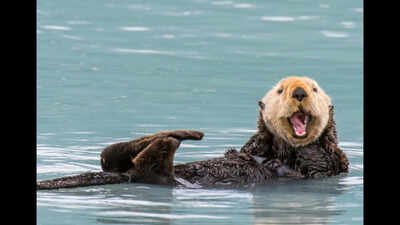
Sea otters returned to a polluted California estuary in 1984; eelgrass expanded 600%, while marsh-edge erosion later slowed by 69% on average

Sea otters returned to a polluted California estuary in 1984; eelgrass expanded 600%, while marsh-edge erosion later slowed by 69% on average

Sea otters returned to California’s Elkhorn Slough in 1984 when pollution had severely affected its ecosystem. When sea otters returned to California’s Elkhorn Slough in 1984, the estuary was already facing severe environmental pressure. The coastal wetland had high nutrient levels linked to its agriculture-dominated watershed, while eelgrass had fallen to an all-time low of…

Read More
Australian researchers heated used coffee grounds to 350°C and turned them into material that made concrete 29% stronger, replacing part of the sand |

Australian researchers heated used coffee grounds to 350°C and turned them into material that made concrete 29% stronger, replacing part of the sand |

After a cup of coffee is brewed, the grounds left behind are often discarded as waste. But researchers have found a way to turn them into a useful material for concrete. A 2023 study examined whether spent coffee grounds (SCG) could replace part of the sand used in concrete after being converted into biochar through…

Read More
In 2015, Canada sank a 113-metre retired warship off British Columbia; five years later, monitoring had recorded more than 170 marine species on the wreck

In 2015, Canada sank a 113-metre retired warship off British Columbia; five years later, monitoring had recorded more than 170 marine species on the wreck

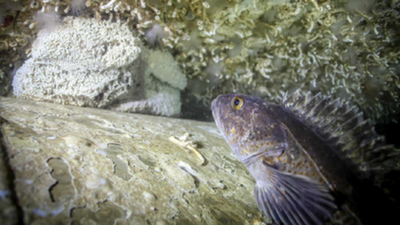
A lingcod guards its egg mass on the Annapolis (Image Credit: Michel Joseph via Artificial Reef Society of British Columbia) A retired Canadian warship that was deliberately sunk off British Columbia in 2015 has become an artificial reef supporting a growing community of marine life. The former HMCS Annapolis, measuring 113.1 metres in length, was…

Read More
Human hair, receipts, fishing nets, and eggshells were among 17 waste materials tested to create stronger, lower-carbon cement building products |

Human hair, receipts, fishing nets, and eggshells were among 17 waste materials tested to create stronger, lower-carbon cement building products |

Cement is one of the most widely used materials in construction, but its production comes with a high environmental cost. Circular Design Cement, a 2026 James Dyson Award project, is exploring a new approach to construction materials. The project uses everyday waste and industrial byproducts as recycled aggregates in cement-based materials designed for architectural applications….

Read More
A Scottish river project set out to revive oysters that once covered an area the size of Edinburgh; now, 60,000 have been returned |

A Scottish river project set out to revive oysters that once covered an area the size of Edinburgh; now, 60,000 have been returned |

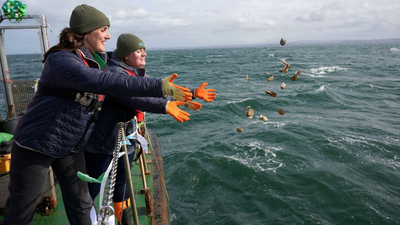
A Scottish restoration project has returned 60,000 native oysters to the Firth of Forth, reviving a species that once formed vast oyster beds across an area roughly comparable to the size of Edinburgh. The Restoration Forth partnership originally aimed to return 30,000 European flat oysters to the estuary, but the target was later doubled after…

Read More
Quote of the day by Isaac Newton: “Truth is ever to be found in simplicity, and not in the multiplicity and confusion of things" |

Quote of the day by Isaac Newton: “Truth is ever to be found in simplicity, and not in the multiplicity and confusion of things” |

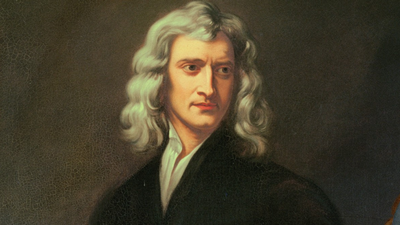
Isaac Newton, one of history’s most influential scientists, spent much of his life trying to understand the laws governing the natural world. His work transformed physics, mathematics and astronomy, but his approach to discovery was rooted in careful observation, experimentation and the search for underlying principles. One of his enduring observations was that truth is…

Read More
Meet Franklin Howley-Dumit Serulle, the amateur naturalist whose online insect photo helped reveal a new hoverfly species |

Meet Franklin Howley-Dumit Serulle, the amateur naturalist whose online insect photo helped reveal a new hoverfly species |

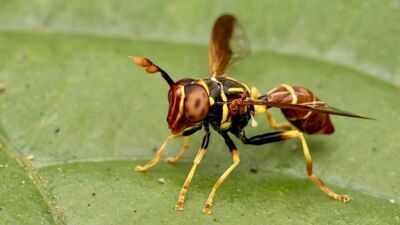
PC: Swiss Academy of Sciences A photograph shared online has helped scientists identify a hoverfly species that had remained a mystery for years. The insect, named ‘Monoceromyia ndidiae’, was photographed in the Dominican Republic and posted on iNaturalist. Its unusual appearance caught the attention of an entomologist, who began asking whether the fly represented something…

Read More
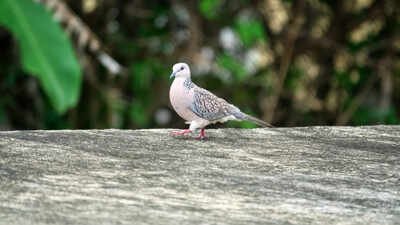
Britain’s turtle doves lost 98% of their population since the 1960s; in 2026, conservationists released 30 birds and one began laying eggs

Britain’s turtle doves lost 98% of their population since the 1960s; in 2026, conservationists released 30 birds and one began laying eggs

The European turtle dove population in the United Kingdom had fallen to just 2 percent of its peak population in the late 1960s. The species is Europe’s only migratory dove and has become the fastest-declining bird species in the U.K. As the festive season approaches, a bird forever linked with love, devotion and Christmas is…

Read More
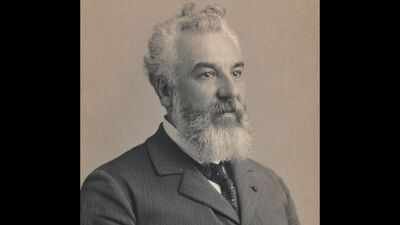
Quote of the day by Alexander Graham Bell: "Concentrate all your thoughts on the task at hand. The sun's rays do not burn until…" - lesson about turning potential into results |

Quote of the day by Alexander Graham Bell: “Concentrate all your thoughts on the task at hand. The sun’s rays do not burn until…” – lesson about turning potential into results |

Quote of the day by Alexander Graham Bell (Image: Wikipedia) In an age of constant notifications, endless open tabs and competing priorities, Alexander Graham Bell’s words feel genuinely surprising in how modern they still sound. “Concentrate all your thoughts on the task at hand,” he said. “The sun’s rays do not burn until brought to…

Read More
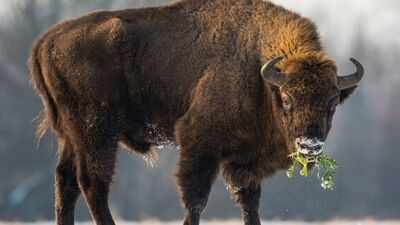
In 1987, Kansas brought 30 bison back to Konza Prairie; 29 years later, native plant richness had risen 103% locally and 86% across catchments

In 1987, Kansas brought 30 bison back to Konza Prairie; 29 years later, native plant richness had risen 103% locally and 86% across catchments

Restoring grazing by native large herbivores such as bison can produce sustained increases in native plant diversity In 1987, 30 bison from the Fort Riley Military Reservation were brought to Konza Prairie in Kansas. Nearly three decades later, researchers found that native plant species richness had increased by 103% at the local scale and by…

Read More
Singapore covered a reservoir with 122,000 floating solar panels; it now powers 5 water-treatment plants and cuts 32,000 tonnes of CO₂ every year |

Singapore covered a reservoir with 122,000 floating solar panels; it now powers 5 water-treatment plants and cuts 32,000 tonnes of CO₂ every year |

Singapore has turned part of a reservoir into a giant renewable-energy installation, covering about one-third of Tengeh Reservoir with more than 122,000 floating solar panels spread across 10 floating islands. The 45-hectare Sembcorp Tengeh Floating Solar Farm has a capacity of 60 MWp and generates electricity used to support five local water-treatment plants. The project…

Read More