






Headlines
‘I don't want to be murdered by Chinese AI’: Is AI going to ‘kill everyone’ in ten years or is Big Tech conning us with ‘doomsday’ predictions? |

‘I don’t want to be murdered by Chinese AI’: Is AI going to ‘kill everyone’ in ten years or is Big Tech conning us with ‘doomsday’ predictions? |

A still from Terminator 2: Judgement Day Marvel Studios is as good a metaphor for what happens when a company starts believing in its own infallibility. After the success of Endgame in 2019, Disney executives were thoroughly convinced that no matter what they produced, it would be lapped up by audiences if you stuck a…

Read More
Quote of the day by Nicolaus Copernicus: “Although the idea seemed absurd, still ... I believed it would be readily permitted me to try” |

Quote of the day by Nicolaus Copernicus: “Although the idea seemed absurd, still … I believed it would be readily permitted me to try” |

Quote of the day by Nicolaus Copernicus: “Although the idea seemed absurd, still … I believed it would be readily permitted me to try”New ideas can often appear strange before they are understood. Centuries ago, Polish astronomer Nicolaus Copernicus confronted an idea that challenged the accepted understanding of the universe. In his work De revolutionibus…

Read More
Scientists fitted GPS collars to 17 lions and 14 hyenas expecting hyenas to follow lions; thousands of locations revealed the opposite, with male lions approaching as hyenas retreated

Scientists fitted GPS collars to 17 lions and 14 hyenas expecting hyenas to follow lions; thousands of locations revealed the opposite, with male lions approaching as hyenas retreated

Wildlife biologists tracking lions and spotted hyenas in Southern Africa have found evidence that challenges a long-held belief about how the two predators interact. Instead of hyenas mainly following lions to find leftover food, the study found that male lions often actively move towards spotted hyenas, while the hyenas try to get away. The study,…

Read More
Washington built wildlife bridges over a busy highway; more than 10,000 animals have now crossed safely |

Washington built wildlife bridges over a busy highway; more than 10,000 animals have now crossed safely |

Washington has reached a striking milestone in its effort to make a major highway safer for wildlife. More than 10,000 successful animal crossings have now been recorded at the I-90 wildlife overcrossing near Snoqualmie Pass. The milestone was reached in July 2026 and was announced by the Washington State Department of Transportation. The bridge is…

Read More
In 2001, Hurricane Iris devastated southern Belize; the damage inspired Lisa Carne’s coral-restoration work, which has now outplanted over 100,000 corals

In 2001, Hurricane Iris devastated southern Belize; the damage inspired Lisa Carne’s coral-restoration work, which has now outplanted over 100,000 corals

When Hurricane Iris tore through southern Belize in 2001, it left more than a battered coastline behind. The storm severely damaged the region’s coral reefs, including those around Laughing Bird Caye. For marine biologist Lisa Carne, the destruction became the starting point for a restoration effort that has since helped put more than 100,000 corals…

Read More
A methane leak in the South China Sea formed a plume over 1km high; but bacteria and worms built a 'worm bed' within two years shocking scientists and theories

A methane leak in the South China Sea formed a plume over 1km high; but bacteria and worms built a ‘worm bed’ within two years shocking scientists and theories

There is a vast amount of methane trapped beneath the seafloor, across the planet. If it were to be released, the results could be potentially catastrophic for all forms of life. This is why finding out how ecosystems respond to methane leaks is important to ocean scientists. Generally, these investigations take place on purpose in…

Read More
In 1982, Israel released 28 wild donkeys to its desert; 44 years later, they created an oasis in one of Earth's most extreme places

In 1982, Israel released 28 wild donkeys to its desert; 44 years later, they created an oasis in one of Earth’s most extreme places

Donkeys are more than just packs of animals and load carriers; these herbivores have the capacity to contribute more to the environment than most humans. Over four decades ago, authorities in Israel released 28 wild donkeys into the Ramon Crater, an extremely arid area of Israel’s Negev Desert. The animals’ daily habits completely transformed the…

Read More
More than a century ago, a railroad dam blocked Michigan’s Buckhorn Creek; after its removal, the stream is flowing freely again and a new 90-foot bridge now crosses above it

More than a century ago, a railroad dam blocked Michigan’s Buckhorn Creek; after its removal, the stream is flowing freely again and a new 90-foot bridge now crosses above it

More than 100 years after a dam built beneath the historic Grand Rapids and Indiana Railroad disrupted the natural flow of Buckhorn Creek, the waterway is running free again, and the Fred Meijer White Pine Trail now crosses it on a new 90-foot bridge. The Muskegon River Watershed Assembly (MRWA), which has led the restoration…

Read More
Scientists warmed Minnesota forest trees by 3.4°C for years expecting respiration to surge 23%; the trees adapted and erased nearly 80% of that increase

Scientists warmed Minnesota forest trees by 3.4°C for years expecting respiration to surge 23%; the trees adapted and erased nearly 80% of that increase

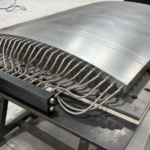
The open-air study was designed to mimic future warming while maintaining natural outdoor conditions. Researchers established plots in both open and closed-canopy forest environments and planted seedlings representing 11 tree species. In a Minnesota forest, researchers turned up the heat, not for days or weeks, but for years. Beneath the trees, heating cables warmed the…

Read More
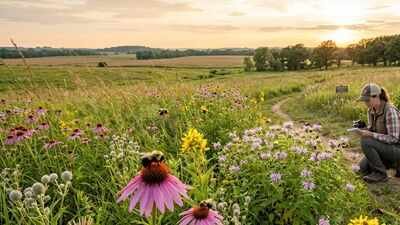
Wisconsin restored former farmland into prairie; researchers found more bumblebees and rare species only at the restored sites |

Wisconsin restored former farmland into prairie; researchers found more bumblebees and rare species only at the restored sites |

Fields once used for crops can become important wildlife habitat when restored to native prairie. Across Wisconsin, former farmland is being transformed with native grasses and wildflowers, creating a wider range of resources for pollinators. According to Restoring Lands, A Wisconsin Land Trust, bumblebee surveys have found greater diversity at restored sites, with some uncommon…

Read More
In 1989, Britain began reintroducing red kites after persecution left fewer than 10 breeding pairs; their population has since risen 2,613% and expanded across the country

In 1989, Britain began reintroducing red kites after persecution left fewer than 10 breeding pairs; their population has since risen 2,613% and expanded across the country

The red kite, once pushed close to extinction in Britain because of human persecution, has made one of the country’s most successful wildlife recoveries. After centuries of hunting and egg collecting reduced the UK population to fewer than 10 breeding pairs in remote Welsh valleys, a reintroduction programme launched in 1989 brought birds from Spain…

Read More
Scientists turned human poop into concrete; one mixture was 42% stronger after 91 days of curing |

Scientists turned human poop into concrete; one mixture was 42% stronger after 91 days of curing |

Concrete has a major environmental cost, while human waste creates another difficult waste-management challenge. Researchers have now brought the two problems together in an unusual laboratory experiment. A team converted treated faecal sludge into biochar and used the resulting material to replace part of the cement in concrete. The researchers tested mixtures containing 5%, 10%…

Read More