









More than a century ago, a railroad dam blocked Michigan’s Buckhorn Creek; after its removal, the stream is flowing freely again and a new 90-foot bridge now crosses above it

More than a century ago, a railroad dam blocked Michigan’s Buckhorn Creek; after its removal, the stream is flowing freely again and a new 90-foot bridge now crosses above it

More than 100 years after a dam built beneath the historic Grand Rapids and Indiana Railroad disrupted the natural flow of Buckhorn Creek, the waterway is running free again, and the Fred Meijer White Pine Trail now crosses it on a new 90-foot bridge. The Muskegon River Watershed Assembly (MRWA), which has led the restoration…


Read More
Scientists warmed Minnesota forest trees by 3.4°C for years expecting respiration to surge 23%; the trees adapted and erased nearly 80% of that increase

Scientists warmed Minnesota forest trees by 3.4°C for years expecting respiration to surge 23%; the trees adapted and erased nearly 80% of that increase

The open-air study was designed to mimic future warming while maintaining natural outdoor conditions. Researchers established plots in both open and closed-canopy forest environments and planted seedlings representing 11 tree species. In a Minnesota forest, researchers turned up the heat, not for days or weeks, but for years. Beneath the trees, heating cables warmed the…

Read More
Wisconsin restored former farmland into prairie; researchers found more bumblebees and rare species only at the restored sites |

Wisconsin restored former farmland into prairie; researchers found more bumblebees and rare species only at the restored sites |

Fields once used for crops can become important wildlife habitat when restored to native prairie. Across Wisconsin, former farmland is being transformed with native grasses and wildflowers, creating a wider range of resources for pollinators. According to Restoring Lands, A Wisconsin Land Trust, bumblebee surveys have found greater diversity at restored sites, with some uncommon…

Read More
In 1989, Britain began reintroducing red kites after persecution left fewer than 10 breeding pairs; their population has since risen 2,613% and expanded across the country

In 1989, Britain began reintroducing red kites after persecution left fewer than 10 breeding pairs; their population has since risen 2,613% and expanded across the country

The red kite, once pushed close to extinction in Britain because of human persecution, has made one of the country’s most successful wildlife recoveries. After centuries of hunting and egg collecting reduced the UK population to fewer than 10 breeding pairs in remote Welsh valleys, a reintroduction programme launched in 1989 brought birds from Spain…

Read More
Scientists turned human poop into concrete; one mixture was 42% stronger after 91 days of curing |

Scientists turned human poop into concrete; one mixture was 42% stronger after 91 days of curing |

Concrete has a major environmental cost, while human waste creates another difficult waste-management challenge. Researchers have now brought the two problems together in an unusual laboratory experiment. A team converted treated faecal sludge into biochar and used the resulting material to replace part of the cement in concrete. The researchers tested mixtures containing 5%, 10%…

Read More
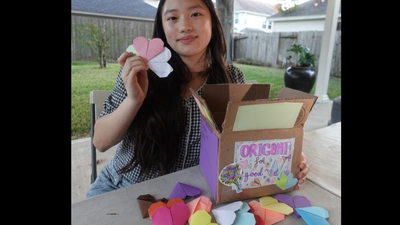
Environmental Stewardship: Meet Vivian Liu, the 17-year-old who turned origami into a global kindness movement with 7,500 volunteers across 50 countries |

Environmental Stewardship: Meet Vivian Liu, the 17-year-old who turned origami into a global kindness movement with 7,500 volunteers across 50 countries |

PC: Youth Service America At just 17, Vivian Liu has turned a childhood passion for origami into a worldwide movement built around one simple idea: making people feel remembered. Through Origami For Good, the teenager from Katy, Texas, has helped bring together thousands of young volunteers who fold recycled paper into cranes, flowers, animals and…

Read More
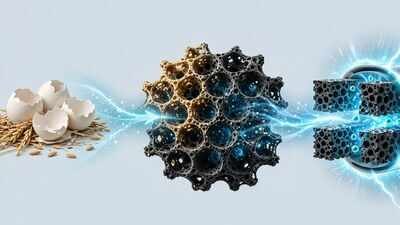
Scientists find a surprising way to turn egg and rice waste into a material that can store electricity |

Scientists find a surprising way to turn egg and rice waste into a material that can store electricity |

Egg and rice waste can be converted into a material for storing electrical energy. Researchers developed a nitrogen- and oxygen-co-doped porous carbon from a mixture of egg waste and rice waste and tested it for use in supercapacitors. The material was produced through pre-carbonisation followed by pyrolytic activation. According to the study published in Molecules…

Read More
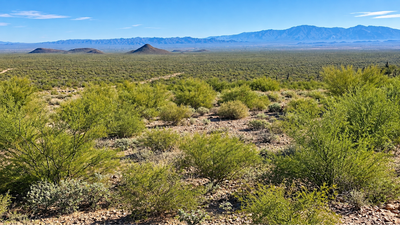
Volunteers spent 16 years restoring a damaged Arizona desert; 133 native plant species now thrive where invasive grass once ruled |

Volunteers spent 16 years restoring a damaged Arizona desert; 133 native plant species now thrive where invasive grass once ruled |

An 18-acre stretch of Arizona desert that was once heavily disturbed and overrun by invasive buffelgrass has been transformed through 16 years of sustained restoration work by volunteers and conservation partners. The Waterman Restoration Project, located on Bureau of Land Management land within Ironwood Forest National Monument near Marana, began in 2010 after earlier attempts…

Read More
Scientists found a surprising use for apple waste. It removed up to 100% of toxic lead from water in lab tests |

Scientists found a surprising use for apple waste. It removed up to 100% of toxic lead from water in lab tests |

Lead contamination in water is being studied through different approaches, including the use of waste materials that can help remove metal ions from water. Apple pomace, the residue left after juice production, was among the waste materials researchers examined for its ability to remove lead ions from water in laboratory experiments.Researchers compared untreated raw apple…

Read More
Scientists found a surprising use for apple waste. It removed up to 100% of toxic lead from water in lab tests |

Scientists found a surprising use for apple waste. It removed up to 100% of toxic lead from water in lab tests |

Lead contamination in water is being studied through different approaches, including the use of waste materials that can help remove metal ions from water. Apple pomace, the residue left after juice production, was among the waste materials researchers examined for its ability to remove lead ions from water in laboratory experiments.Researchers compared untreated raw apple…

Read More
Scientists will deploy 70 electronic tags on 3 vulnerable shark species around Britain, pairing new tracking data with anglers’ catch records dating back to 1953

Scientists will deploy 70 electronic tags on 3 vulnerable shark species around Britain, pairing new tracking data with anglers’ catch records dating back to 1953

Representative Image (AI-generated) Britain’s coastal waters are home to more shark species than many people might expect, but scientists still know surprisingly little about how several of these animals move, feed and reproduce. In a report by The Guardian, researchers outlined plans for a new three-year project that will combine modern electronic tracking with decades…

Read More