





Headlines
‘Internet of the forest’: Scientists discover birds and monkeys in the Amazon have developed a natural communication network to share danger warnings and protect each other from predators |

‘Internet of the forest’: Scientists discover birds and monkeys in the Amazon have developed a natural communication network to share danger warnings and protect each other from predators |

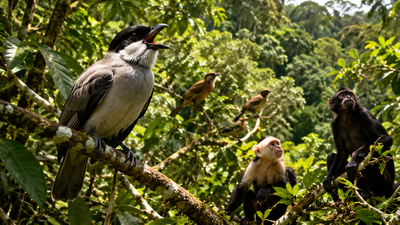
The Amazon rainforest is never truly quiet, and its endless chorus of chirps, whistles and calls may carry far more information than humans realise. Scientists studying wildlife in the Peruvian Amazon have uncovered a remarkable network in which birds and primates pick up information from one another’s alarm calls when predators appear. Small canopy birds…

Read More
An asteroid shattered near Jupiter’s gravitational gateway 800 million years ago; scientists say the debris may have bombarded Earth for 150 million years

An asteroid shattered near Jupiter’s gravitational gateway 800 million years ago; scientists say the debris may have bombarded Earth for 150 million years

Asteroid breakup 800 million years ago may have triggered impacts on Earth, the Moon and Mars (AI photo) A massive asteroid that broke apart around 800 million years ago may have sent a huge number of rocky fragments towards Earth, the Moon and Mars, according to a new study led by researchers at the Southwest…

Read More
People may not need to touch Florida’s toxic algae blooms to be exposed; scientists found their toxins travelling through the air

People may not need to touch Florida’s toxic algae blooms to be exposed; scientists found their toxins travelling through the air

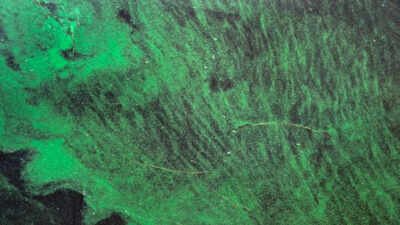
Cyanobacteria, a blue-green algae is known to have played an ancient role in establishing Earth’s atmosphere. They love warm temperatures, lots of sunlight and slow-moving water. Florida’s year-round climate provides all of this and more. When rivers, lakes and estuaries are loaded with excess nitrogen and phosphorus, often due to agricultural runoff and improperly treated…

Read More
Scientists tracked endangered Australian cockatoos for three breeding seasons and found pesticides in 80% of seed samples, some hundreds of times above regulatory limits

Scientists tracked endangered Australian cockatoos for three breeding seasons and found pesticides in 80% of seed samples, some hundreds of times above regulatory limits

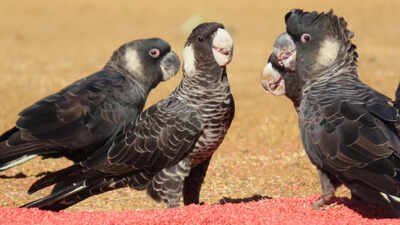
Zoe Kissane says the birds often ate at seed spills around agricultural operations (Supplied: Murdoch Univeristy) Scientists tracking endangered Carnaby’s black cockatoos across Western Australia’s Wheatbelt over three breeding seasons found worrying levels of chemical contamination in the birds’ food. Four out of five seed samples tested positive for pesticides, with some containing chemical levels…

Read More
Soviet scientists drilled 12 kilometres into the Earth, but the world's deepest borehole barely scratched the planet's crust |

Soviet scientists drilled 12 kilometres into the Earth, but the world’s deepest borehole barely scratched the planet’s crust |

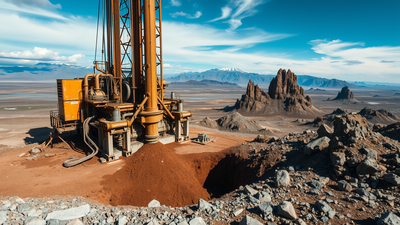
In 1970, Soviet scientists began drilling into the ground on the Kola Peninsula in the far northwest of the country, hoping to reach deeper into the earth than anyone before them. Almost two decades later, in 1989, the project hit its final depth of 12,262 metres, making it the deepest vertical borehole ever created by…

Read More
Quote of the day by Albert Einstein: "There are two ways to live your life. One is as though nothing is a miracle. The other is..." - a lesson on the way we choose to see life |

Quote of the day by Albert Einstein: “There are two ways to live your life. One is as though nothing is a miracle. The other is…” – a lesson on the way we choose to see life |

Albert Einstein (Image: Wikipedia) Some people move through the world treating almost everything as ordinary. Others notice something remarkable in the same ordinary details. A line widely credited to Albert Einstein names that exact split. “There are two ways to live your life. One is as though nothing is a miracle. The other is as…

Read More
Scientists turned plastic waste into clean hydrogen fuel without expensive sorting and it could revolutionise recycling forever |

Scientists turned plastic waste into clean hydrogen fuel without expensive sorting and it could revolutionise recycling forever |

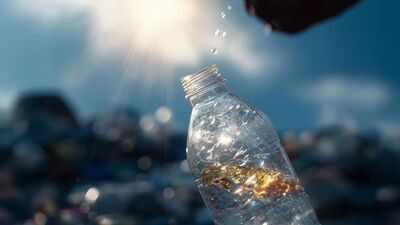
We live in a world where everything, from the blood running in our veins to the oceans spanning our planet, is polluted by plastic in one way or the other. We see mountains of plastic rubbish growing day-by-day. We are currently facing a massive environmental crisis as humanity produces over 460 million tonnes of plastic…

Read More
Scientists marked this West African coral reef as probably dead in the 1960s; underwater drones found it alive more than 50 metres below the sea

Scientists marked this West African coral reef as probably dead in the 1960s; underwater drones found it alive more than 50 metres below the sea

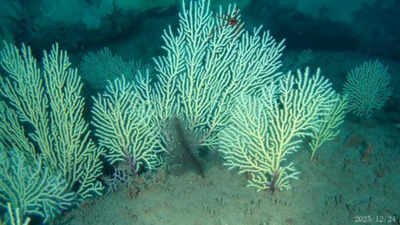
An image of the rediscovered coral reef by Gérard Zinzindohoué (Photo: Gérard Zinzindohoué) A deep-water coral reef off the coast of West Africa that was believed to be dead for six decades has been discovered alive and thriving more than 50 metres below the ocean surface.The forgotten reef was first identified off the coast of…

Read More
Scientists warn AI-edited bird photos could create fake sightings and threaten biodiversity research |

Scientists warn AI-edited bird photos could create fake sightings and threaten biodiversity research |

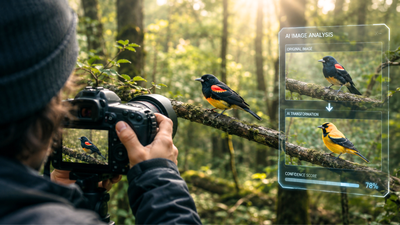
Artificial intelligence has transformed wildlife photography, allowing people to sharpen blurry images, remove distracting branches and enhance colours with just a few clicks. But scientists now say these seemingly harmless edits could have unintended consequences far beyond social media. A new commentary published in Nature Ecology & Evolution warns that AI-enhanced bird photographs are beginning…

Read More
Hunter-gatherers carried trout past waterfalls into fishless Norwegian mountain lakes 7,000 years ago; their descendants are still caught there today

Hunter-gatherers carried trout past waterfalls into fishless Norwegian mountain lakes 7,000 years ago; their descendants are still caught there today

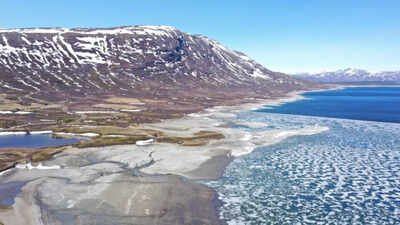
7,000-year-old fish traps show hunter-gatherers brought fish to Norway’s mountains centuries before farming Ancient hunter-gatherers carried live brown trout past steep waterfalls to stock empty mountain lakes in Norway 7,000 years ago, creating managed fisheries whose descendants are still being caught by local anglers today.Archaeologists at the University of Oslo discovered well-preserved wooden fish traps…

Read More
Nasa explored putting astronauts into a hibernation-like state for Mars missions, but scientists are still trying to make the science-fiction idea safe for humans |

Nasa explored putting astronauts into a hibernation-like state for Mars missions, but scientists are still trying to make the science-fiction idea safe for humans |

Sending humans to Mars is one of Nasa’s greatest ambitions, but the journey presents enormous challenges. A round trip could take well over a year, exposing astronauts to dangerous cosmic radiation, muscle and bone loss caused by microgravity, psychological stress and the need to carry vast amounts of food, water and supplies. To tackle these…

Read More