










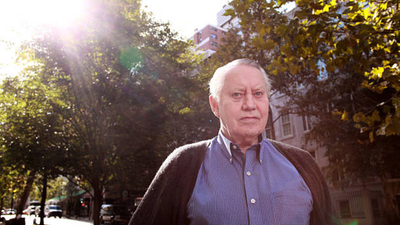
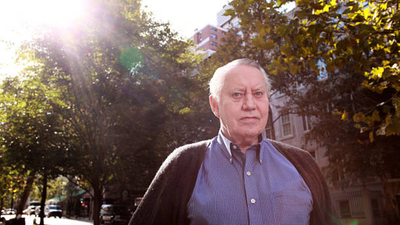
In 2011, billionaire Chuck Feeney donated $350 million through his philanthropic organisation, The Atlantic Philanthropies, to help Cornell University establish a technology and applied sciences campus in New York City. Six years later, the first phase of Cornell Tech opened on 12 acres of Roosevelt Island, bringing together researchers, students and technology companies in a project intended to strengthen the city’s position as a hub for innovation. According to the Cornell Chronicle, the landmark gift was a decisive factor in Cornell winning New York City’s competition to build the new campus. The donation was among the most significant contributions to Cornell and reflected Feeney’s approach to philanthropy: giving away his wealth during his lifetime rather than preserving it for future generations.
The $350 million gift that helped shape Cornell Tech
The gift was announced on December 16, 2011, initially without identifying the donor. Four days later, Cornell confirmed that the money came from The Atlantic Philanthropies and its founding chairman, Feeney, a Cornell alumnus who graduated in 1956. The grant was intended to support a joint proposal by Cornell and the Technion–Israel Institute of Technology for a new graduate-level campus focused on applied sciences and engineering.The project emerged from New York City’s Applied Sciences NYC competition, launched under then-mayor Michael Bloomberg. The initiative sought to diversify the city’s economy, expand its technology sector and establish a stronger base for science and engineering research. Cornell and Technion’s proposal was selected in December 2011. The partnership combined Cornell’s academic and engineering expertise with Technion’s experience in technology education, while the city provided the opportunity to develop a campus on Roosevelt Island. Feeney’s gift gave the proposal substantial financial backing at a critical stage.The scale of the contribution was striking. Cornell described it as the largest gift in the university’s history at the time and one of the largest donations in higher education. The Atlantic Philanthropies later characterised it as its largest single grant, supporting the first stage of a planned two-million-square-foot applied sciences and engineering campus.
A campus opens on Roosevelt Island
Construction on the Roosevelt Island campus began in 2015. On September 12, 2017, Cornell Tech officially opened its first phase at a dedication ceremony attended by New York officials and leaders from Cornell and Technion. The opening marked the arrival of a new graduate education and research institution in the city.The first phase featured three principal buildings, each designed around a different aspect of the campus’s mission. The Emma and Georgina Bloomberg Centre became the main academic building, providing space for teaching and collaboration. The Bridge was designed to bring companies and entrepreneurs into close contact with academic teams, while The House provided residential accommodation for students, faculty and staff.The development also placed an emphasis on energy efficiency. Cornell Tech’s plans included a target of net-zero energy use for the Bloomberg Center, using measures such as solar panels, geothermal heat pumps and energy-efficient building systems. The House was designed to meet Passive House standards, which aim to reduce energy consumption through insulation and other building techniques.The campus aimed to bring academic research, industry partnerships and entrepreneurship into one location, encouraging students and researchers to work on technology with practical applications. When the first phase opened, New York City estimated that the campus could generate as many as 8,000 permanent jobs, hundreds of spin-off companies and more than $23 billion in economic activity over 35 years. These were projections made by the city in 2011, rather than measured outcomes at the time of opening.
Feeney’s philosophy of giving while living
The Cornell Tech donation was part of a much broader philanthropic effort. Feeney, who co-founded Duty Free Shoppers in 1960 with Robert W. Miller, built a fortune through the international duty-free retail business. The company expanded from selling goods to sailors and travellers to operating across major airports and markets worldwide.In 1984, Feeney transferred nearly all his stake in Duty Free Shoppers, then estimated to be worth more than $500 million, to The Atlantic Philanthropies. The move sharply reduced his personal wealth and helped establish the foundation as a major funder of education, healthcare, scientific research, human rights and other causes. Much of its giving was initially made anonymously.Feeney’s approach became known as “giving while living”: using wealth to address needs during the donor’s lifetime, rather than leaving most of it untouched or distributing it only after death. He also avoided attaching his name to buildings and programmes, reflecting his preference for the work to take precedence over personal recognition.His relationship with Cornell stretched back decades. The university reported that Feeney and Atlantic Philanthropies invested nearly $1 billion across Cornell over almost four decades, supporting scholarships, campus buildings, student life and academic initiatives, in addition to Cornell Tech.
A legacy beyond one donation
Feeney’s philanthropy extended well beyond New York. The Atlantic Philanthropies said it gave away about $8 billion over several decades to universities, nonprofits and initiatives around the world. Its grants supported causes ranging from medical research and health equity to education and social justice.In October 2020, Cornell reported that Feeney had reached his goal of giving away his entire fortune during his lifetime. The foundation formally dissolved after completing its grant-making commitments, bringing to a close an unusually ambitious philanthropic experiment.The Roosevelt Island campus remains one of the most visible results of that approach. Feeney’s $350 million grant did not fund the project alone: Cornell, Technion, New York City and other donors and partners all played important roles. But the contribution helped turn a proposal for a new technology institution into a physical campus, one intended to connect higher education with research, business and the city’s wider economy.