










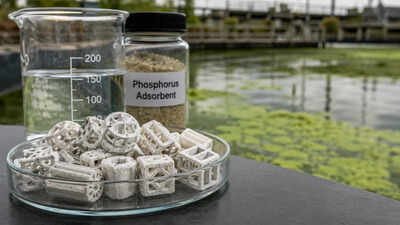
Harmful algal blooms can turn freshwater ecosystems into dangerous environments, but researchers at Florida Atlantic University are developing a novel way to tackle one of the nutrients that helps drive them, excess phosphorus. Rather than removing algae after a bloom has already formed, the team is developing 3D-printed adsorbent structures designed to capture phosphate directly from surface waters. The project, titled ‘Developing Novel 3D-Printed Adsorbent Materials for Phosphate Removal from Surface Waters,’ has received a two-year, $600,379 grant from the Florida Department of Environmental Protection. Led by Masoud Jahandar Lashaki, Ph.D., the research builds on earlier FAU work that transformed algal biomass into activated carbon capable of removing phosphorus from water. By combining this material with 3D-printing technology, researchers aim to create durable, porous structures that can be placed in waterways, capture excess phosphate and later be removed, regenerated or recycled. The approach could offer a practical new tool for reducing nutrient pollution before it contributes to harmful algal blooms.
3D-printed seaweed structures could help remove bloom fuelling phosphorus
Harmful algal blooms occur when algae grow excessively, often because waterways contain unusually high concentrations of nutrients. In Florida’s freshwater systems, phosphorus from sources including agricultural fertilisers, wastewater and urban stormwater can contribute to conditions that encourage rapid algal growth. Once blooms develop, they can consume oxygen, block sunlight and, in some cases, produce toxins that threaten aquatic ecosystems, wildlife and human health. That makes phosphorus removal an important part of preventing blooms rather than simply responding to them after they appear. FAU’s project takes this preventative approach by developing materials that can be placed directly into freshwater environments and capture phosphate from the surrounding water. The research is being led by Lashaki, an associate professor and graduate programme director in FAU’s Department of Civil, Environmental and Geomatics Engineering, alongside co-investigators Yalan Liu, Ph.D., and Mohammed Abdellatef, Ph.D.
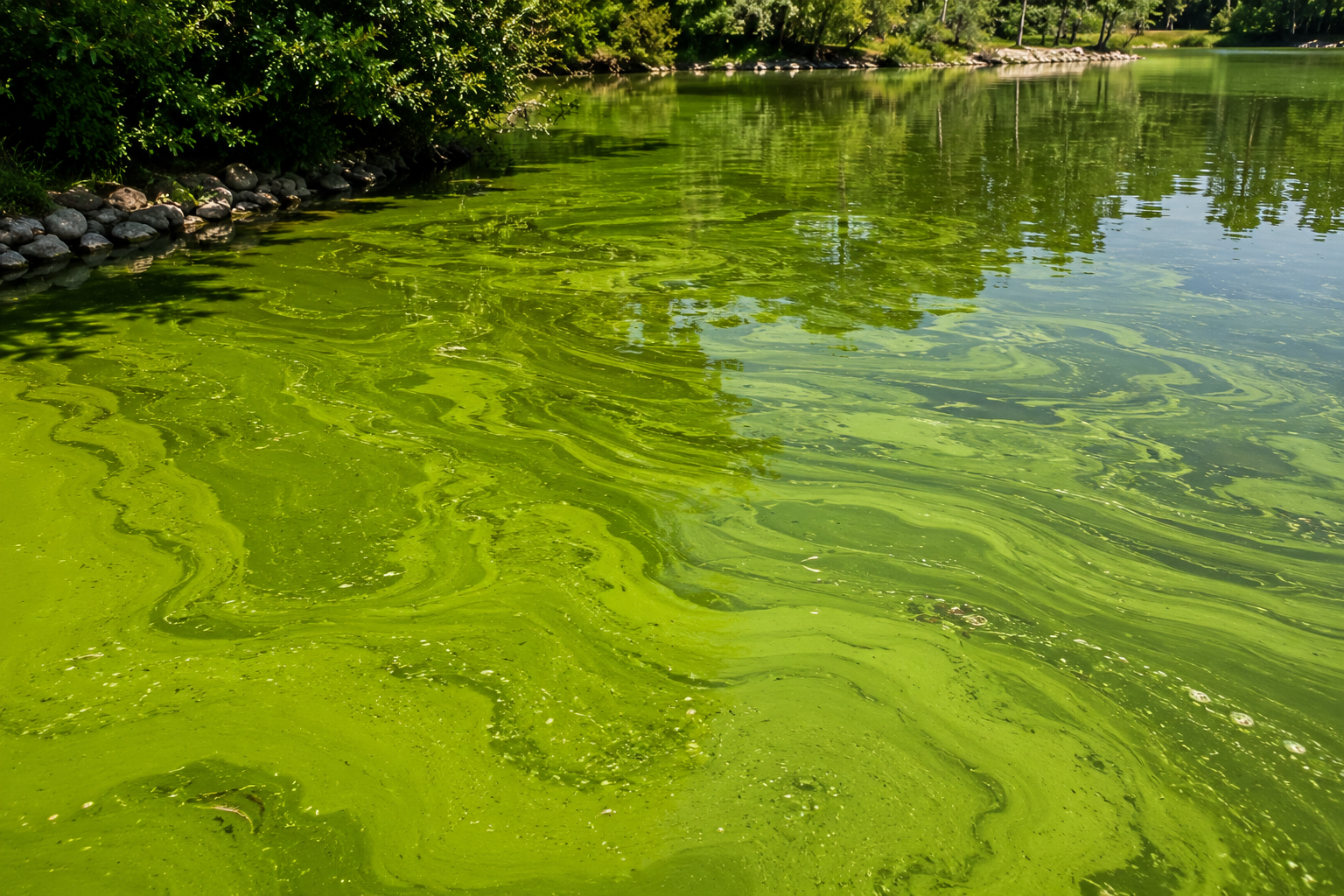
Harmful algal blooms (Image: AI Generated)
How the researchers are turning algal biomass into phosphorus-catching material
The new 3D-printing project is based on research the FAU team has already carried out. In a 2025 study published in Algal Research, Vithulan Suthakaran, Ryan Thomas, Mitchell Guirard, Daniel Meeroff and Masoud Jahandar Lashaki investigated how cyanobacterial biomass could be converted into activated carbon adsorbents capable of removing phosphate from surface water. The researchers collected cyanobacterial biomass from Lake Okeechobee in Florida and processed it into activated carbon. They then modified the material using different chemicals, including lanthanum chloride, to increase its ability to capture phosphate. The results were particularly promising for the lanthanum-modified materials. Several achieved more than 99% phosphorus removal across tested phosphate concentrations. The strongest-performing material removed more than 90% of phosphorus at an adsorbent dosage of just 0.2 grams per litre, with a contact time of 30 minutes. The material also retained its performance when natural organic matter was present in the water. This is important because the research is effectively turning one environmental problem into a potential tool for addressing another, biomass associated with algal blooms can become the raw material for an adsorbent designed to remove phosphorus that contributes to future blooms.
Lanthanum helps lock phosphorus into a stable mineral
The chemistry behind the material is central to its performance. The FAU research found that modifying the carbon with lanthanum substantially increased phosphate uptake. When phosphate interacts with the lanthanum-modified material, it can form LaPO₄·H₂O, or rhabdophane, a stable mineral that permanently sequesters the phosphorus. That mechanism gives the approach an advantage beyond simply trapping phosphorus temporarily. According to the original study, the formation of rhabdophane prevents the captured phosphorus from remaining available for algal growth. The team’s earlier work therefore provided the scientific foundation for the new project. Rather than developing the 3D-printed structures from scratch, researchers are taking a material that has already demonstrated strong phosphate-removal performance and changing its physical form so it can be deployed more practically in real waterways.
Why FAU is moving from powders to 3D-printed structures
Powdered adsorbents can work effectively in laboratory experiments, but using loose particles in a lake or pond presents practical problems. They can settle into sediments and become difficult to retrieve once they have captured phosphorus. The new project addresses that problem by transforming the lanthanum-modified adsorbent into durable 3D-printed structures. FAU says the structures will be designed with controllable porosity, allowing water to pass through them while exposing the adsorbent material to phosphate in the water. They will also be retrievable, meaning water managers could remove the structures once they have become saturated rather than leaving the spent material in the environment. The structures are intended to be submerged directly into freshwater bodies. Their durability and retrievability could make them more suitable for repeated use than loose adsorbent powders, while also making it easier to evaluate how much phosphorus has been removed and what happens to the material afterwards. Once spent, the structures could potentially be withdrawn, regenerated or recycled, according to FAU. This could help prevent captured phosphorus from accumulating in sediments and potentially reduce maintenance requirements for water managers.
Seaweed could become part of the solution in a long run
An especially interesting element of the research is its use of algal biomass as a resource. FAU’s earlier research demonstrated the feasibility of converting algal material into activated carbon, while separate FAU student research has also investigated sargassum seaweed biomass as a precursor for activated-carbon adsorbents for phosphate removal. This creates a circular concept, biomass associated with aquatic environmental problems can potentially be converted into a material capable of removing a nutrient that contributes to harmful algal growth. The approach does not mean seaweed itself will simply be dropped into lakes to absorb phosphorus. Instead, the biomass is processed into engineered adsorbent material, modified to improve phosphate capture and then incorporated into a controllable structure. That distinction is important because the objective is to create a predictable and retrievable water-treatment material rather than introduce additional organic biomass into already nutrient-rich waterways.
FAU will test the 3D-printed adsorbents in real ponds
The next stage moves the technology beyond laboratory experiments. FAU researchers plan to deploy the 3D-printed phosphate adsorbents in multiple ponds on the university’s Boca Raton campus. These field tests will allow the team to evaluate both how effectively the structures remove phosphate and whether they remain environmentally safe during real-world use. The structures could also eventually become more multifunctional. FAU says future versions could combine lanthanum for phosphate capture with activated carbon aimed at organic contaminants or ion-exchange materials designed to remove nitrogen. Such combinations could make the technology more useful than a single-purpose phosphorus filter, particularly in waterways where several types of pollutants or excess nutrients occur simultaneously.
A potential new tool for preventing algal blooms
The project is still a developing technology, so the 3D-printed structures should not yet be viewed as a proven solution for large-scale lakes or widespread harmful algal blooms. Their performance, durability, regeneration and environmental effects will need to be demonstrated through field testing. But the research offers an intriguing progression from laboratory chemistry to practical environmental engineering. The Algal Research study showed that lanthanum-modified algae-derived activated carbon could remove phosphorus rapidly and at high efficiencies. The new FDEP-funded project is attempting to turn that material into a physical structure that can be placed in water, recovered and potentially reused. If the field trials succeed, the technology could provide water managers with another way to tackle one of the conditions that allows harmful algal blooms to flourish: excess phosphorus. Rather than waiting for an algal bloom to become visible, the underlying idea is to remove a key nutrient before it can continue feeding the cycle. In that sense, FAU’s 3D-printed structures represent a shift from cleaning up blooms after they appear towards trying to control the chemistry that helps create them in the first place.