








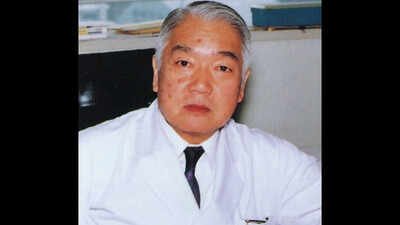
Have you ever wondered whether there is a right way to blow your nose? A Japanese researcher spent years studying exactly that question — and nearly five decades after publishing his findings, his work has now won an Ig Nobel Prize.Professor emeritus Tokuji Unno, a Japanese specialist in respiratory physiology who died in 2022 at the age of 89, was awarded the 2026 Ig Nobel Prize in Medicine for his research into the aerodynamics of nose-blowing. His prize-winning work was published in 1977 under the title How to Blow the Nose — An Aerodynamic Study of the Nose Blowing.Unno was the inaugural professor of otolaryngology at Asahikawa Medical University in Hokkaido. Otolaryngology is the branch of medicine dealing with conditions involving the ear, nose and throat.His award was accepted in Zurich on Thursday by fellow researcher Miki Takahara, who represented the late scientist at the ceremony. The 2026 ceremony was held outside the US for the first time, with the event taking place in Switzerland amid concerns over travel and visa access.
A nose-blowing study
So, what did Unno discover?The study examined the mechanics of blowing one’s nose and the way air moves through the nasal passages.That may sound like an oddly specific question, but nose-blowing involves a surprisingly complex interaction between pressure, airflow and the structures inside the nose. Unno’s research attempted to examine the phenomenon scientifically rather than treating it as an everyday reflex that requires no investigation.The study concluded that to best blow one’s nose, one should inhale moderately then blow powerfully, and blow each nostril separately. Such techniques, the paper said, can clear secretions in the lower airways in the chest area in addition to the upper airways, helping prevent respiratory diseases.The prize was accepted on the late Unno’s behalf by Miki Takahara, Unno’s colleague and the chair of otolaryngology at Asahikawa Medical University.“He was a pioneer in nasal physiology and airflow research,” Takahara said. “He studied everything: normal breathing, cough and also voice.”The work has now been recognised by the Ig Nobel Prizes, which celebrate scientific studies that initially make people laugh or raise an eyebrow, but can also make them think about an unusual aspect of everyday life.And nose-blowing is not the only seemingly bizarre subject recognised this year.The 2026 Ig Nobel Awards honoured research into everything from cockroach milk and soil health to kissing and mosquito anatomy. One study looked at whether wealthier people were more likely to take sweets intended for children, while another examined the evolutionary history of kissing. Researchers also received recognition for studying ways to reduce splashing from urinals.Another unusual project involved burying cotton underwear in soil as a way of assessing soil health.
What is an Ig Nobel Prize?
The Ig Nobel Prize is not the same as the prestigious Nobel Prize. It is a satirical award designed to celebrate research that is unusual, humorous or seemingly absurd — while still being based on serious scientific inquiry.The organisers say the awards are intended to honour discoveries that “first make people laugh, then make them think.”That combination is precisely what makes Unno’s research stand out. Something as mundane as blowing one’s nose becomes, under scientific scrutiny, a question involving airflow and human physiology.Unno’s prize is also a posthumous recognition. He died four years ago, meaning he did not live to see his decades-old research receive international attention.