








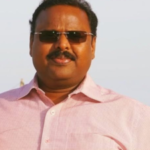


Born to daily-wage agricultural labourers, Bethala Veera Swami grew up seeing how poverty could stand between children and education. Today, the mechanical engineer, who continues to work in Abu Dhabi, is helping rural children access learning opportunities through PARD India, the nonprofit he founded with childhood friends. Growing up in the rural village of Yernagudem, Bethala Veera Swami saw how a family’s financial circumstances could determine a child’s future. Children with dreams of continuing their education sometimes had to leave school and work to support their families; some children entered the workforce. Others left school because there was little support at home or because they had fewer opportunities to learn beyond the classroom. For a child growing up in a household dependent on daily-wage agricultural labour, the consequences of poverty were not an abstract problem. They were visible in the lives of people around him.Years later, those experiences would help shape an initiative aimed at ensuring that fewer children face the same choices. Swami founded Pragathi Association for Rural Development (PARD India) in 2011 with childhood friends from Yernagudem village in Andhra Pradesh. According to the organisation’s profile on Daan.org, PARD India reports that its programmes have influenced 90,494 children and reached more than 550 communities, with a presence in 110 villages. These figures are self-reported by the organisation and should not be interpreted as an independently audited count of children directly supported.Swami’s journey took him from rural Andhra Pradesh into engineering, eventually leading to work in Abu Dhabi. But his professional career did not mean leaving his home community’s challenges behind. Instead, he continued to lead an organisation designed to make education and other opportunities more accessible to children growing up in circumstances similar to those he had witnessed.
Starting with 50 children
PARD India was registered on January 13, 2011, and began its first After School Education Programme in August that year. The programme started with 50 children in Classes 4 and 5 at the government school Swami had attended as a child, according to the organisation’s published programme information.The idea was simple: children should have access to additional academic support even when their circumstances at home make studying difficult. The programme provides guided learning after regular school hours, covering subjects such as mathematics, English and science, alongside moral education, computer skills and extracurricular activities.The classes operate six days a week, according to the programme account. Teachers also monitor attendance and coordinate with parents and volunteers when children miss classes, helping identify problems that might eventually lead to a dropout.For children who do not have access to private tuition or additional learning resources, this kind of support can make a difference. It also offers a way for communities to identify students who may be struggling before they leave school altogether.
An engineer’s personal investment in rural education
One of the most striking parts of Swami’s work is that he continued pursuing his engineering career while helping build PARD India. His professional life in Abu Dhabi and his commitment to rural education have developed alongside each other. In 2012, he personally contributed ₹8 lakh to establish a Village Knowledge Centre in Yernagudem, equipping it with 15 computers. The centre was intended to bring digital learning opportunities to a rural community where access to technology could otherwise be limited.PARD India’s Village Knowledge Centre Programme document says the initiative was launched on August 26, 2012, to bridge the digital divide between rural and urban communities. It provided free computer and internet training to children, students, young people and working professionals, along with career guidance, personality development and support with online job searches.The centre operated for nearly eight years before its equipment became outdated, according to the account of the initiative. The programme’s ambition, however, went beyond teaching children how to use computers. Digital skills could also help them access educational resources, explore career options and prepare for employment. For Swami, the investment represented an effort to bring opportunities closer to the village rather than expecting young people to overcome every barrier on their own.
Helping children stay in education
PARD India subsequently expanded its work through scholarship and academic support programmes. The V-Kid Scholarship Programme and the V-Kid Knowledge Boost Programme were introduced in 2014, according to the organisation’s programme account. The scholarship initiative is intended to help disadvantaged students continue their education, from primary school through graduation. Its focus includes children who have lost one or both parents and those from economically vulnerable families.The need for such assistance extends beyond school fees. Books, transport, food and other education-related expenses can become difficult for families dependent on irregular or low incomes. When these costs compete with household essentials, children may be pressured to stop studying.Financial assistance, combined with academic guidance, can help reduce some of that pressure. PARD India’s approach brings these interventions together with after-school education and digital learning, seeking to address several of the barriers that can prevent children from reaching their potential.The organisation’s 2023-24 annual report records 206 children benefiting from its After School Education Programme during that financial year and 58 students receiving direct support through its Quality and Value Education Programme. These are figures for particular programmes during one reporting period, not the total number of children reached since the organisation began.
Extending support beyond the classroom
PARD India’s work has also expanded into nutrition, community support and livelihood development. The organisation’s programmes include food assistance for people in need, sewing training for women and environmental initiatives. Its 2023-24 annual report records 2,540 cooked meals provided through its Hearts of Serving the Humanity Programme during the year. It also reports that 112 women received training through its Power of Sewing initiative, which aims to develop skills that can support economic self-reliance.These programmes address different needs, but they are connected by the circumstances in which children grow up. A student may struggle to concentrate on schoolwork when a household is facing food insecurity or financial uncertainty. Supporting families and strengthening livelihood opportunities can therefore complement efforts to keep children in education.The organisation’s published profile reports that its initiatives have influenced 90,494 children across more than 110 villages in Andhra Pradesh and Telangana. The initiative now wants to reach 20,000 children across 150 villages by 2030 and provide more than eight million hours of free education. It also plans to introduce STEM-based projects in government schools, expand scholarships from Class 1 through graduation, and develop Village Knowledge Centres with computer- and AI-enabled literacy and skills training.