





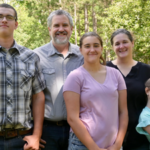



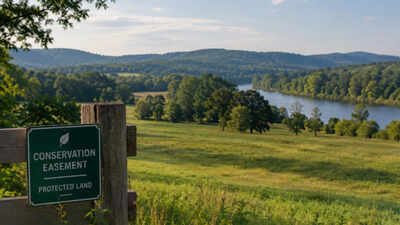
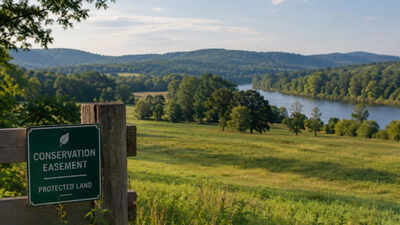
A woman in South Carolina has permanently protected her family’s 146-acre property from future development, fulfilling a promise she made to her mother. Alice Smith placed the land, known as Duck Haven, in Pickens County under a conservation easement, a legal arrangement that restricts future construction while allowing the family to retain ownership.According to a report by WVLT 8, Smith’s grandparents bought the property in the 1940s. She wanted to ensure that the land, which had remained with the family for generations, would not be sold or taken over for development. She said she had promised her mother that she would find a way to keep the property together. “I made a promise to my mother that I would find a way to keep the land together,” Smith said as quoted by WVLT 8.The 146-acre property has rolling fields that connect to the Saluda River. It was mostly farmland when her grandparents purchased it, according to Smith. By choosing a conservation easement instead of accepting development offers, she has ensured that restrictions on future development will remain in place even after her lifetime.Smith is among two landowners in Upstate South Carolina who have recently protected more than 250 acres of family-owned land through conservation easements arranged with non-profit organisation Upstate Forever. The second property, Moore Farm, covers 110 acres in Greenville County and belongs to Ed Lomas’s family.The organisation said the two agreements are part of its wider effort to protect land across the region. Upstate Forever now safeguards more than 40,000 acres across 10 counties.
How conservation easements protect land
A conservation easement is a legal agreement that allows property owners to retain ownership while placing permanent restrictions on development. These restrictions continue to apply even if ownership of the property changes.Scott Park of Upstate Forever said landowners grant these restrictions to the organisation, which takes responsibility for ensuring that the agreed protections remain in place.“Conservation easements, they’re in essence a charitable donation, so that’s why Upstate Forever can be a grantee of these conservation easements,” Park said.He explained that the landowner grants the restrictions and the organisation becomes the long-term steward of the property.“So the landowner is the grantor; they grant those restrictions to Upstate Forever. We are the forever steward, so we’re almost a partner in the pocket of that landowner now for as long as that landowner owns that piece of property.”
Another family protects its century-old farm
The second property covered by the agreements is Moore Farm, owned by the Lomas family for more than 100 years. The 110-acre farm is located near Horsepen Creek in Greenville County.The property was previously used to grow cotton. Since around the 1950s, it has been used to raise cattle. However, new residential neighbourhoods have gradually developed around the farm.Ed Lomas said the change has been particularly noticeable in the traffic passing through the area. “Twenty years ago, you would wait for cars to come by maybe every few minutes,” Lomas said. “Now it’s a constant stream, especially first thing in the morning.”The process of securing the conservation easement took around a year and a half. Lomas said he decided to protect the farm after hearing about another family that was struggling to hold on to its property.He recalled receiving a call from a family friend whose relatives were getting older and could no longer manage their land. They were concerned about leaving the property to their children and the difficulties that could follow. “I actually had a phone call from a family friend about a year ago saying they had exactly that scenario,” Lomas said.He said the family believed selling the property was their only option. “They were older, they couldn’t take care of it, it was going to be left to the children, it was going to be a big mess. They felt that was their only option, just to sell the land.”Lomas wanted to prevent his own family from facing similar pressure. He said the agreement would protect the farm and ensure that his children would not be pressured into selling it for development. “I know it’ll be safe and the kids will not be able to be pressured into selling it as a development,” he said.
Conservation agreements offer tax benefits
Conservation easements can also provide financial benefits to property owners because they are treated as charitable donations.According to the South Carolina Farm Bureau, the value of an easement is calculated by comparing the property’s fair market value before and after the development restrictions are imposed. The difference is recognised by the Internal Revenue Service as a non-cash charitable donation. Landowners can claim this amount as a federal tax deduction for up to 15 years.South Carolina also offers state tax credits, generally amounting to a maximum of $250 per acre. These credits have no expiration date and can be applied towards the landowner’s personal income.In addition, many easements qualify for direct financial support from sources such as the South Carolina Conservation Bank. This funding is generally calculated as a percentage of the easement’s value and paid to the landowner at closing.
Families want others to consider the option
Park said Upstate Forever was seeing growing interest from landowners who wanted to protect their properties against development.He said families such as the Lomas and Smith families were determined to preserve land that had remained in their families for generations.“You meet landowners like Ed and Alice that are just salt of the earth,” Park said. “They just want to protect their property. They see the development pressure that’s coming around them and they are pretty much, they are laser focused on getting these properties protected, and we’re happy to be a partner in that.”Both landowners said they hoped their decisions would encourage other families to explore ways to protect their properties.“There are opportunities and ways to protect and conserve the property you may have,” Lomas said. Smith said she did not consider herself wealthy or well-connected but wanted others to know that protecting family land was possible.“I’m not well-to-do, I’m not really well connected, but if for some reason I can plant a seed in anyone, that if I’m able to do this, they can too,” she said.For Smith, the agreement means that her family’s land will remain protected even after she is gone. She said she wanted to ensure that the work and sacrifices made by earlier generations were not lost to development.“What your family sacrificed and worked so hard for did not go to waste and a developer is not going to be able to ever touch it, and even when I’m gone, it’s still going to stay like this,” she said.