










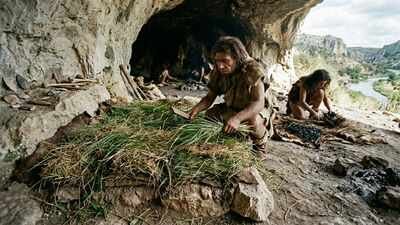
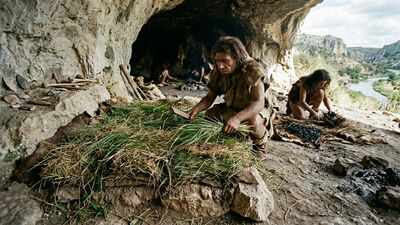
Long before houses, mattresses, and woven fabrics became part of daily life, humans were already creating dedicated places to sleep. Deep inside a South African cave, traces of ancient grass bedding have preserved a small but revealing detail of prehistoric life: our ancestors cared about where they rested. The remains suggest that hunter-gatherers were not simply sleeping on whatever the ground provided. They arranged plant materials, used fire to maintain their sleeping areas, and repeatedly cleared old bedding before creating new layers. The discovery offers a rare glimpse into everyday habits from a time when human culture was still taking shape.
A South African cave preserves the earliest signs of organised sleeping areas
The evidence comes from Border Cave, a rock shelter in South Africa’s KwaZulu-Natal region that has become one of the most significant archaeological sites for understanding early Homo sapiens behaviour.The cave was occupied repeatedly between roughly 220,000 and 43,000 years ago, leaving behind traces of tools, food remains, and signs of how people organised their living spaces. Among the most unusual discoveries are ancient bedding layers that survived through an unlikely combination of dry conditions and mineral preservation.The study published in Journal of Archaeological Science, titled ‘New microscale insights into plant-based bedding construction and maintenance between 200 000 and 43 000 years ago at Border Cave, South Africa’ reveals that archaeologists examined several bedding deposits dating between about 161,000 and 43,000 years old, while earlier traces from the cave have been linked to around 200,000 years ago. These remains provide evidence that humans were deliberately shaping their sleeping areas far earlier than many everyday behaviours are usually associated with.The bedding was largely made from grasses belonging to the Panicoideae group, a plant family that includes species related to modern crops such as maize and millet. Other plant materials, including sedges, were also used at different times.
Prehistoric humans used fire to refresh and protect their bedding
The most striking feature was not just the presence of grass mats, but what was found beneath them. The bedding layers were repeatedly placed over ash deposits, suggesting that fire played a regular role in maintaining these sleeping areas.Rather than simply abandoning old bedding, the cave’s occupants appear to have burned it before preparing a fresh surface. In some places, layers of bedding and ash had built up over long periods, showing that the practice was repeated many times.The use of ash may have served a practical purpose. Researchers suggest that it could have helped reduce insects and other unwanted organisms around sleeping areas. Ash is known to create a dry environment that can discourage certain pests, making it a useful material for early humans living in close contact with nature.The fires may also have helped remove old plant material and waste, allowing the cave to remain a more controlled and comfortable living space.
Ancient bedding reveals the everyday habits of early human communities
This discovery provides further support to increasing evidence that prehistoric humans meticulously managed their environment. Places for sleeping were not just a matter of selecting a place when day ends but they were prepared, tended to, and replaced as required.