










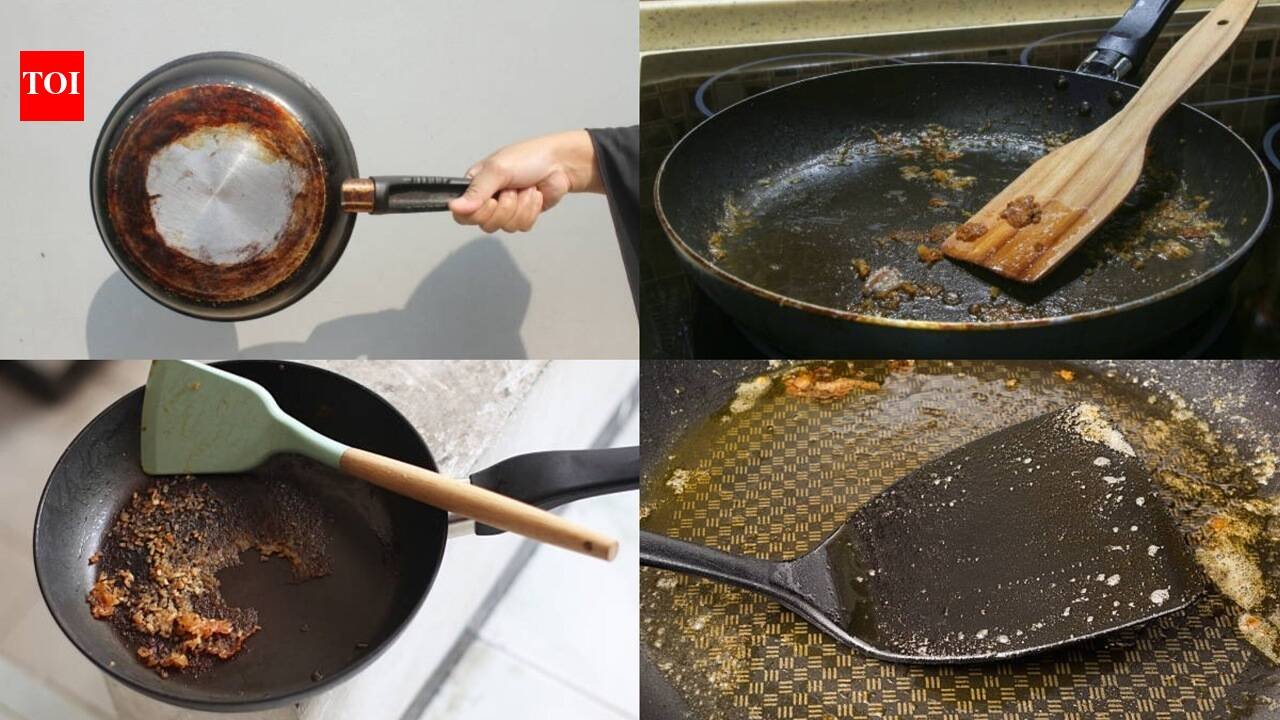
There’s a particular kind of frustration reserved for a non-stick pan that still glides beautifully in the centre but has developed a dark, sticky ring of hardened grease creeping around its edges, exactly the spot that never quite gets scrubbed properly during a quick daily wash. That buildup usually comes down to oil and food residue slowly accumulating along the rim over repeated use, and the tricky part is that most of the usual aggressive scrubbing solutions can permanently damage a non-stick coating if you’re not careful. The good news is there are genuinely gentle, effective ways to tackle this grime without risking the pan’s surface. Here’s how to do it properly.
Start with a simple soak in warm, soapy water
Before reaching for anything stronger, give the gentlest option a proper chance first. Fill the pan with warm water, add a few drops of mild dish soap, and let it soak for several minutes to loosen the grease before you even start scrubbing. Once it’s had time to soften, use a soft, non-abrasive sponge or cloth to work along the greasy edges specifically, since this alone often clears lighter buildup without needing anything harsher at all.
Make a baking soda paste for the stubborn spots
For grease that doesn’t budge with soap alone, baking soda is genuinely one of the safest, most effective options for non-stick surfaces. Mix roughly three parts baking soda with one part water to form a thick paste, similar in consistency to toothpaste, and spread it generously over the greasy edges. Let it sit for a few minutes so the mild alkaline reaction can properly break down the residue, then gently scrub with a soft sponge, baking soda is fine enough that it won’t scratch the coating, even with a bit of pressure behind it.
Simmer a vinegar and water solution for baked-on residue
For grease that’s been sitting for a while and hardened further, a vinegar simmer works well without any scrubbing at all. Mix roughly three parts water to one part white vinegar, pour enough into the pan to cover the affected areas, and let it simmer gently for about ten minutes. The acidity helps dissolve stubborn, baked-on residue from within, and once the pan has cooled completely, most of the loosened grime wipes away easily with a soft cloth.
Combine baking soda and vinegar for genuinely tough buildup
When grease has built up over a longer stretch of neglect, pairing both methods together delivers noticeably stronger results. Create a paste using baking soda and a small amount of vinegar instead of plain water, apply it directly to the worst affected edges, and let it sit for 15 to 30 minutes before scrubbing gently and rinsing thoroughly. The combined fizzing reaction helps lift ingrained grime that either ingredient alone might struggle with on its own.
Know what to avoid to stop the problem coming back
Prevention matters just as much as the actual cleaning here. Aerosol cooking sprays are a particularly common culprit, since many contain additives that burn onto the coating at surprisingly low temperatures, creating a sticky film almost instantly. Cooking consistently on high heat also accelerates coating breakdown and grease buildup, so sticking to low or medium heat, wiping the pan down after every use, and steering clear of metal utensils, steel wool, or harsh scouring pads all go a long way toward keeping edges from building up grime in the first place.
A small exception for uncoated rivets and edges
If your pan has visible metal rivets or an uncoated rim where the non-stick layer doesn’t actually extend, these specific spots can handle slightly firmer scrubbing than the coated cooking surface. Just be careful to keep any more abrasive scrubbing confined strictly to those uncoated areas, and switch back to a soft sponge the moment you’re working anywhere near the actual non-stick surface itself.
Disclaimer:
This article is intended for general informational purposes only. Always check your specific pan’s manufacturer instructions before cleaning, as coatings can vary, and avoid abrasive scrubbers, steel wool, or harsh chemical cleaners on non-stick surfaces, as these can damage the coating. Test any cleaning method on a small area first if you’re unsure how your pan’s specific coating will respond