










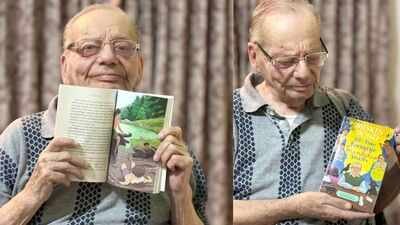
In the latest episode of the Humans of Bombay Show, founder Karishma Mehta did something that most interviewers only dream of. She flew to Dehradun, drove into the quiet, misty hills, and sat down with Ruskin Bond, one of India’s most beloved storytellers, in the home where he has lived, written, and watched the mountains for decades. What followed was one of the most intimate, warm, and quietly profound conversations the show has ever produced. An hour of stories, life lessons, gentle humour, and the unhurried wisdom of a man who has spent a lifetime writing about love, loss, and the beauty of small, ordinary things. And somewhere in the middle of all of it, Ruskin Bond said something that nobody expected.
The boy who lost his father at 10
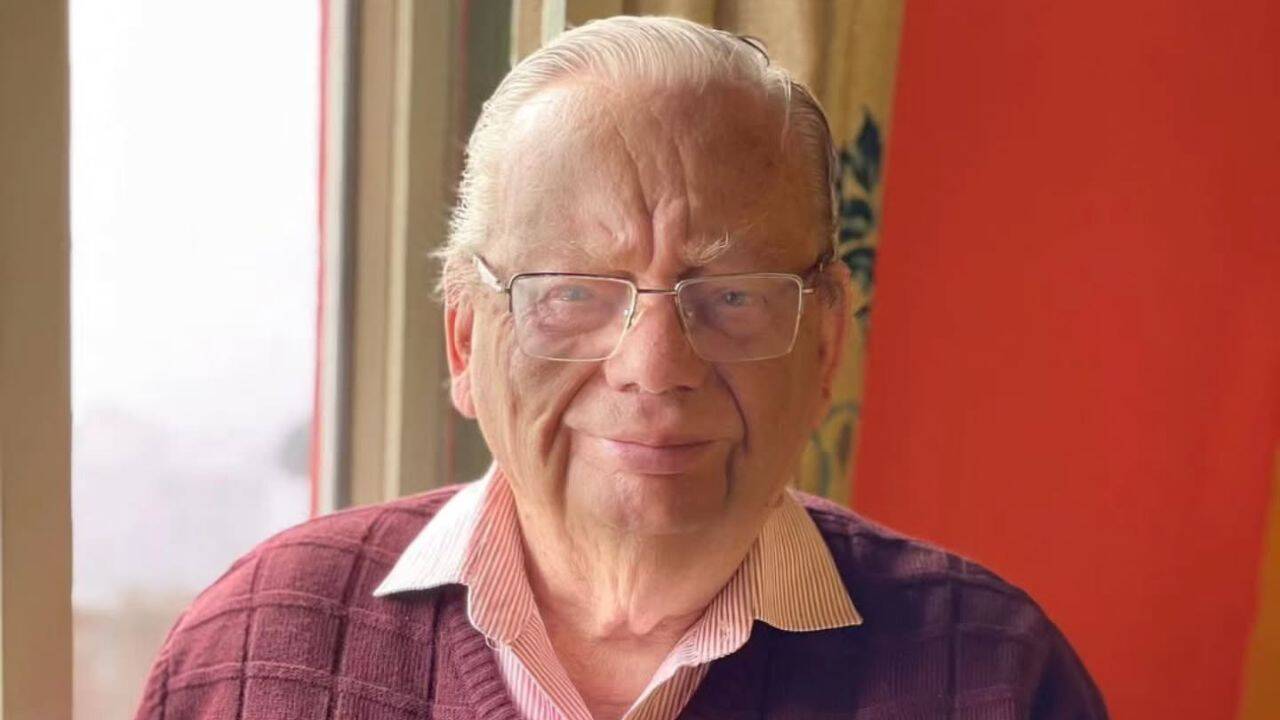
Before the stories, before the books, before the generations of Indian children who grew up with his words, there was a small boy in the hills. Ruskin Bond lost his father when he was 10 years old. It is a loss that shaped everything that came after, the sensitivity with which he writes about loneliness, the tenderness in his descriptions of human connection, and the way his stories always seem to understand what it feels like to be searching for something you cannot quite name. He did not talk about it with drama or self-pity. He rarely does. But it is there, in the foundation of everything he has built over a lifetime of writing about what it means to be alive and to love people who do not always stay.
‘I Was What You Call a Stalker’
Karishma Mehta asked him directly, “Have you ever been heartbroken?” Ruskin Bond smiled. And then he answered with the kind of honesty that only someone at complete peace with their past can offer. “Yes,” he said. “A few times. I was a lovesick character on more than one occasion.” He talked about London. He was 19 or 20. There was a Vietnamese girl, someone who had the unusual gift of reading fortunes in tea leaves. When you finished your cup of tea, she would study what remained at the bottom and tell you what she saw in your future. Young Ruskin, hopelessly smitten, asked her to marry him.She looked into his cup. She studied the leaves carefully. And then she said, “Ruskin, the tea leaves don’t say when you’re going to get married.” That was her way of saying no. But young Ruskin Bond was not deterred. He kept following her around. He was persistent. He was devoted. He was, as he admitted with complete good humour seventy-something years later, “what you call a stalker.” “Until she finally made it clear,” he said, “that she didn’t want to be stalked.” The room laughed. Ruskin Bond laughed. And yet somewhere in that story told so lightly, with such affectionate distance, is the echo of a young man who felt things very deeply and channelled all of that feeling into decades of writing that captured the ache of unrequited love better than almost any other Indian author ever has.
On love, marriage, and the generation that does not want to be tied down
From his own lovesick youth, the conversation moved to the young people of today, and Ruskin Bond had something thoughtful and refreshingly non-judgmental to say about them. He has noticed, he said, that young people with westernised educations are not particularly keen on getting married or having children. At least not yet. At least not now. “Maybe later they will, or they’ll come under family pressure,” he said. “But they all say no, we want to concentrate on our careers, on what we want to do in life. We don’t want to get tied down.”He observed that they are thinking very much in terms of their own passage through life. Their own journey. Their own becoming. And then he said something that surprised many who might have expected a man of his generation to disapprove. He called it an “understandably selfish point of view.” Not a condemnation. Not a lament. An understanding. A recognition that wanting to know yourself before you take on the weight of building a family is not a moral failure; it is simply a different way of moving through life. From a man who spent his own youth following a Vietnamese girl around London and writing poetry about feelings she did not return, this generosity toward the choices of the young felt entirely earned.
The man the mountains made
Ruskin Bond has lived in the hills for most of his life. Not because he had nowhere else to go, but because the mountains gave him something no city could. Quiet. Slowness. The kind of space in which a person can actually think, actually feel, actually sit with a cup of tea and notice the mist moving through the trees outside the window.His home in Dehradun is where his books have been written. Where his characters have been born and lost and found again. Where a boy who lost his father at ten became one of the most gentle, humane, and widely loved voices in Indian literature. He has a new book, ‘Laugh With Me,’ which carries the same quality that has always defined his writing. The ability to find warmth in small things. To make you feel, while reading, that you are sitting across from someone who genuinely understands what it means to be human, complicated, tender, and always trying.
What stays with you
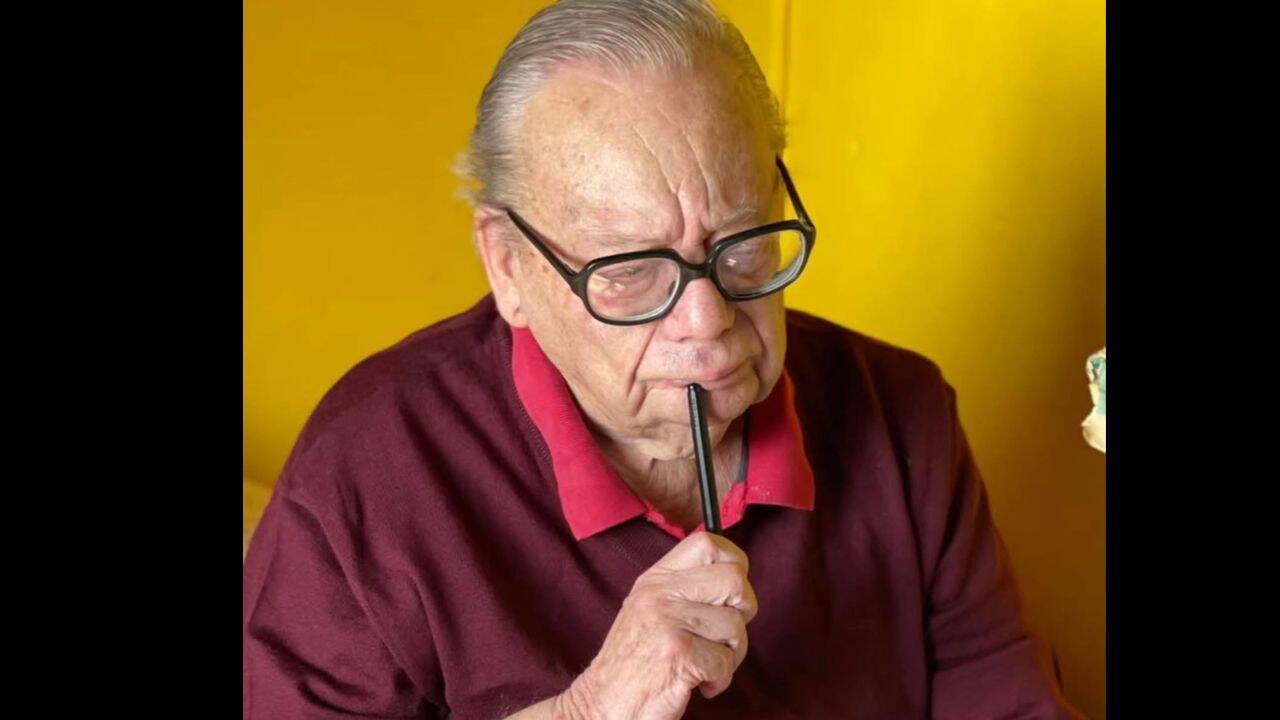
An hour with Ruskin Bond on the Humans of Bombay Show is not a conventional celebrity interview. There are no revelations designed to go viral. There are no carefully managed moments of vulnerability calculated for maximum emotional impact. There is simply a man who has lived fully, loved genuinely, lost without bitterness, and spent his whole life finding the precise words for the things most of us feel but cannot say. He was a lovesick stalker in London at 19. He has been heartbroken more than once. He never married. He chose the mountains. He chose the stories.And in choosing them for all of us, across all these decades he gave an entire country a gentler, warmer, more human way of seeing the world. The tea leaves, it turns out, were right. He was not going to get married. He was going to do something else entirely.