









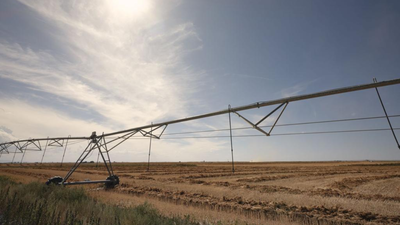
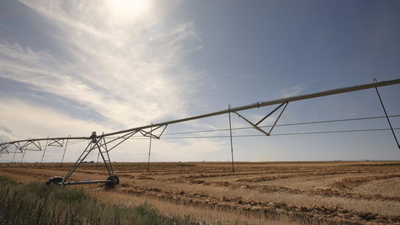
An Idaho family that has farmed 1,000 acres near the Snake River for three generations has sued the state after an emergency water order forced them to shut off their irrigation pumps. The order dried their fields and destroyed their crops. Jerry Bingham and his family have grown wheat, alfalfa, and potatoes near Blackfoot since 1950. They filed a lawsuit in the Seventh Judicial District Court of Idaho in Bingham County. The lawsuit challenges an order from the Idaho Department of Water Resources (IDWR) that stopped groundwater pumping across large areas of the Eastern Snake River Plain. The Binghams are represented by the nonprofit public interest law group Pacific Legal Foundation. They argue that state regulators broke Idaho’s long-standing water priority laws and effectively took their private property rights without paying them.
Emergency order cuts off groundwater
The dispute began with an administrative order from IDWR Director Matthew Weaver. Under the order, groundwater users in the Eastern Snake River Basin with water rights dated after 1900 had to stop pumping unless they were part of an approved mitigation district or had their own mitigation plan. The state agency issued the shutdown because water levels in the underground aquifer were falling. It also wanted to meet demands for water from senior surface-water users, including canal companies farther downstream. The Binghams have a 1950 water right. That makes their right older than those of many water users in the region, but newer than surface-water claims from the 19th century. Idaho follows a “first in time, first in right” system for water. Under this system, when there is not enough water, regulators are supposed to limit junior water rights in reverse order of priority. They are not supposed to issue broad bans based simply on historical dates. According to court documents filed by the Pacific Legal Foundation, the state’s blanket 1900 cutoff ignored water rights with dates between older and newer claims. The foundation said this unfairly grouped 1950 water-right holders like the Binghams with people who received their water rights much more recently.
Crops fail as soil dries out
The effect on the Bingham family farm was immediate and serious. After the state ordered the irrigation pumps to be turned off, the soil across their 1,000 acres dried during the height of the growing season. Important food crops, including wheat and alfalfa, dried up in the heat. The family said they could no longer plant crops, putting their farming business, which has lasted for generations, at risk of permanent failure. Since the first shutdown order, state regulators have allowed the Binghams to turn on their irrigation pumps only once, during a short period in April 2026. The family submitted five different mitigation plans to IDWR. They hoped to legally resume irrigation while still meeting the state’s water conservation goals. Regulators rejected all five proposals. With the restrictions continuing and their fields empty, the family decided to sue the state.
Constitutional challenge over property rights
In their petition for judicial review and request to pause enforcement, the Binghams argue that Idaho water rights are real property protected by both the state and federal constitutions. The lawsuit says IDWR unlawfully took their property by denying them access to their established 1950 water allocation without following the state’s required curtailment procedures or paying them for their financial losses. Pacific Legal Foundation Senior Attorney Damien Schiff said the case involves more than whether one farm can survive. He said it raises larger questions about government power and the future of farming. “The case is about more than one family’s farm. It asks whether the institutions governing scarce resources will give people the certainty to invest, steward those resources responsibly, and produce an abundant future, or whether arbitrary decisions will make all three harder,” Schiff said in a public statement released by the foundation.
Broader struggle over Snake River Basin
The lawsuit in Bingham County is part of a growing conflict between groundwater users and surface-water users across Southern Idaho. The Eastern Snake Plain Aquifer covers nearly 10,000 square miles. It supplies both deep farm wells and the Snake River. Years of drought, changing rainfall patterns, and more efficient irrigation methods have reduced the amount of water flowing back into the underground aquifer. As a result, downstream canal operators with 19th-century water rights have called for state regulators to step in. In September 2025, a state district judge approved a settlement in a related water dispute. The agreement required some junior groundwater users to stop irrigation for the rest of that season, according to an official news release from the Idaho Department of Water Resources. However, individual family farms that did not join large groundwater districts were left without administrative options when state shutdown orders took effect. The Binghams are asking the court to stop enforcement of the state’s pumping ban on their property and restore a clear, legal system for deciding water rights across Idaho. The case remains pending in the Seventh Judicial District Court.