










In 1816, a young doctor from Barbados carried out blood transfusion experiments that challenged a dangerous medical assumption and helped point the field towards a safer future. ‘John Henry Leacock’ used dogs and cats to investigate whether blood from one animal could successfully sustain another, at a time when doctors knew little about compatibility between donors and recipients. His experiments showed that blood could not simply be transferred across species and expected to work in the same way. Yet Leacock’s name largely disappeared from the story of transfusion medicine. According to a historical study published in The BMJ(British Medical Journal), his planned work came before better known experiments that helped establish transfusion as treatment. His findings also led him to recommend using human blood for human patients, decades before doctors understood blood groups or could routinely predict whether a transfusion would succeed.
How did John Henry Leacock’s blood transfusion experiments challenge animal blood
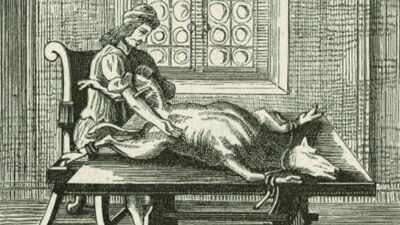
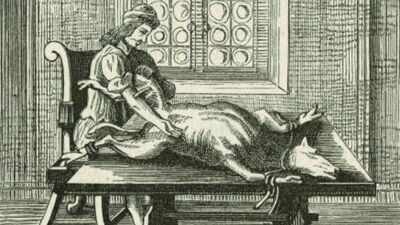
According to the study, Leacock was the son of a sugar planter from Barbados and studied medicine in Edinburgh. He was among the early researchers who experimented with blood transfusion during the early 19th century, long before the discovery of blood groups made the procedure routinely practical. The idea of transfusion itself was not new. Doctors in the 17th century had attempted to transfer animal blood into humans, but these efforts produced disastrous results. The failures were serious enough that transfusion as a medical practice was largely abandoned for around 150 years.By the early 1800s, however, the subject had not completely disappeared. Sporadic experiments involving animal blood continued, but there had been little systematic research into one crucial question that ‘whether the blood of one species could safely replace that of another.’ Leacock decided to investigate the problem in a more organised way. In 1816, while in Edinburgh, he carried out a planned series of experiments involving dogs and cats. His work compared the effects of transferring blood between animals of the same species with the effects of using blood from a different species. The results led him towards a remarkably important conclusion. Blood from an animal of the same species could sustain life, while blood from a different species appeared unable to achieve the same purpose.
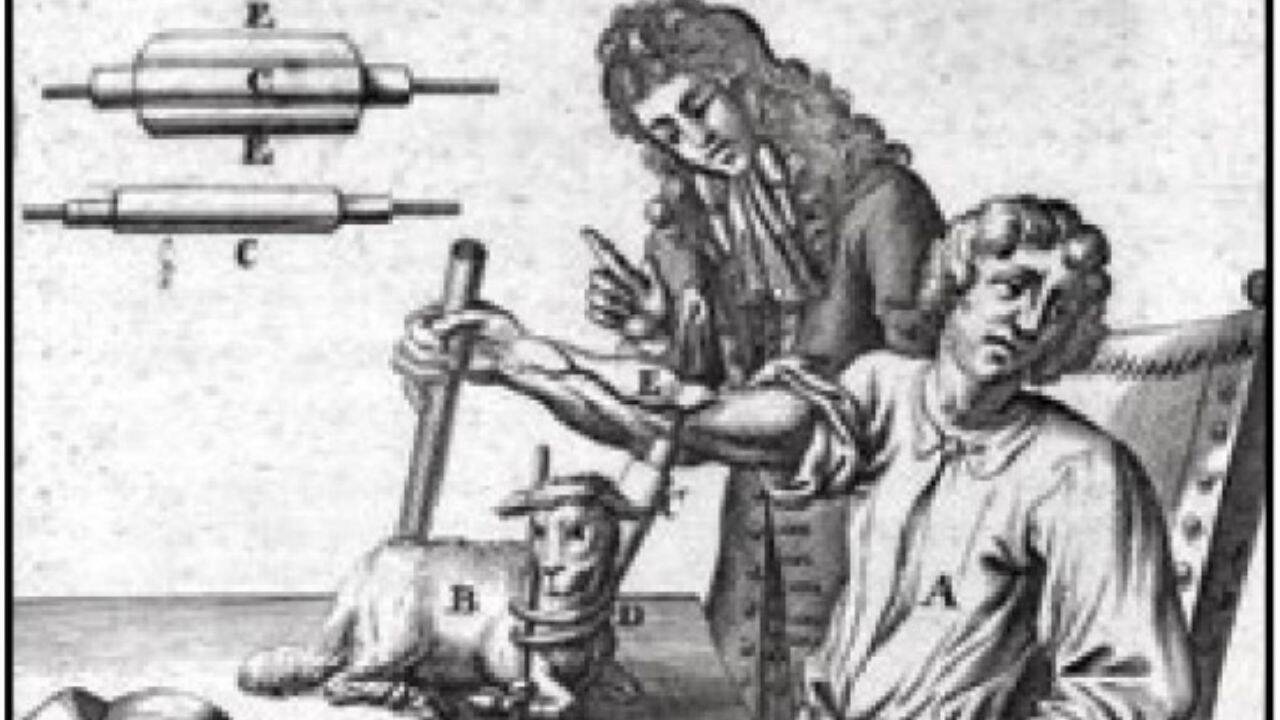
Attempt at blood transfusion from lamb to man, depicted in an illustration dating from 1705. Image Credit: Wellcome Library, London
His experiments revealed the importance of species compatibility
Leacock did not know why this happened. At the time, modern knowledge of blood groups and immune reactions did not exist. The discovery of blood groups was still nearly a century away, meaning doctors had no reliable way of predicting whether a donor’s blood would be compatible with that of a recipient. Nevertheless, his experiments revealed a basic principle through observation. Donor and recipient mattered. Blood was not simply a universal fluid that could be moved from one body to another without consequences. According to the study, Leacock’s 1816 experiments established the need for compatibility between species and led him to recommend transfusion between humans rather than the use of animal blood in human patients.That recommendation was particularly significant because earlier attempts to use animal blood had helped create the impression that transfusion itself was unreliable or dangerous. Leacock’s work suggested that the problem was not necessarily the idea of replacing lost blood, but the source of the blood being used. In simple terms, his experiments helped separate two questions that ‘whether transfusion could work at all,’ and ‘whether the wrong kind of blood was being used.’
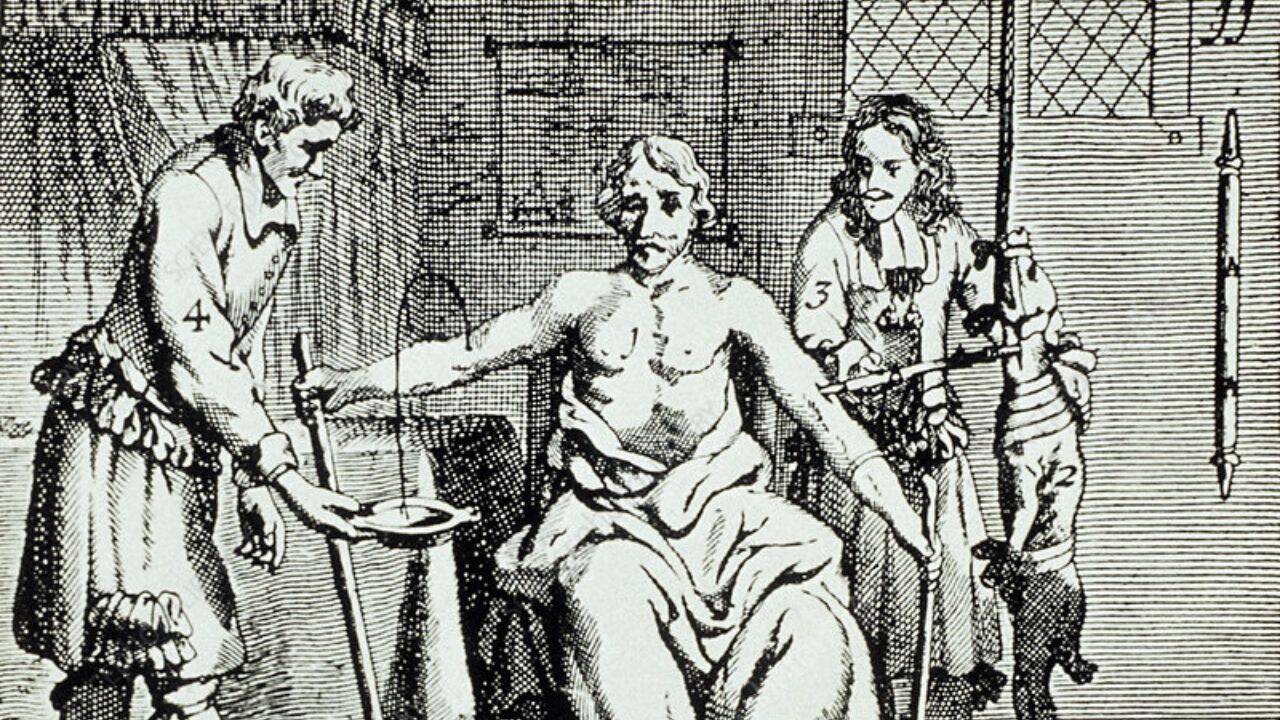
Animal-human blood transfusion, 1670s. Image Credit: National Library of Medicine
Why did human blood become the more logical choice
Leacock’s findings pointed towards an obvious but medically important alternative. If animal blood could not properly replace the blood of another species, then humans who needed transfusions should receive blood from other humans. The study notes that Leacock advocated the transfusion of human blood in cases of severe bleeding and blood deficiency. This idea came at a time when the medical use of transfusion was still far from established. His work also influenced the wider revival of interest in transfusion. ‘James Blundell,’ the London physician often credited with introducing blood transfusion into medical practice, acknowledged inspiration from two colleagues from Barbados, Leacock and Goodridge. Of the two, Leacock was regarded in the study as the more important figure. Blundell went on to conduct extensive animal research and publish widely on transfusion, helping to establish it as a possible medical treatment during the first quarter of the 19th century.
A promising medical career returned to Barbados
Despite the importance of his work, Leacock did not become a famous figure in the history of medicine. The study explains that he returned to Barbados after his research and published nothing further on transfusion. That may help explain why his contribution became largely forgotten while other researchers received greater recognition. Medical history often remembers the figures whose work was widely circulated, developed or turned into regular practice. Leacock’s experiments were important, but his direct involvement in the subject appears to have ended soon afterwards. His timing was also difficult. Even human-to-human transfusion remained uncertain for many decades because doctors still did not understand blood compatibility. Some transfusions succeeded, while others failed, without anyone being able to explain or predict the difference. It was only with the later discovery of blood groups that doctors gained a scientific basis for matching donors and recipients and making transfusion far safer.
Leacock’s forgotten work changed the direction of transfusion research
John Henry Leacock’s experiments did not provide all the answers, but they helped move transfusion research away from a dangerous path. His work showed that animal blood could not simply be treated as a replacement for human blood and that compatibility between donor and recipient was a central issue. His 1816 experiments were among the first planned studies to establish the importance of species compatibility. That finding helped support the shift towards human-to-human transfusion, even though the science needed to make the practice reliably safe would take many more decades to develop. For Leacock, the path began with dogs and cats in Edinburgh and a question about whether blood could cross the boundaries between species. His answer, reached through systematic experiments, helped expose the limits of animal blood transfusion and pointed medicine towards a principle that would become essential to the future of the field.