










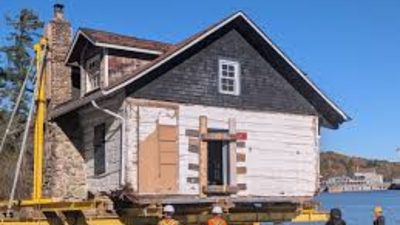
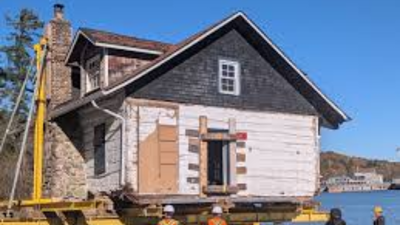
An 1834 Métis home built near the Canadian shoreline is beginning a new chapter after being moved across Georgian Bay. Its private owner sold the historic building for just $2 to help create a heritage museum. Known as the Labatte House, the building weighs about 75,000 pounds. It was placed on a special barge at Thunder Beach, Ontario, and carried across the water to Balm Beach. The move aims to protect what is believed to be Ontario’s oldest surviving historic Métis home. Louis-George Labatte and his family built the timber and stone house in 1834. It offers a direct link to the early history of settlement around the Great Lakes. The Métis Nation of Ontario organised the move to protect the building from damage caused by age or possible redevelopment of the original site.
Navigating the shoreline journey
Moving a historic building weighing 75,000 pounds across open water required careful planning and special equipment. Moving crews used hydraulic jacks and steel beams to lift the single-storey house from its original foundations. Once the house was raised, the crew moved it onto a heavy-duty transport trailer. They then drove it onto a large barge waiting near the shore at Thunder Beach. The barge carried the building across Georgian Bay towards Balm Beach. Weather conditions along the bay needed close attention throughout the journey. Strong winds and rough waves could have affected the balance of the barge and put the building at risk. The vessel reached Balm Beach safely, where workers unloaded the house for transport over land.
Securing a cultural haven
The decision to move the house was driven by limits at its original location. Thunder Beach had offered a suitable home for the Labatte family in 1834, but the privately owned site lacked enough space and facilities for public visits, parking and long-term preservation work. Recognising the building’s historical importance, the private owner agreed to sell it to the Métis Nation of Ontario for the symbolic price of $2. The house was moved to a 39-acre property at 159 Balm Beach Road East. The larger site offers space for restoring the land, creating walking trails and building modern educational facilities around the historic home. Saving the house is about more than protecting an old building. Organisers say physical reminders of early Métis settlement are rare across the Great Lakes region. “We cannot replace this. This is a living testimony to the fact that the Métis here in Ontario existed, and that we still exist,” said Mitch Anderson, a representative speaking on behalf of the preservation project, in comments reported by news outlet Collingwood Today.
Establishing the museum site
Workers have placed the house on a temporary support frame at the Balm Beach property. Plans call for a permanent concrete foundation to be poured in spring 2027. After that, restoration work will focus on the timber frame, roof and stonework inside the building. Once the work is complete, the house will become the main feature of a planned museum and cultural centre dedicated to Indigenous and Métis history in the region. Exhibits are expected to include 19th-century trade tools, household objects and historical documents that tell the story of the Métis community around Georgian Bay. The Métis Nation of Ontario has confirmed plans to apply for official municipal heritage designation through the Township of Tiny once the house is placed on its permanent foundation. This status would offer legal protection against future demolition or changes to the building’s structure. Community members and descendants of the Labatte family gathered at the new site in Balm Beach to mark the house’s safe arrival. Restoration teams expect early work on the site and repairs to the building’s exterior to continue over the coming months.