




In 1980, Paul Newman and his friend A.E. Hotchner were not setting out to build a food company. They were making salad dressing at home and handing bottles to friends as Christmas presents. The dressing proved popular enough that people began asking where they could get more. Two years later, the experiment became Newman’s Own, with Newman deciding that the profits should be given away rather than kept by the business. What began with a familiar kitchen product gradually developed into a wider philanthropic enterprise. According to Newman’s Own Foundation, more than four decades later, the company says more than $600 million has been donated to charitable causes, while its founder’s name remains closely tied to the idea behind the business.
Newman’s Own turned an unexpected profit into a charitable mission
Newman and Hotchner made salad dressing for friends around 1980, initially treating it as a holiday gift rather than the beginning of a commercial venture. Friends wanted to buy the dressing, and the pair eventually decided to put it on the market. Newman’s Own officially launched in 1982, and the first year produced more than $300,000 in profit.Newman then made a decision that would define the company. Rather than treating the unexpected earnings as personal income, he and Hotchner chose to give the money to charitable causes. The phrase associated with that decision was simple: “Let’s give it all away to those who need it!”The arrangement became the foundation of the business model. Consumers bought the products, the company generated profits, and those profits were directed towards causes rather than building personal wealth for Newman.
Paul Newman’s career reached beyond Hollywood into racing and social causes
By the time Newman’s Own appeared, Newman was already one of Hollywood’s best-known actors. His career had begun on Broadway in 1958 with Picnic, where he also met Joanne Woodward and became his wife.Reportedly, film success followed. Newman appeared in more than 50 films, including The Hustler, Hud, Cool Hand Luke, Butch Cassidy and the Sundance Kid, The Sting, Slap Shot and Road to Perdition. His performance in The Color of Money earned him the Academy Award for best actor in 1987. Away from acting, he developed another serious interest in motor racing. His public life also extended into political and social causes. Newman attended the March on Washington in 1963 and spoke publicly on civil rights, women’s rights and gay rights. He also campaigned against the nuclear arms race and was appointed by President Jimmy Carter to a United Nations General Assembly session concerning nuclear disarmament.The charitable work that later became inseparable from his name therefore developed alongside an already established public career.
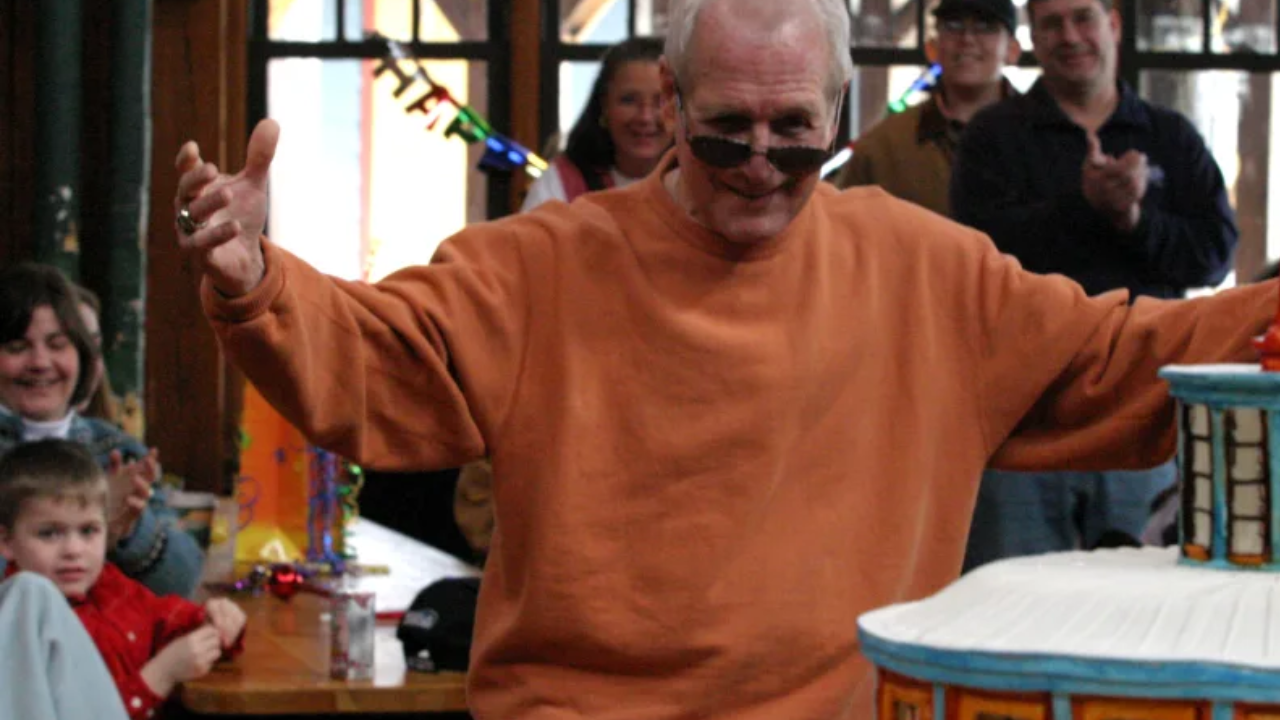
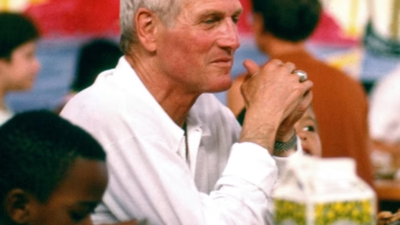
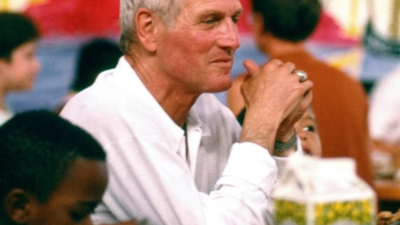
PC: Newman’s Own
The camp gave the philanthropy a physical home
Newman’s interest in helping children became particularly visible in 1988, when the Hole in the Wall Gang Camp opened in Connecticut. The camp was created for children with serious illnesses. Its first year brought 288 children through its programme, with the setting designed to give them an ordinary camp experience away from hospitals and medical routines.The project eventually became part of SeriousFun Children’s Network, the organisation connected to Newman’s broader philanthropic legacy. The camp also illustrated a feature of his giving that went beyond writing cheques. His charitable interests increasingly involved creating organisations and programmes that could operate over time.
How his daughter helped expand the food business
The Newman family became involved in the food company in other ways too. In 1993, Newman’s daughter Nell Newman founded Newman’s Own Organics with her father and business partner Peter Meehan. The venture broadened the range of food associated with the Newman’s Own name. Paul Newman’s daughter Melissa Newman was also involved creatively, designing the American Gothic-inspired label featuring Paul alongside Nell.By then, the original salad dressing experiment had become something much larger. The business included a growing range of products, while its profits continued to be linked to charitable giving.
A foundation was created before Newman’s death
Newman established Newman’s Own Foundation in 2005, creating a structure intended to preserve the charitable purpose of the business beyond his lifetime. He died on 26 September 2008, aged 83. The foundation was designed to continue distributing money generated through Newman’s Own. The basic principle established in the early 1980s remained intact: the commercial side of the business existed to generate money that could be directed towards good causes.
A legal change helped protect the model
The unusual relationship between a commercial food company and a private foundation later required a different legal framework. In 2018, the Philanthropic Enterprise Act was passed, allowing a for-profit company to be entirely owned by a private foundation and operate with the purpose of giving its profits to charitable causes.For Newman’s Own, the change provided a legal structure through which the company could continue the model Newman had established decades earlier. The business was no longer simply a celebrity-branded food company. Its ownership and purpose had been structured around philanthropy.
More than $600 million had been donated by 2022
Newman’s Own marked its 40th anniversary in 2022 and reported that more than $600 million had been donated to charitable causes. The foundation’s work was also being concentrated around areas connected to children facing adversity. Its priorities included nutrition education and school food, Indigenous food justice, and SeriousFun Children’s Network.That represented a more defined focus than the broad charitable giving associated with the company’s early years. The money raised through products could support programmes dealing with food, children and community needs in different ways.The scale of the giving is striking partly because of how ordinary the original product was. Salad dressing was the starting point. The business model that grew around it became the mechanism for distributing hundreds of millions of dollars.