









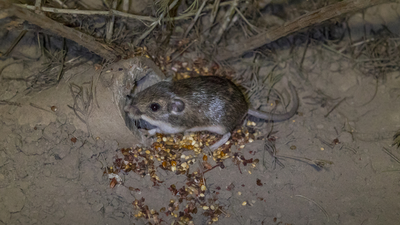
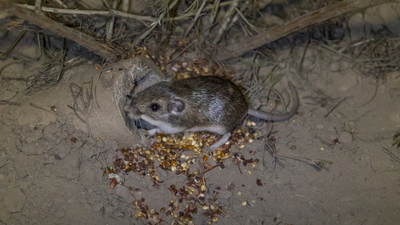
A mouse once written off as extinct is now being given a fresh chance to survive in the wild. The Pacific pocket mouse, a tiny mammal native to Southern California, was rediscovered in 1993 after being considered extinct for decades. Since then, conservationists have worked to rebuild its numbers through breeding, habitat restoration and carefully planned releases. According to the San Diego Zoo Wildlife Alliance, which has led a conservation programme for the species since 2006, more than 530 Pacific pocket mice have now been reintroduced into native habitats. In 2026, the programme reached another milestone with the establishment of a third reintroduced population at Camp Pendleton.
A tiny animal with a difficult history
The Pacific pocket mouse is not much to look at in size. It measures around five inches from nose to tail and weighs roughly as much as three pennies. But its disappearance from Southern California had much larger consequences. For decades, scientists believed the species had vanished completely from its native range. Then, in 1993, a small surviving population was found in Orange County.The rediscovery brought relief, but it also showed just how precarious the species had become. The Pacific pocket mouse was placed under the federal Endangered Species Act, and conservation efforts shifted towards preventing another disappearance. Today, three original wild populations remain, alongside the populations re-established through conservation efforts.
Conservation work began in 2006
The San Diego Zoo Wildlife Alliance launched its Pacific Pocket Mouse Conservation Program in 2006. The goal was not simply to keep the remaining mice alive, but to find a way to rebuild populations in suitable parts of their historic range. That has required a mix of approaches. Scientists have worked on genetics, animal behaviour, veterinary care, habitat restoration, population modelling and long-term monitoring.A conservation breeding programme was added in 2012. It was designed to produce mice that were not only genetically diverse, but also capable of surviving outside human care. The effort has since raised more than 900 Pacific pocket mice, with over 530 released into protected native habitats. The re-established populations have also welcomed nearly 700 additional mice, according to the Alliance.
The mice have to learn how to survive
Releasing a captive-bred animal into the wild is not as simple as opening a cage. Before Pacific pocket mice are considered ready for release, they go through behavioural training. The animals are taught to recognise predators, including threats from above, and are exposed to competing rodent species. They are also assessed on practical skills such as finding food and constructing burrows.This preparation matters because the aim is to establish animals that can function independently once they are back in their natural habitat. The training programme has become an important part of the Alliance’s reintroduction strategy.
Three reintroduced populations
The first reintroduced population was established at Laguna Coast Wilderness Park in Orange County in 2016. A second followed at Marine Corps Base Camp Pendleton in 2024. Then came the latest milestone. In 2026, conservationists established a third reintroduced population at North San Mateo, a training area within Marine Corps Base Camp Pendleton. The new population included Pacific pocket mice from the conservation programme and marks another step in expanding the species beyond the few original populations still surviving in the wild. The project involves the San Diego Zoo Wildlife Alliance, US Fish and Wildlife Service, California Department of Fish and Wildlife, US Geological Survey and Marine Corps Base Camp Pendleton.
Why such a small mouse matters
The Pacific pocket mouse’s importance goes beyond its size. The animals collect and carry seeds in their cheek pouches, dispersing them across their habitat. They also store seeds in underground chambers, where some can eventually sprout into new plants.Their burrows can extend below the soil surface and include several chambers and entrances. Digging helps aerate and stabilise the soil while contributing to nutrient cycling. For that reason, the species is considered an ecosystem engineer. Restoring its populations can therefore help restore ecological processes that were lost when the mice disappeared from parts of their range.
A new phase of recovery
The conservation programme has also moved beyond simply increasing numbers. In 2026, scientists began genetic rescue efforts aimed at improving genetic diversity in an isolated population at Camp Pendleton. Nine Pacific pocket mice were introduced into the existing population, with researchers using population estimates and modelling to determine the release strategy. The team will monitor the animals and look for evidence that their genes are being passed to the next generation. After decades of being presumed extinct, the Pacific pocket mouse now has multiple reintroduced populations and a growing conservation programme behind it.The story is still far from over, but the progress is striking: from a tiny population rediscovered in 1993 to more than 530 mice returned to native habitats and a third reintroduced population established in 2026.