









In 1998, a Tucson resident named Brad Lancaster took a saw to the curb outside his home and cut six openings into it, creating small channels to divert rainwater off the street and into the space between the sidewalk and the road. Cutting into a public curb without permission was against city rules, and Lancaster carried out the work quietly, often early on Sunday mornings to avoid drawing attention. City officials remained unaware of what he had done for roughly three years, until Lancaster eventually told them himself, since the results of his experiment had become too striking to keep quiet. What began as one man’s unauthorised backyard project would go on to reshape how an entire city thinks about rainwater, eventually leading Tucson to legalise, fund and formally require water harvesting practices across the city.
Why Brad Lancaster started cutting curbs without permission
Tucson sits in the Sonoran Desert and receives only around 11 inches of rainfall a year, making every drop of water a valuable resource in a region long shaped by scarcity. Lancaster, who lived in the Dunbar Spring neighbourhood just north of downtown Tucson, wanted to capture rainwater running off the street and use it to irrigate food-bearing trees and native desert plants along the roadside, rather than letting it disappear into the city’s storm drains as wasted runoff.Since existing city rules did not allow residents to alter public street curbs, Lancaster’s solution technically broke the law. He proceeded anyway, cutting openings that let stormwater flow directly from the street into planted basins along the sidewalk, allowing mesquite trees, native shrubs and other vegetation to take root and grow using water that would otherwise have simply run off into the sewer system.
How one illegal project led to real environmental change
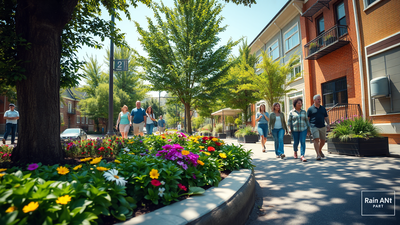
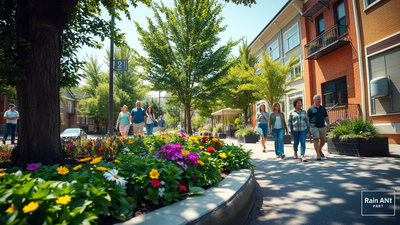
Over time, the results of Lancaster’s curb cuts became difficult to ignore. Trees fed by the diverted rainwater grew into a shaded canopy along his street, and studies of the area later found that soil temperatures in these shaded, water-fed basins ran noticeably cooler than the exposed pavement nearby. According to an account published by the University of Arizona’s Water Resources Research Center, the multiple benefits of these small, low-cost interventions eventually became widely recognised among local water officials, including reduced demand for treated drinking water, better water quality, reduced nuisance flooding and the creation of habitat within the city.Neighbours in Dunbar Spring began installing similar curb cut basins of their own, further transforming the character of the streets in the area. What had started as one resident’s individual, technically illegal project gradually became a visible, community-wide demonstration of how rainwater could be put to productive use rather than treated purely as a drainage problem to be moved away as quickly as possible.
How Tucson eventually legalised and expanded water harvesting
Rather than penalising Lancaster once his curb cuts became known, city officials began working with him to formally legalise the practice. According to city ordinance records, Tucson went on to adopt one of the first ordinances of its kind in the country requiring new commercial developments to meet at least half of their landscaping water needs through harvested rainwater rather than treated municipal supply. The city also began offering rebates to residential homeowners who installed similar streetside water harvesting basins on their own properties.This shift eventually grew into a dedicated municipal programme. According to the City of Tucson’s Climate Action Hub, the city’s Green Stormwater Infrastructure programme, known as Storm to Shade, was formally approved to install and maintain water harvesting features across public land throughout Tucson, building directly on approaches that had already been developed and tested informally by residents and community groups over the preceding decades.
Why Tucson’s example still matters for other cities
What makes Tucson’s story notable is not just the environmental outcome, but the path it took to get there. A change that eventually became official city policy first had to prove itself through years of unauthorised, small scale experimentation, carried out quietly by a private citizen willing to risk breaking a minor city rule in pursuit of a larger environmental goal. City officials have since credited this grassroots groundwork directly, describing municipal programmes today as a formal continuation of work that began below the radar years earlier.As more cities across the arid Southwest grapple with prolonged drought and rising demand for water, Tucson’s experience offers a clear example of how small, unofficial interventions can sometimes reshape formal city policy when the results speak clearly enough for themselves. What began as a handful of illegal cuts in a residential curb has since become a documented, institutionalised approach to managing stormwater, one that other water-stressed cities have increasingly looked to as a practical model worth studying.