








You must have heard the phrase: ‘Hi honey, I’m home.’ But in Australia, honey itself has found its way home this time after devastating wildfires. Scientists at the University of Western Australia (UWA) have analysed honey more closely to understand its production and how the entire process could have been disrupted by the devastating Black Summer bushfires of 2019–2020. On Australia’s Kangaroo Island, catastrophic wildfires affected wildlife, plant life and large stretches of vegetation, with approximately 211,000 hectares of the island burned. Years later, researchers have found another way of understanding the changes brought about by the fires, this time through the beloved and sweet honey.According to a report dated 2 November 2026, scientists from the University of Western Australia (UWA) analysed 120 honey samples collected from Kangaroo Island between 2014 and 2026, examining their chemical composition to understand how the island’s changing vegetation has influenced the nectar available to honeybees. Their findings, published in the Plant Biosystems journal, reveal that one previously recorded honey type almost disappeared from post-fire harvests, while newer chemical signatures emerged as different plants became available to bees. The research also suggests that honey could eventually help scientists monitor the recovery of vegetation in landscapes affected by major wildfires.
The fires that changed Kangaroo Island’s landscape
Located off the coast of South Australia, Kangaroo Island is known for its distinctive natural environment and its protected population of Ligurian honeybees (Apis mellifera ligustica). It is recognised as the world’s oldest bee sanctuary, with the population protected through legislation and biosecurity measures since 1885. The island’s geographical and genetic isolation has also helped protect its honeybees from the spread of the Varroa mite, a parasite that poses a serious threat to honeybee colonies.However, the island experienced one of the most destructive wildfire events in its recent history during Australia’s Black Summer bushfire season. The fires affected large areas of vegetation that provided flowering plants and nectar for honeybees, disrupting their foraging patterns and reducing honey production.According to Kangaroo Island Beekeepers representative Sharon Simons, beekeepers lost hives during the fires, and honey production also deteriorated significantly. She explained that vegetation can take between seven and 10 years to recover sufficiently to provide the nectar required for a quality honey crop. This meant that the effects of the fires continued to be felt well beyond the period during which the flames were still active.
What 120 honey samples revealed?
To understand how the fires had influenced honey production, the researchers examined samples collected across different years, including those harvested before and after the fires. Of the 120 samples, 100 came from harvests between 2014 and 2024, while another 20 were collected in 2026.The team used a technique called high-performance thin-layer chromatography (HPTLC), which allowed them to examine the organic compounds present in honey and compare their chemical patterns. Honey contains more than just sugars. It also carries compounds originating from the nectar collected by bees from flowering plants. The combination of these compounds creates what researchers describe as a nectar signature, which can help identify the floral sources contributing to a particular honey.
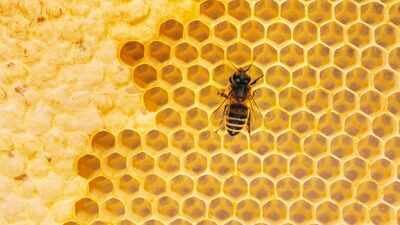
(Image credit: Canva)
By comparing these chemical fingerprints, the researchers identified 13 different honey groups on Kangaroo Island. However, only four groups had enough samples to establish reliable and reproducible fingerprints, while the remaining groups required further investigation.The researchers also found that honey’s relatively high electrical conductivity reflected the dominance of eucalyptus species in the local vegetation. This could eventually help distinguish genuine Kangaroo Island honey from products being sold under the same geographical name without coming from the island.
An older honey type disappeared as new ones emerged
One of the most significant findings concerned the differences between honey harvested before and after the Black Summer fires. The researchers found that some honey types continued to appear in harvests despite the destruction of vegetation, suggesting that certain flowering sources had survived because they were located in less severely affected areas.However, another previously recorded honey type, identified as Group 4 in the study, became almost entirely absent from post-fire harvests. Although it was still recorded for a period after the fires, it stopped appearing in harvests after 2021.Researchers believe this honey may have originated from flowering vegetation in the western part of Kangaroo Island, where the fires had caused extensive damage. Since nectar production depends on mature, flowering vegetation, the loss of established plants could have affected the availability of this particular source for bees.Alongside this, the researchers identified newer honey types that appeared in the post-fire period. What was particularly fascinating was the discovery of a honey signature associated with Kangaroo Island’s Narrow-leaf Mallee (Eucalyptus cneorifolia), which appeared in the 2026 samples.The study found that the 2026 honey samples generally showed higher antibacterial activity than older stored samples. However, this does not mean that the new honey type appeared simply because of the fires. Changes in the areas where beekeepers placed their hives and the availability of different flowering plants could also have influenced the results. The researchers also noted that the freshness of the samples and their processing conditions could have contributed to the differences in antibacterial activity.
Could honey help track the recovery of forests?
Since bees collect nectar from flowering vegetation and carry its chemical compounds back to their hives, the composition of honey can provide clues about the plants available in their surrounding environment. Moreover, the continued presence of certain chemical signatures, alongside the appearance of new ones, could help researchers understand which nectar sources are becoming available again and how the vegetation is changing.For Kangaroo Island’s beekeepers, the findings have provided an encouraging picture of what is now happening years after the fires. While the loss of vegetation has continued to affect honey production, the emergence of new nectar signatures indicates that bees are accessing more floral resources as the landscape continues to change.