








In 2023, when a mustard oil enterprise was proposed in Hussaini village in Uttar Pradesh’s Mathura district, some families were reluctant to let women work outside their homes. Three years later, five women from the village are managing the business, operating machinery, maintaining accounts and selling their products across parts of Uttar Pradesh, Haryana and Rajasthan.The enterprise, set up with an investment of Rs 14 lakh, has recorded more than Rs 24 lakh in cumulative sales since commercial operations began in November 2023, according to a report by The Better India. The amount represents sales revenue, not profit. For the women involved, the change has also meant earning their own money, contributing to household expenses and gaining experience in work they had not previously done.
How the mustard oil unit began
According to the official website of SM Sehgal Foundation, the enterprise was established in Hussaini village, in Mathura’s Chhata block, through the Shri Ji self-help group (SHG). The idea followed a survey that identified local demand for mustard oil. The Foundation worked with the women to develop a business using a product already widely consumed in the area. The unit required an investment of Rs 14 lakh. According to the latest report, Rs 8 lakh came through the Foundation’s project supported by HDFC Bank Parivartan, while the community contributed Rs 6 lakh, largely in kind.The proposal was not immediately accepted by everyone in the village. Chhaya Singh, a field specialist in data and documentation at S M Sehgal Foundation, recalled that some village elders suggested the project should be handed over to men instead. The women and the project team spent around five to six months discussing the plan with families before moving ahead. Training followed, covering financial literacy, stock management and the technical skills required to operate the enterprise.An earlier report by the Press Institute of India, documented how the Shri Ji group established the unit, learnt to operate the machinery and began marketing its oil.
Five women share responsibility for the business
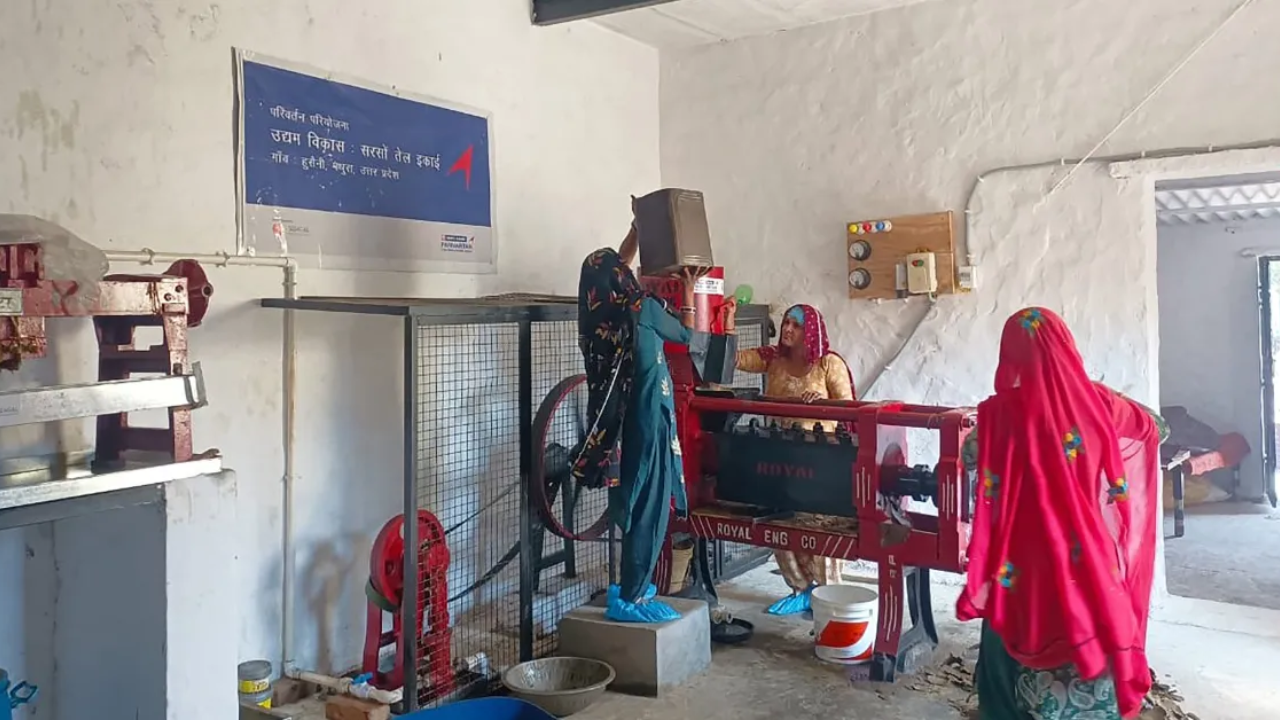
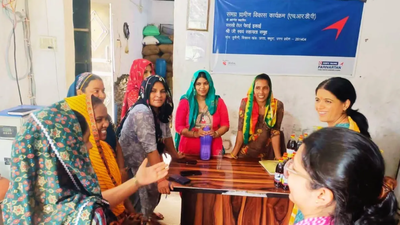
Photo credit: The Better India
The unit uses an expeller machine to extract oil from mustard seeds. The women’s work includes cleaning the seeds, operating the machine, filtering the oil, filling and sealing bottles, labelling, packaging, maintaining stock and tracking sales. Eight women received technical training, and the five who currently manage the enterprise were among them.Each woman has a defined role. Kavita, the group’s president, coordinates members, leads meetings, reviews accounts and works on market connections. Preeti manages the accounts and cash flow. Anchal, the secretary, oversees operations, maintains registers and tracks stock. Bati handles seed cleaning and oil extraction, while Ritu takes care of filtration, filling, sealing, labelling and packaging. The women make decisions collectively, from managing production to maintaining records and connecting with buyers.
More than Rs 24 lakh in cumulative sales
The latest figures show that it sold 2,995.5 litres of mustard oil and 3,841.5 kg of oil cake between January and August 2026. Sales during those eight months amounted to Rs 6,53,980. Since commercial operations began in November 2023, cumulative sales have crossed Rs 24 lakh, according to the figures reported by The Better India.The group’s market extends beyond Hussaini to Kosi Kalan, Mathura, Aligarh and Bulandshahr in Uttar Pradesh, as well as Gurugram, Faridabad, Palwal and Hodal in Haryana and parts of Rajasthan. Five per cent is set aside for maintenance, while the remaining amount is divided equally among the five women, according to the report. Members can also leave their share with the group so it can be lent to another member at an interest rate of one per cent.
How earning has changed life at home
For Preeti, the income helps pay her children’s school fees and meet household expenses. She can also save money and travel to meetings. Her family’s attitude towards her work has changed, although she still seeks her in-laws’ permission before visiting other people’s homes. Anchal’s earnings help her contribute to the cost of her children’s treatment. She no longer has to rely entirely on her husband’s income for every household expense.Both women have also gained experience in managing work outside the home, learning unfamiliar skills and interacting with people in the market. Their responsibilities now extend from operating machinery to keeping accounts and making decisions about the enterprise’s future.The project’s longer-term aim is for the women to manage the business independently. Their experience also sits within a wider effort to help self-help groups build income-generating enterprises through training, resources and market connections.