








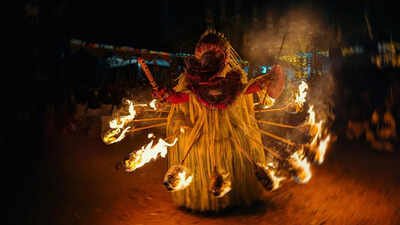
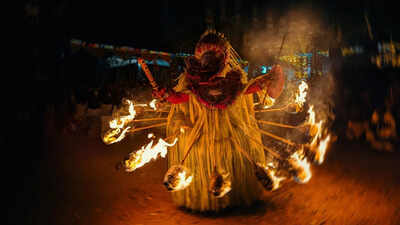
Have you ever seen a performance so powerful that you could feel it in your bones? There are performances you watch and forget, and then there are those you take with you throughout your life. The accounts of Theyyam definitely categorise it among extraordinary experiences. Performed in the villages of northern Kerala, you might have witnessed a glimpse of this magnificent performance in the renowned movie Kantara (2022).“I thought I was just going to document a famous cultural performance. But sitting there in the suffocating heat of the night, watching a 1,500-year-old ritual where an artist transforms into a ‘Living God’ right before your eyes… it completely shatters your ego,” a traveller named Dennis (@dennisintransit), who experienced Theyyam for the first time, said while detailing his experience.The performance involves drums pounding through the night, flames lighting up the darkness and a performer who emerges looking almost god-like. For devotees gathered to witness this spectacle, it is not simply a dance or a theatrical experience. It is the moment the divine appears before their eyes.Welcome to Theyyam, one of Kerala’s most extraordinary ritual traditions, where faith, folklore, music and movement come together in a celebration that feels almost otherworldly.
More than a dance, a living tradition
Famously practised in Kannur and Kasaragod, Theyyam is rooted in the spiritual life of North Malabar. The word is associated with daivam, meaning God, and the ritual is built around the belief that a deity or spirit manifests through the performer. More than 400 varieties of Theyyam are believed to exist, each with its own mythology, costume, music and movements.
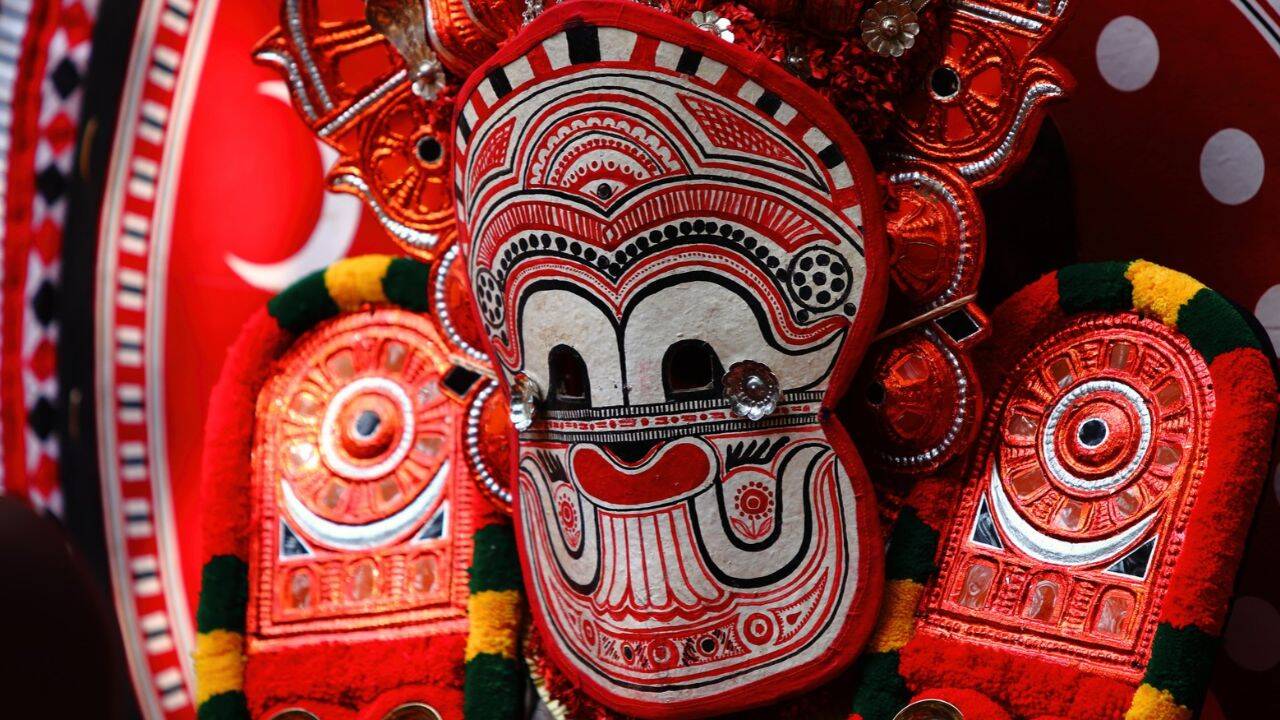
(Image Credit: Canva)
While some honour powerful goddesses, others commemorate warriors, ancestral spirits and local heroes. Certain forms even reflect the region’s layered cultural history, including traditions that cross religious boundaries. This is what makes Theyyam so fascinating: it is not a single performance repeated across villages, but a collection of stories that have kept communities connected to their past across generations.Unlike a conventional stage show, Theyyam often takes place at a kavu (sacred grove), temple courtyard or traditional family shrine. There may be no ticket counter, velvet curtains or carefully arranged rows of seats. Instead, people gather around an open ritual space, sometimes late into the night, waiting for the appearance of the deity they have come to honour.
When the transformation begins
One of the most striking aspects of Theyyam is the transformation itself. Before the performance, the artist follows a period of spiritual preparation that may involve fasting, prayer, meditation and abstinence. The elaborate costume and makeup are not merely decorative additions; they are integral to the ritual.
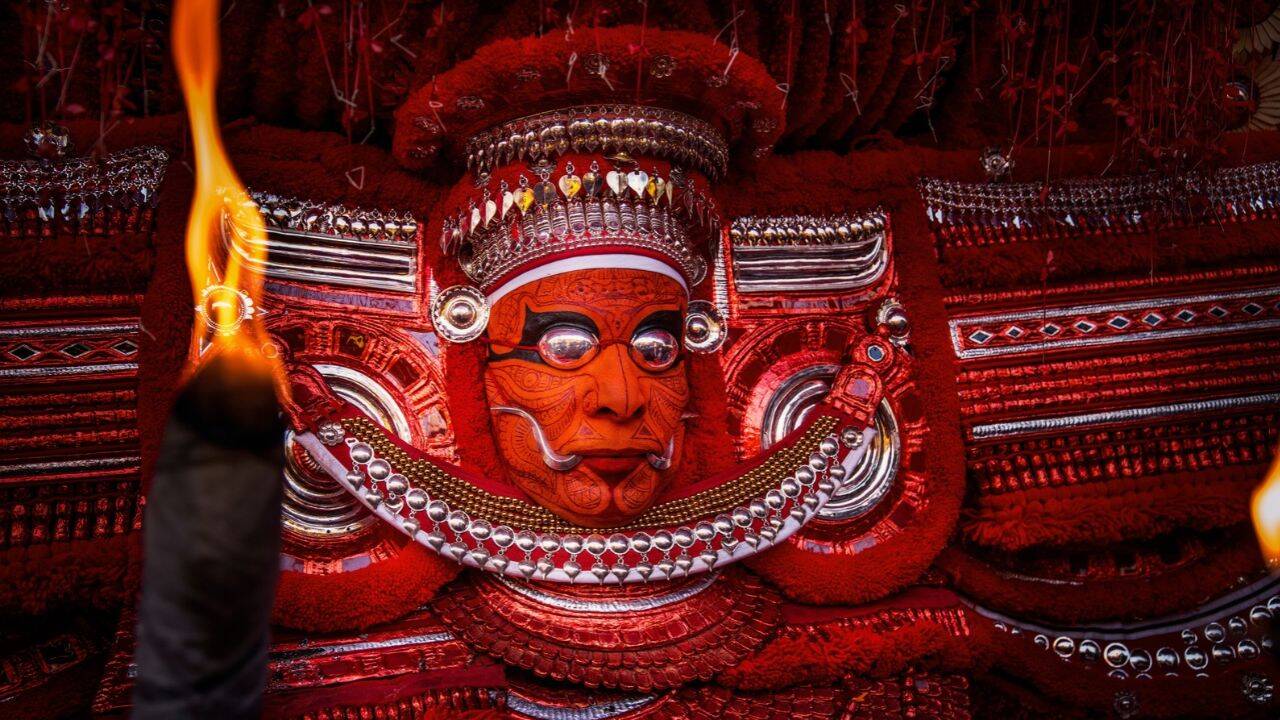
(Image Credit: Canva)
According to Kerala Tourism, traditional colours used for Theyyam’s intricate facial designs include natural ingredients such as rice flour, turmeric and charcoal. For instance, rice flour is used for white, turmeric for yellow and charcoal for black. Among all the colours, red dominates the palette, symbolising energy, power and anger. The traditional headgear, known as mudi, is complemented by coconut fronds, areca leaves and ornaments to complete the entire look.The energy builds as the performer, known as the kolam, begins to move. In certain forms of Theyyam, the performer dances amid fire or burning embers. Representing a spiritual gateway, fire plays a critical role in some Theyyam rituals.Beyond the spectacle, the performance also provides a commentary on social practices that have been part of Indian culture for centuries. Theyyam can challenge rigid caste hierarchies, as performers from historically marginalised communities are revered as gods during certain rituals. The deity they embody commands reverence from devotees across social groups.
Plan your trip around the Theyyam season
The best way to experience Theyyam is to let the ritual calendar guide your travels rather than arrive in Kannur and hope to stumble upon a performance. The season generally runs from October or November through May, with many major events taking place between December and April. Exact dates vary according to local customs and the Malayalam calendar.December is a particularly interesting time to plan a visit. The District Tourism Promotion Council (DTPC), Kannur, publishes a Theyyam calendar listing performance dates, shrine locations and contact details. Check it before finalising your itinerary, and confirm timings with the organisers, as schedules can change.Make Kannur your base and explore the surrounding villages, where performances take place at temples, family shrines and sacred groves. You could also extend your journey into Kasaragod, another important centre of the tradition. Keep your plans flexible: some rituals begin in the early hours of the morning, while others unfold late at night. Here, the clock follows the ritual, not the other way around.
How to experience Theyyam respectfully
Arrive with curiosity, but remember that you are entering a living religious tradition, not attending a tourist show. Seek permission before photographing performers, follow local instructions and avoid interrupting rituals for a better view. Dress modestly, be mindful of temple customs and allow devotees their space.If you can, spend time speaking with local residents about the stories behind the particular Theyyam you have come to see. The mythology, family connections and village histories often make the experience far richer than the dramatic costumes alone.And when the drums begin to echo through the night, resist the urge to view everything through your camera screen. Put it away for a while. Watch the flames, listen to the rhythm and notice how the crowd responds as the performer moves through the ritual.Theyyam stays with you because it offers something travel rarely promises: a glimpse into a world where mythology is not confined to books, gods are not necessarily distant, and centuries-old beliefs continue to shape everyday life. In northern Kerala, the divine does not always wait behind temple doors. Sometimes, it arrives in a blaze of colour, accompanied by drums, and walks straight into the village.