









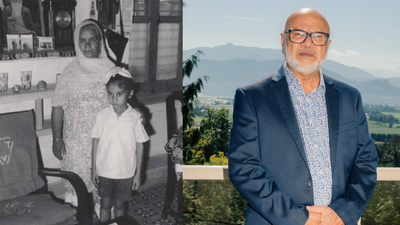
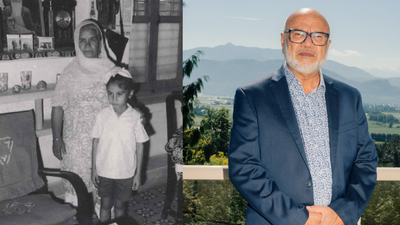
Growing up in Amritsar in the 1960s, Singh had heard whispers that the woman he believed was his mother was not his biological mother at all. His grandmother, whom he knew as the person who raised him, was in fact his paternal grandmother. The truth about his birth remained largely a family secret. At eight, Singh was told he had a family waiting for him in Canada. Shortly after his ninth birthday, he boarded a plane alone for Halifax, Nova Scotia. He spoke no English and had never flown before. His new life in Canada began with school, snow and a family he barely knew. Yet the questions about his biological mother never disappeared.As reported by The Guardian, that unanswered question would stay with Singh for more than five decades, until an unexpected search using artificial intelligence finally gave him a lead.Singh eventually learned that her first name was Savinder. He was told that she had been married to his father, that they had separated and that she had returned to Africa. But he was given little else. For years, he searched through Google, Facebook, archives and other records. In 2009, he even travelled to London’s National Archives at Kew hoping to find immigration or marriage records that might lead him to her.
Nothing worked
He also considered DNA testing but rejected the idea because of concerns about genetic privacy. Instead, the search became something he carried quietly for years. Then, on May 8, 2026, while on holiday in southern France with his wife, Rosie, Singh decided to try something he had previously overlooked.“I thought, I’ve tried Google and everything else, why don’t I give AI a shot?” he recalled. He typed what little he knew about Savinder into ChatGPT. The chatbot returned a possible match: Savinder Kaur Nagi, a Sikh woman born in 1936 in Kisumu, Kenya, whose life included connections to India and Britain.Singh knew AI could get things wrong. But ChatGPT had also pointed him towards an article about the woman. That article had been written by Nicci Dhamu, a British jewellery designer, about her late mother.One detail immediately caught Singh’s attention. The article included a photograph of a dressmaking certificate that Savinder had earned in 1962 in Dhariwal, near Amritsar, the same region where Singh had been born. It was not definitive proof. But after decades of dead ends, it was enough to make him look closer.Dhamu, meanwhile, had spent years trying to solve a mystery of her own. She knew her mother had had a son before leaving India. The boy had been separated from Savinder when he was very young and raised by his father’s family. Dhamu knew only his childhood nickname: Titu.She had searched online, spoken to relatives, investigated family records and even submitted her mother’s DNA to Ancestry.com. During a 2025 trip to Amritsar, she visited the school where her mother’s first husband had taught, hoping someone might remember the child.
Nobody could help, then Singh’s email arrived
He wrote to Dhamu after reading her article, carefully explaining that he believed there might be a family connection. Dhamu was immediately intrigued. Her mother had died in 2024, but in her final years she had sometimes cried out for “mera bacha”, Punjabi for “my child”. On the morning the email arrived, Dhamu was already thinking about the son her mother had lost.
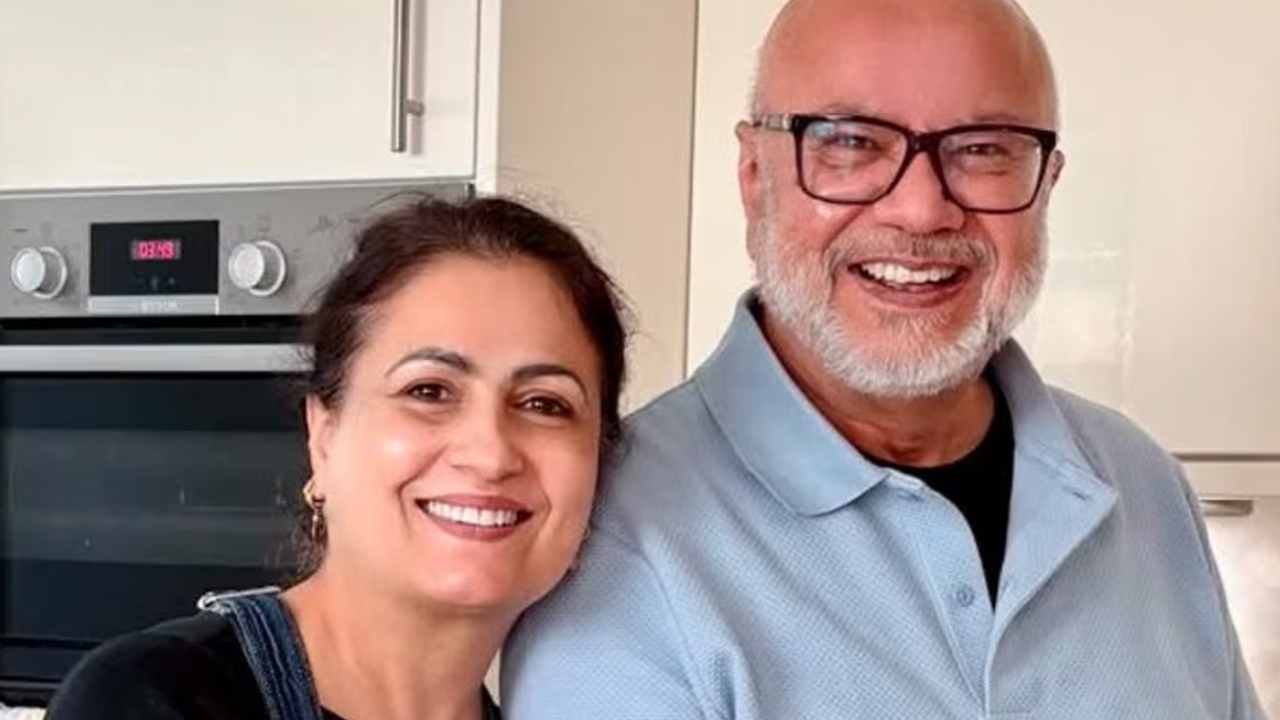
The two exchanged messages and agreed to speak by phone. During their first conversation, Singh asked Dhamu about her mother’s life in India. “She was married and divorced in India,” Dhamu told him.“Did she have any children?”“Yes,” she replied. “She had a son.”Then came the question that Singh had been waiting for all his life.“Titu, is that you?”“Yes,” Singh answered.The call left both Singh and his wife in tears.
A bittersweet reunion, decades in the making
For Dhamu, the revelation was equally overwhelming. The mysterious half-brother her mother had spent decades missing was suddenly on the other end of the phone. Singh soon travelled to London, where he met Dhamu and began piecing together the family history that had been hidden from him for most of his life. Photographs, memories and old stories helped connect the fragments.Savinder was Singh’s biological mother. After separating from his father, she went on to marry again and raise three more children, including Dhamu. This meant that Dhamu was not simply someone who had discovered Singh’s story, she was his maternal half-sister, the daughter of the mother he had spent decades trying to find. She had apparently carried the pain of losing her first son throughout her life. Dhamu said her mother never forgot him.The reunion came after Savinder’s death, making it bittersweet. Singh would never meet the mother he had spent decades searching for. But he had finally found the family she had left behind. The story is also an unusual reminder of what AI can and cannot do.Singh himself remains sceptical about describing ChatGPT as intelligent. He sees it more as an extraordinarily powerful pattern-matching and search tool. In this case, however, that was enough to connect scattered pieces of information that conventional searches had failed to bring together. The irony is not lost on him: he had avoided DNA databases because of privacy concerns, yet an AI system ultimately helped lead him to his family through information already available online. For Dhamu, the technology feels almost secondary to what followed.ChatGPT found an article. The article led to an email. The email led to a phone call. And the phone call finally brought together two people who had spent years searching for the same missing piece of their family. Singh had gone looking for his mother. Instead, after more than half a century, he found his maternal half-sister, the daughter of the mother he had spent all those years trying to find.