










The waters off New York’s Hamptons, once immortalised as shark-infested territory in Jaws, are revealing a very different story. Researchers have confirmed a summer nursery for young great white sharks in the New York Bight, with studies showing juvenile whites repeatedly using the region’s coastal waters during their early years. NOAA lists Long Island among the known nursery areas for juvenile white sharks, while research published in Scientific Reports found that young sharks can return to the New York Bight in subsequent seasons. The Associated Press, in a September 1, 2026 report, documented the latest tagging work off Long Island, as scientists continue tracking sharks to understand their movements and how warming waters may be changing which species use the region.
Why are baby great whites coming back?
For juvenile great whites, the relatively shallow coastal waters around Long Island offer something valuable: food. Newborn great whites can already be around 4 feet long and weigh as much as 80 pounds. Unlike many mammals, they receive no parental care and have to hunt for themselves from the moment they enter the ocean. The waters around Long Island provide young sharks with access to schools of fish while offering some protection from larger predators.
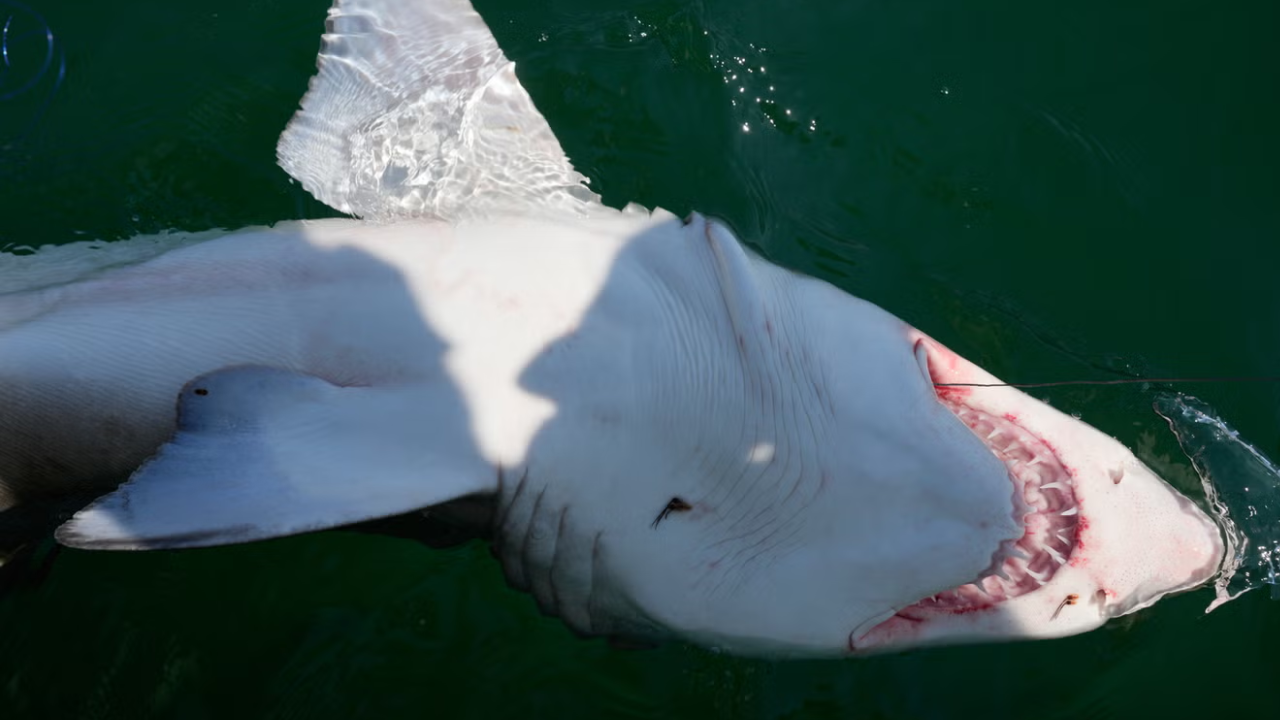
Researchers compare the area to a kind of nursery school, where young sharks can develop their hunting skills before taking on larger prey. As they grow, great whites can travel much farther north, particularly toward areas such as Cape Cod, where large seal populations provide a richer food source.
Scientists are putting trackers on sharks
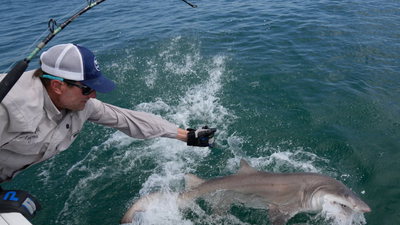
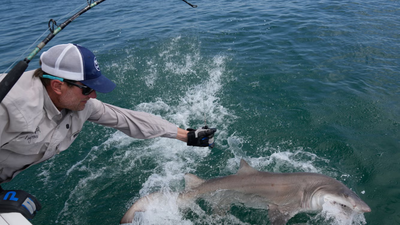
The current research involves catching, tagging and releasing several shark species. Greg Metzger, lead field biologist for the South Fork Natural History Museum and Nature Center’s shark research and education programme, recently caught a young female sand tiger shark off Hampton Bays. Researchers collected tissue samples and attached tracking equipment before releasing her back into the ocean.The tags can reveal remarkably long journeys. Acoustic devices transmit signals detected by receivers along the coast, while other tags record information such as depth and water temperature before detaching. Stony Brook University marine scientist Bradley Peterson said tagged sharks have been detected as far south as North Carolina, Georgia, Florida and even the Gulf of Mexico before returning to the Long Island area the following year. That seasonal return is one of the reasons researchers are so interested in the region.
The Hamptons are seeing more than great whites
Great whites are not the only sharks turning up in Long Island waters. Researchers say they are also seeing more species typically associated with warmer waters, including spinner sharks, blacktip sharks and bull sharks. Frank Quevedo, executive director of the South Fork Natural History Museum and Nature Center, attributed the shift partly to warming coastal waters, likely linked to climate change. For scientists, the changing mix of species offers another reason to keep tracking what happens beneath the surface.At the same time, researchers caution that the impression of a sudden shark invasion can be misleading. Better technology, including drones, tracking equipment and the near-universal presence of smartphones, means sharks are now much easier to detect and document than they were decades ago.
From Jaws fear to conservation
The Hamptons’ shark reputation has deep roots in popular culture. Jaws, which premiered more than five decades ago, helped cement the image of the great white as a terrifying predator. According to Quevedo, the movie was also followed by increased recreational fishing for great whites in the region, placing heavy pressure on a population whose members take decades to reach reproductive age. Conservation measures have since helped great white and other shark populations recover, although researchers say their numbers remain below historical levels.And that is ultimately why the nursery matters.These young sharks are not simply an unusual sight for beachgoers. They are part of a larger marine ecosystem, predators that help maintain its balance. The researchers hope that understanding where young great whites go, what they eat and why they return each year will replace some of the fear surrounding them with a better understanding of their role in the ocean. The same waters that once inspired one of cinema’s most enduring shark nightmares are now giving scientists an unusually close look at how the real animals grow up.