









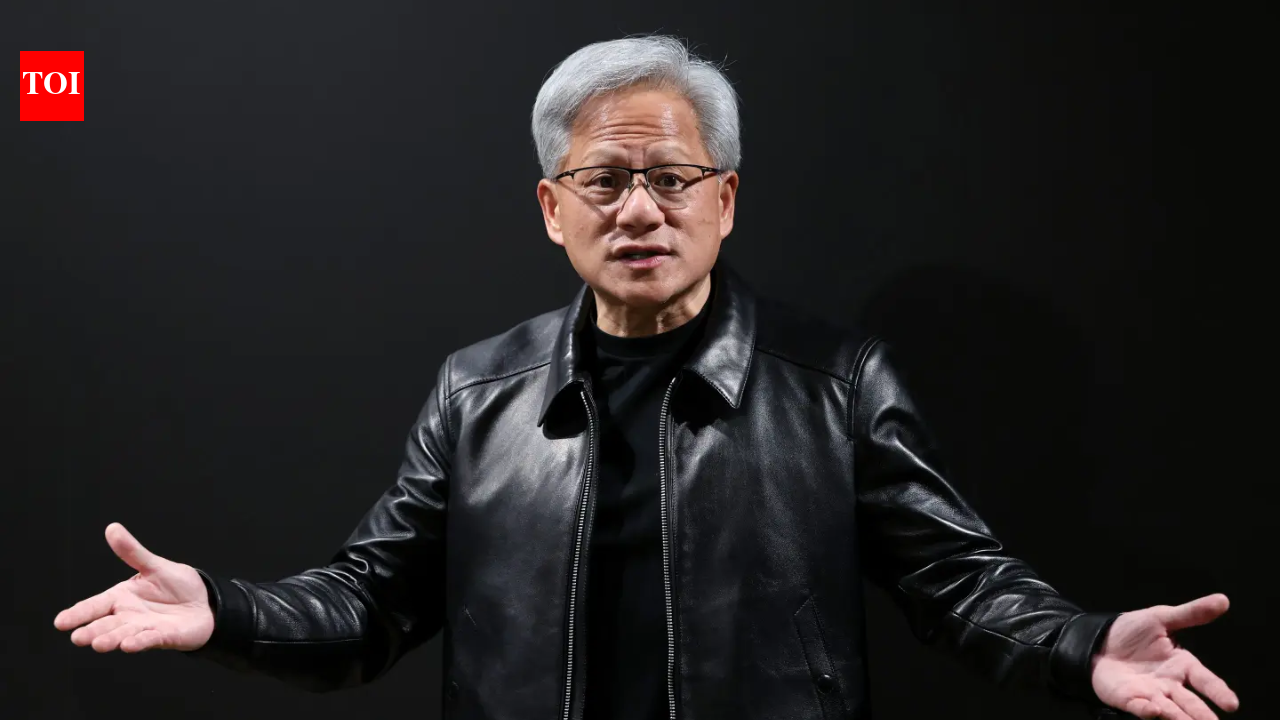
For more than 30 years, Jensen Huang has been the face of Nvidia. He co-founded the company in 1993 and led its transformation from a graphics chipmaker into one of the biggest names in artificial intelligence.Now, questions about his future are putting the company’s leadership under the spotlight.Recent reports about Huang’s personal relationships, including allegations involving a woman suspected by US intelligence agencies of having links to Chinese intelligence, have reportedly raised concerns at Nvidia’s board level.The Wall Street Journal reported that the board was preparing to discuss Huang’s future. The New York Times also reported allegations of another relationship involving a senior Nvidia executive who reportedly reported directly to him.Huang has acknowledged being unfaithful to his wife and apologised to his family and employees. Nvidia’s board had earlier expressed confidence in him while looking into whether he had been targeted by a foreign intelligence operation.But the latest reports have brought an uncomfortable question into focus: what would happen to Nvidia if Huang were no longer CEO?There is no confirmed decision to remove him, and Nvidia has not announced a succession plan. Still, several names have emerged in reports and industry discussions about who could take over.
Who could replace jensen Huang at Nvidia? 5 names to know
Finding a replacement for Huang won’t be easy. He knows the semiconductor business inside out, has deep relationships across the technology industry and has been closely involved in Nvidia’s biggest strategic decisions.According to names discussed in a Business Insider report, here are five executives who could come into the picture if the company ever needs a new leader.
1. Ian Buck: The longtime Nvidia executive
Ian Buck is one of the most interesting names in the succession conversation.He has spent more than two decades at Nvidia and was closely involved in the development of CUDA, the software platform that helped make Nvidia’s GPUs widely used in AI and high-performance computing.Buck currently leads the company’s data centre and computing businesses. That’s a major responsibility, considering how central data centres have become to Nvidia’s business.His biggest advantage is his understanding of the company. He knows its technology, its people and how its different businesses operate.A former Nvidia employee told Business Insider that Buck is already running the business responsible for virtually all of the company’s revenue.That experience could put him in the conversation if Nvidia ever looks for an internal successor.
2. Colette Kress: Could Nvidia’s CFO take over?
Colette Kress is another name that could attract attention.As Nvidia’s chief financial officer, she has been part of the company’s leadership team for around 13 years. Before joining Nvidia, she held finance roles at Microsoft and Cisco.She is also one of the company’s most visible executives after Huang.DA Davidson analyst Gil Luria, speaking to Business Insider, suggested that Kress could be considered for the interim CEO role if Huang were to step aside.Her experience with Nvidia’s finances and business strategy would be valuable during a leadership transition.But there is one obvious difference between Kress and Huang. Her background is in finance, while Huang has spent much of his career working closely with engineering and technology.Whether that matters in choosing Nvidia’s next CEO is another question.
3. Madison Huang: Could Jensen Huang’s daughter be in the running?
This is perhaps the most talked-about possibility.Madison Huang, Jensen Huang’s daughter, already works at Nvidia. She is a senior director of product marketing for physical AI, a growing area focused on bringing artificial intelligence into machines and real-world environments.A former Nvidia employee told Business Insider that Madison had been taking on greater authority across different parts of the business.That has led to questions about whether she could eventually move into a more senior leadership position.However, there’s no public confirmation that Nvidia is preparing her to succeed her father.And appointing a family member to lead a company as influential as Nvidia would inevitably attract scrutiny. Shareholders would want to know whether the decision was based on experience and leadership ability rather than family connections.Her brother Spencer also works at Nvidia, although that alone says nothing about the company’s succession plans.
4. Thomas Kurian: A possible outside candidate from Google
Nvidia doesn’t necessarily have to choose its next CEO from within the company.Thomas Kurian, the chief executive of Google Cloud, is another name mentioned in discussions about possible external candidates.Kurian runs a major cloud computing business with significant exposure to artificial intelligence and data centre infrastructure.He understands the demands of running a large technology operation and dealing with some of the biggest companies in the world.Those skills could be useful at Nvidia. But leading a cloud business and running a semiconductor company are two very different jobs.An outside appointment would also mean bringing someone into a company with a deeply established engineering culture.
5. Matt Garman: Could Amazon’s AWS Chief be an option?
Matt Garman, CEO of Amazon Web Services, is another external name worth watching.AWS is one of the biggest players in cloud computing, and AI infrastructure has become a major part of its business.Garman has experience managing large technology operations and working in a market where computing power is increasingly important.That background could make him relevant to Nvidia’s future leadership discussions.Still, an outsider would have a lot to learn. Nvidia’s business isn’t just about selling chips. Its software, developer ecosystem, customer relationships and long-term technology plans are all closely connected.Getting to grips with that business would be a major undertaking.
Why finding Jensen Huang’s replacement won’t be easy
Nvidia can appoint another CEO. The harder part would be replacing the influence Huang has built over more than three decades.He has been involved in the company’s biggest decisions, from its early focus on graphics processors to its expansion into data centres and artificial intelligence.And his leadership style has been unusual.Huang has previously said he has as many as 60 direct reports. Nvidia has also not publicly identified a clear successor who could step into his position without a major change in the company’s leadership structure.That’s one reason the succession question is attracting so much attention.Brad Gastwirth, global head of research at Circular Technology, told Business Insider that Huang’s technical knowledge, strategic thinking and industry relationships would be difficult to replace.Huang also owns around 3.6% of Nvidia, according to the reported figures cited in the succession discussion. While that doesn’t give him majority control, it does represent a substantial financial stake in the company.
What would happen to Nvidia without Jensen Huang?
Nvidia isn’t a small company that depends on one person to keep its doors open. It has thousands of employees, a strong leadership team and a business that serves some of the world’s largest technology companies.But Huang’s role goes beyond being the person who signs off on major decisions.He’s been the public face of Nvidia’s rise and one of the central figures in the global AI boom. Investors, customers and industry leaders have closely followed his comments on the future of computing.A sudden departure could raise questions about the company’s direction, particularly at a time when competition in AI chips is growing.An internal candidate such as Ian Buck or Colette Kress could offer continuity. An outside executive like Thomas Kurian or Matt Garman would bring experience from other parts of the technology industry. Madison Huang’s name, meanwhile, raises a different set of questions about family involvement and corporate governance.For now, all five remain possibilities discussed in reports, not confirmed candidates for an announced vacancy.The bigger question isn’t simply who could replace Jensen Huang. It’s whether anyone could take over the company he built and keep it moving in the same direction.