










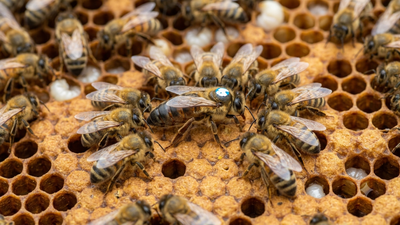
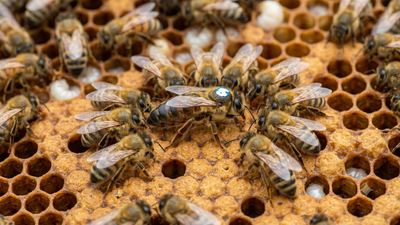
Imagine two identical twins. One lives a modest life for about six weeks, while the other lives a luxurious life with high-stakes responsibility for several years. In the world of the honeybee, it is daily life. A queen honeybee can live for up to 8 years, while other worker bees often last less than two months in the summer.New research is finally uncovering this golden mystery. At the centre of this exploration is a comprehensive study published in the Springer Nature journal ‘GeroScience,’ titled ‘Evolution and mechanisms of long life and high fertility in queen honey bees.’ This paper highlights that the honeybee is one of the most promising species for studying ageing because it allows us to see how the same DNA can produce two completely different lifespans.
Is the ‘Royal diet’ of the Honeybee Queen the actual reason for the difference in lifespans
The journey of becoming a queen or a worker begins in the honeycomb cell. All female larvae start with the same DNA, but their destiny is decided by their diet. If a larva is given a rich, exclusive diet of royal jelly, she becomes a queen. If she receives a normal mix of honey and pollen, she becomes a worker.This ‘royal’ diet acts as a switch by reprogramming the larva to grow larger, develop functional ovaries, and most importantly gain the potential for a long life.
Why do queens have a longer lifespan despite having so many babies
In the animal kingdom, there is a strict pattern that if you have a lot of babies, you die young. Giving life to others usually consumes your own energy and speeds up the ageing process. However, as the research paper points out, honeybee queens are a wonderful exception. They can lay up to 2,000 eggs every single day while still outliving the worker bees by a factor of ten or more. The research suggests that because the workers do all the dangerous collecting, cleaning, and feeding, the queen lives in a protected, controlled environment where she is constantly cared for. This allows her to save enormous amounts of energy for both reproduction and maintaining her own body.
What is the secret chemical ‘shield’ in their blood
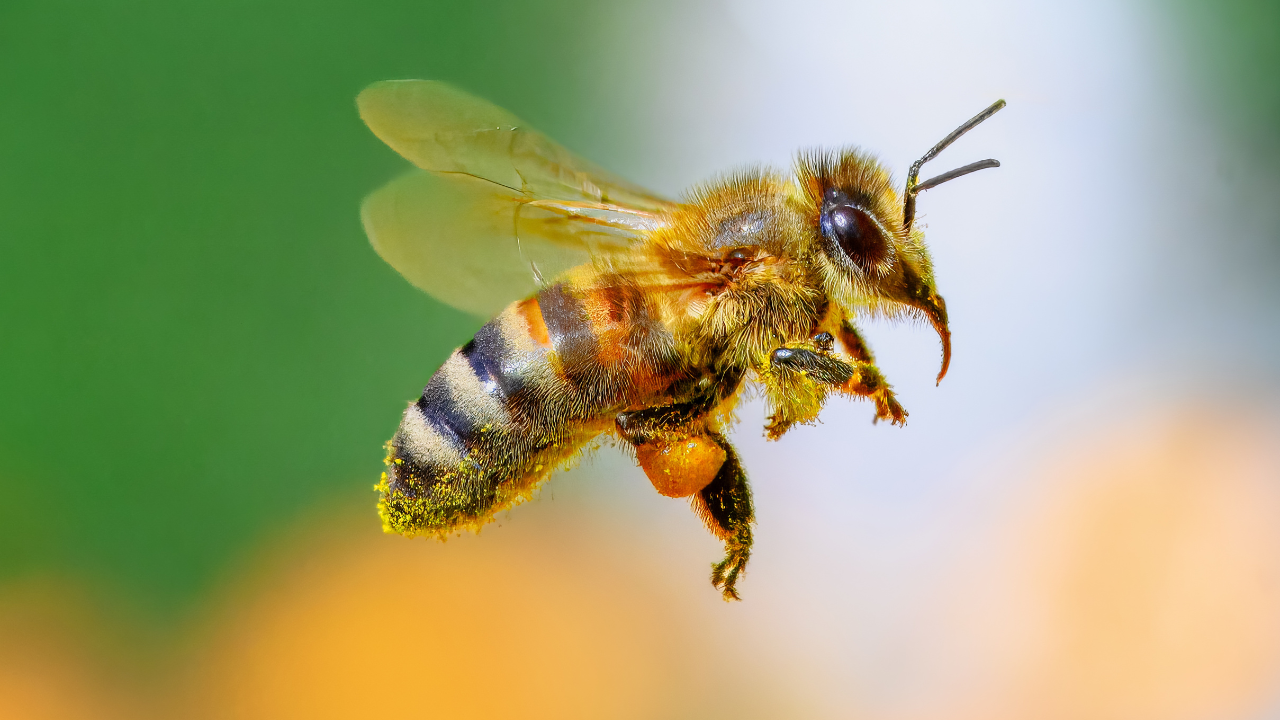
Beyond the social perks, the queen has a biological power. Scientists have identified a key protein called Vitellogenin (Vg) which acts as a powerful antioxidant. Antioxidants clean-up the body, clearing the harmful ‘residue’ that accumulates as cells work. Because queens have incredibly high levels of this protein, they are much more resistant to the pollutants from the environment. Interestingly, even worker bees that are fed royal jelly in lab experiments show an increase in this protective protein and live longer than those on a normal diet.
Does the brain play a role in the longer lifespan of Honeybee Queen
It is not just the body that contributes to a longer life, it’s the brain too. Research using high-resolution DNA sequencing has found that there are over 550 genes in the brains of queens different from workers. Many of these genes are responsible for important bodily functions like metabolism.One of the most fascinating discoveries is that the queen’s brain stays ‘younger’ because of the way her genes are designed. It is like editing a film where you can take the same raw footage and create several different versions from it. The queen’s brain is edited to choose those versions of genes that promote stability and longevity, whereas the worker bee’s brain is edited for the high-intensity, short-duration life of a labour.
Is the queen’s long life a ‘lucky draw’ or an evolutionary plan
The research paper explores whether long life is the reason behind their social skills, or if becoming a social species allowed them to evolve a long life.It suggests that the safety of the hive was the ‘ultimate cause.’ Because the queen is rarely exposed to environmental challenges, natural selection favoured those who could live longer and keep producing more workers for the colony. In contrast, ‘workers are less important.’ Once they transform from being ‘nurses’ inside the hive to ‘labourers’ outside, their chances of dying increase. Collecting food is a dangerous, high-energy job that exposes their wings to the harmful elements. Essentially, workers are programmed to ‘live fast and die young’ for the sake of the hive’s survival.
What can we learn from Honeybees
Understanding the honeybee’s secret could eventually help us understand human ageing. The fact that diet alone can trigger such a massive shift in lifespan proves that the ‘speed’ of aging is not entirely dependent on DNA, it can be adjusted by the environment. The honeybee queen’s life may seem like a fairy tale of immortality, but as research shows, it is a fine balance of diet, social support, and genetic editing. By studying her, we are not just learning about insects; we are learning about the very nature of life itself.