










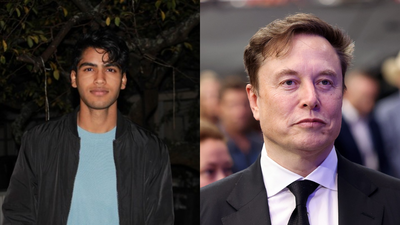
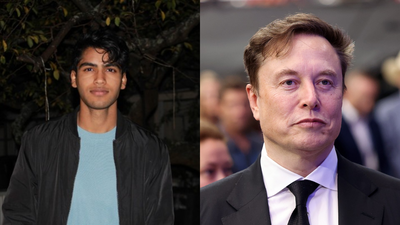
A few years ago, Aman Sanger was a young MIT student working on ideas around artificial intelligence. Today, the 25-year-old Indian-origin entrepreneur finds himself at the centre of one of the biggest AI deals of the year- after Elon Musk’s SpaceX agreed to acquire Anysphere, the company behind AI coding platform Cursor, in a deal valuing it at $60 billion.The deal has turned Sanger and his three co-founders into some of the youngest billionaires in the technology world. But the story of Cursor did not begin with a giant valuation or a Musk acquisition. It began with four young engineers trying to figure out what AI could do inside a programmer’s everyday workflow.
Who is Aman Sanger?
Sanger is one of the four co-founders of Anysphere, the company behind Cursor. He studied at the Massachusetts Institute of Technology (MIT), where he met co-founders Michael Truell, Sualeh Asif and Arvid Lunnemark.According to an Outlook Business report, Sanger comes from a family with Indian roots. His father, Arvind Sanger, is an IIT Bombay alumnus who went on to work in the hedge-fund industry, while his mother, Shilpa Sanger, is an orthodontist and entrepreneur.Before building Anysphere, Sanger had already spent time at Bridgewater Associates and Google and had also worked on his own AI consulting venture. He now serves as Anysphere’s chief operating officer (COO).
From an MIT idea to Cursor
Anysphere was founded in 2022 by Sanger, Asif, Truell and Lunnemark. Their initial experiments were not necessarily focused on building the coding assistant that Cursor would eventually become.The founders explored AI applications in areas including computer-aided design before turning their attention towards software development. Their central idea was relatively simple: instead of making programmers switch between their code editor and a separate AI chatbot, why not put AI directly into the coding environment? That idea became Cursor.
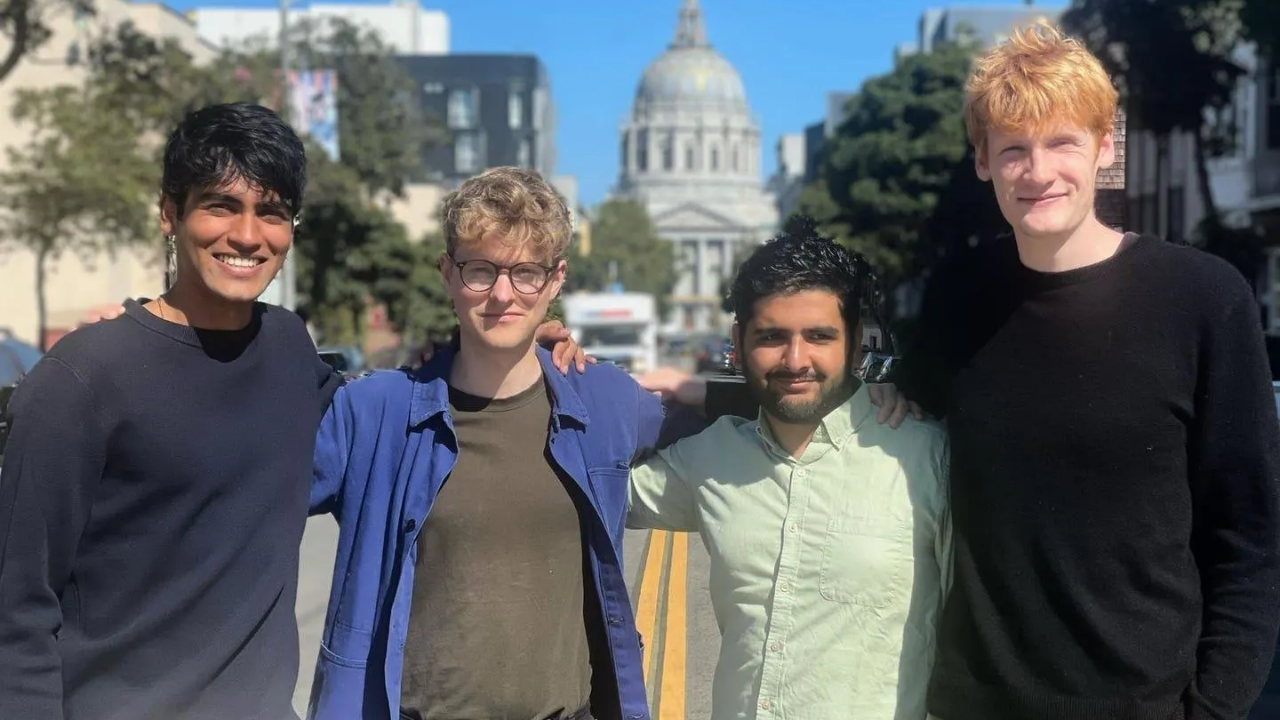
Sanger met Cursor co-founders Michael Truell, Sualeh Asif and Arvid Lunnemark at MIT. (Photo: Forbes)
Unlike conventional coding assistants that mainly suggest snippets of code, Cursor is designed to work with larger portions of a developer’s codebase. It can help generate and modify code, identify bugs and undertake complex programming tasks based on natural-language instructions.This also helped fuel the rise of what is popularly known as “vibe coding”- a style of software development in which people describe what they want in ordinary language and let AI handle much of the coding work.
Why did SpaceX want Cursor?
SpaceX had already begun working with Cursor before the acquisition. In April 2026, the two companies announced a broader collaboration, with SpaceX securing the option to either acquire Cursor for $60 billion or pay $10 billion for a partnership if the acquisition did not go ahead. SpaceX ultimately chose the acquisition route.The transaction will make Anysphere a wholly owned subsidiary of SpaceX, with Cursor shareholders receiving SpaceX Class A stock based on the $60-billion implied equity value, according to the US Securities and Exchange Commission filing cited by Outlook Business.The reason is also tied to Musk’s larger ambitions in artificial intelligence. SpaceX and Cursor had been working on a new AI model, which was expected to be used across Cursor as well as Grok, the AI chatbot developed by Musk’s xAI. In effect, the deal gives Musk’s AI ecosystem a ready-made product used by software developers, along with the young team that built it.
How much is Aman Sanger worth after the deal?
The $60-billion valuation has dramatically changed the financial fortunes of Cursor’s founders. According to Forbes, Sanger, Sualeh Asif, Michael Truell and Arvid Lunnemark each held roughly a 4.5% stake in Anysphere. Estimates put the value of each founder’s stake at around $2.7 billion following the acquisition. The deal has also benefited major investors in Anysphere, including Andreessen Horowitz and Thrive Capital.The company’s rapid rise is particularly striking. Anysphere raised $2.3 billion in its previous major funding round, reaching a valuation of about $29.3 billion. Its business continued to expand rapidly as demand for AI-powered coding tools surged.
From young founder to Musk’s AI ecosystem
For Sanger, the SpaceX deal marks a remarkable turn in a journey that began with an idea shared among four young MIT engineers.Cursor had grown into a tool used by tens of thousands of teams, including engineering organisations at companies such as Nvidia, Adobe, Uber, Shopify and PayPal, according to Outlook Business. The company also said its platform was being used across 64% of Fortune 500 companies.What makes the story stand out is the speed of that transformation. Anysphere was only founded in 2022. Within four years, its product had become valuable enough for SpaceX to put $60 billion behind it.For Sanger, the deal is therefore more than a lucrative exit. It is the latest chapter in a much larger shift in software development- one where the programmer increasingly tells the machine what to build, while AI handles more of the work required to make it happen. And now, that technology sits inside Elon Musk’s rapidly expanding AI ambitions.