









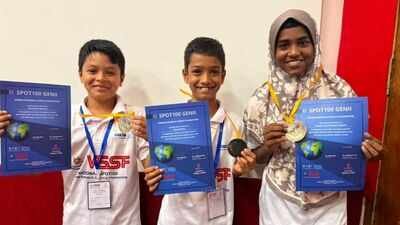
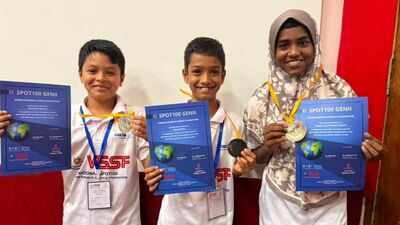
For Yaqub Bangi, Yassira Memon and Shubham Pariyar, science has moved beyond school textbooks. The three students from Pune have earned places in the Sarabhai Younglings Internship 2026 after clearing both rounds of the national SPOT science aptitude test conducted by the Vikram Sarabhai Science Foundation.Their selection gives them an opportunity to learn about science and technology through exposure to leading institutions, including ISRO, the Indian Space Research Organisation. The programme’s learning journey also includes the Indian Space Research Organisation’s ISTRAC centre, Hindustan Aeronautics Limited (HAL), the India Meteorological Department and IIM Bangalore.Yaqub and Yassira study at K.C. Thackeray Vidya Niketan, while Shubham attends Epiphany High School. All three are part of the Scholars programme run by Panaah Communities, a Pune-based nonprofit that works with children and young people from low-income neighbourhoods. Their achievement is not just about qualifying for an internship. It also reflects what can happen when students receive consistent academic support and opportunities to explore subjects beyond their regular classrooms.
From a classroom test to a national science opportunity
The three students qualified for the internship by clearing both stages of SPOT, which stands for Science Promotion Orient Test. Conducted annually by the Vikram Sarabhai Science Foundation, the assessment identifies students with an aptitude for science and encourages them to develop their understanding of the subject. The foundation describes SPOT as more than an examination. Its process is designed to encourage students to ask questions, gather information, test ideas and apply what they learn. Shortlisted students can access science-learning resources, interact with experts and take part in educational experiences.The Sarabhai Younglings programme offers selected students exposure to scientific work and institutions. The 2026 batch brought together students from different parts of India. Updates shared by the foundation also describe interactions with scientists and learning sessions on subjects such as satellite technology and weather forecasting. For Yaqub, Yassira and Shubham, this kind of exposure can help connect lessons learnt at school with the work being done in research, space science and technology.
The support system behind the achievement
All three students are Scholars at Panaah Communities, an organisation that works within Pune’s high-need neighbourhoods. Founded in 2021, Panaah aims to support children through their school years and help young people move towards higher education and employment. Its approach begins with a simple idea: academic difficulties should be addressed before they become reasons for a child to leave school. The organisation works with children in their own neighbourhoods through learning centres and mentors who understand the communities they serve.Panaah’s work is organised around three stages: Solvers, Scholars and Professionals. Solvers supports children who are falling behind in foundational subjects such as reading and mathematics. Scholars work with students who show strong academic potential and prepare them for challenging examinations and learning opportunities. Professionals support older students as they move from school and college towards careers.Yaqub, Yassira and Shubham are part of the Scholars programme, which focuses on helping students strengthen their academic abilities and compete in national-level opportunities. The programme’s progress is also reflected in its assessment data. According to Panaah, students in its Scholars group improved their performance on the Ei ASSET diagnostic assessment during the 2025-26 academic year. They moved from performing better than roughly one in four students nationally at the beginning of the year to doing better than around four in ten by its end.
Why early support can make a difference
Panaah’s model is shaped by a concern that school dropout often begins long before a student reaches the secondary stage. When children struggle with reading or mathematics in the middle grades, the learning gap can grow over time. Eventually, keeping up with lessons becomes difficult, affecting their confidence and interest in school. The organisation therefore starts working with children as early as Grade 4 through its Solvers programme. Its mentors help students strengthen basic skills, while community-based projects encourage them to apply what they learn to everyday problems.For students who show a strong interest in academics, the Scholars programme creates another route. It provides additional guidance and helps them prepare for science and mathematics competitions, Olympiads and other opportunities. Panaah’s co-founder and executive director, Shoeb Sayed, has described the organisation’s approach as a continuous pathway, beginning with children who need help catching up and extending to young adults preparing for well-paying jobs. The idea is to build opportunities within the communities rather than expecting children to find them on their own.The selection of Yaqub, Yassira and Shubham shows one outcome of that approach. Three students from Pune’s underserved neighbourhoods have cleared a national science assessment and earned a place in a programme that connects classroom learning with the wider world of science. Their journey is also a reminder that talent is not limited by a student’s neighbourhood or family circumstances. With sustained guidance and access to opportunities, curiosity can become the starting point for much bigger possibilities.