









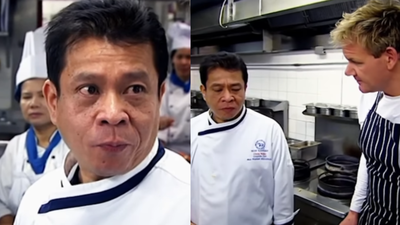
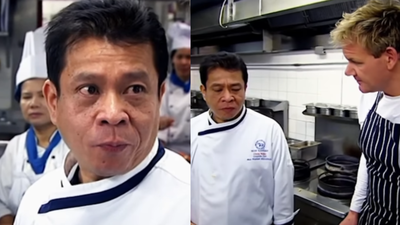
Even Gordon Ramsay, one of the world’s most decorated celebrity chefs who earned multiple Michelin stars, isn’t immune to a brutal food critique. A clip from The F Word, originally aired in 2009, has once again gone viral across social media, with millions of viewers revisiting the unforgettable moment when Ramsay’s version of Pad Thai was dismissed in just a few words by Thai chef Chang: “This is not Pad Thai at all.” For many, the appeal lies in the irony. Ramsay built his television empire by bluntly criticizing underwhelming dishes on shows like Hell’s Kitchen and Kitchen Nightmares. This time, however, the famously outspoken chef found himself on the receiving end of the same no-nonsense honesty that made him a household name.
The moment that became internet gold
In the episode, Ramsay prepares what he calls a “quick and easy” Pad Thai while getting ready to cook for a group of Buddhist monks. Before serving it, he asks Chef Chang, then the executive chef at London’s renowned Blue Elephant restaurant, to taste it. Chang’s reaction has since become legendary.After taking a bite, he looks at Ramsay and says, “This is not Pad Thai at all.” When Ramsay asks what is wrong, Chang explains that an authentic Pad Thai must achieve the delicate balance of sweet, sour and salty flavours. Ramsay tries to defend the dish, saying it doesn’t taste too bad, prompting Chang’s now-iconic reply: “For you, but not for me.”Despite the criticism, Ramsay accepts the feedback without arguing, a detail many viewers have praised over the years. The monks who later ate the meal appeared to enjoy it, suggesting the issue was authenticity rather than whether the food itself was edible.
Why Chef Chang rejected it
Ramsay’s recipe contained familiar Pad Thai ingredients including rice noodles, prawns, egg, bean sprouts, tamarind, fish sauce and peanuts. However, according to Chang, the final flavour profile failed to deliver the signature harmony that defines Thailand’s national dish.Thai chefs have long emphasised that Pad Thai relies as much on technique and balance as it does on ingredients. Traditional versions commonly use palm sugar instead of refined white sugar, fresh tamarind pulp rather than prepared paste, and careful wok cooking to achieve the characteristic smoky flavour known as wok hei. Many recipes also include dried shrimp for added depth.
Reddit says authenticity was the real issue
Years after the clip first aired, Reddit users continue to debate whether Ramsay actually cooked a bad dish or simply one that shouldn’t have been called Pad Thai.One highly upvoted comment summed up the sentiment: “Gordon probably made a good meal, but if it isn’t 100% like Pad Thai then that hurts the business.” Others argued it may have been a perfectly enjoyable noodle dish, just not an authentic Pad Thai.Another popular comment read, “I would have liked to see him learn from the Thai chef how to do it properly,” while several users noted that Ramsay appeared genuinely open to criticism and likely learned far more than the edited television segment showed.Others pointed out that the scene wasn’t about humiliating Ramsay but about preserving the identity of an iconic national dish. As one commenter put it, if someone orders Pad Thai, they expect Pad Thai, not a chef’s personal interpretation.Nearly two decades after it was filmed, the exchange continues to circulate because it perfectly captures something food lovers appreciate: even the world’s most celebrated chefs can be humbled when it comes to another culture’s culinary traditions. And for Gordon Ramsay, that single bite remains one of the internet’s favourite reminders that every chef still has something new to learn.