









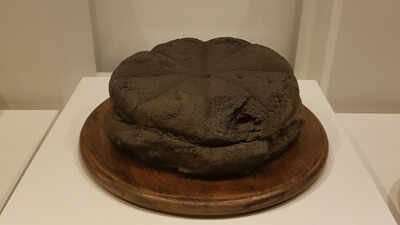
When Mount Vesuvius erupted in AD 79, a round loaf of bread in Herculaneum was buried under volcanic debris; it was found carbonised nearly 2,000 years later, still showing its eight segments and a baker’s stamp
A 2,000-year-old preserved loaf of bread from Herculaneum. (Photo: National Maritime Museum, Sydney, via World History Encyclopedia) When Mount Vesuvius erupted in AD 79, a loaf of bread was still inside an oven in the Roman town of Herculaneum. The eruption buried the town, leaving the bread trapped beneath volcanic material. Nearly 2,000 years later,…