









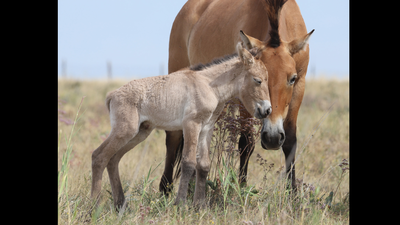
In the early hours of 22 August, a seven-year-old Przewalski’s horse gave birth at the Alibi Reintroduction Centre, a wildlife sanctuary on Kazakhstan’s steppe. According to the United Nations Environment Programme, experts believe the male foal may be the first Przewalski’s horse born on these grasslands in two centuries. Eight days after that birth, Umbra, a six-year-old mare, gave birth to another male. The last of the horses was spotted in the wild in 1969, roaming the Gobi Desert. Since 2024, 22 horses have been airlifted from European zoos to the centre, and officials want 40 horses by 2029.
How many Przewalski’s horses were born
Conservationist Albert Salemgareyev received an excited call from a colleague in the early morning hours of 22 August. A seven-year-old Przewalski’s horse, one of the rarest equines in the world, had just given birth at the sanctuary. Salemgareyev, who leads the effort to return Przewalski’s horses to the wild, then drove 12 hours from Kazakhstan’s capital, Astana, to the Alibi Reintroduction Centre.When he arrived, the foal, still a little shaky on its feet, was huddled beside its mother. “For me, it was a very emotional moment,” Salemgareyev says. “It’s not just another horse for me. It’s the beginning of a new generation here in Kazakhstan.” UNEP adds that eight days after the mare Tessa gave birth to her history-making foal, Umbra, a six-year-old mare gave birth to another male. Neither foal has been named yet.
Why did Przewalski’s horses nearly go extinct
Przewalski’s horses once roamed the plains of Central Asia in large numbers, their short, stocky bodies ideal for retaining heat during the region’s brutal winters. By the mid-1900s, hunting, habitat loss from farming and competition from livestock had decimated the herds. UNEP records that the last of the horses was spotted in the wild in 1969, roaming the Gobi Desert alone.The animals survived in European zoos, where an elaborate breeding programme helped keep their genetic pool diverse and intact. Conservationists say this is important because the horses occupy a unique branch of the equine family tree. They have two more chromosomes than other horses and, unlike free-roaming horses in Australia and the United States of America, have never been domesticated. So-called “wild” horses such as mustangs are the feral offspring of domesticated horses. Experts consider Przewalski’s horses the world’s last truly wild horses, and the animals are hard to handle and almost impossible to ride.
How is Kazakhstan restoring its steppe
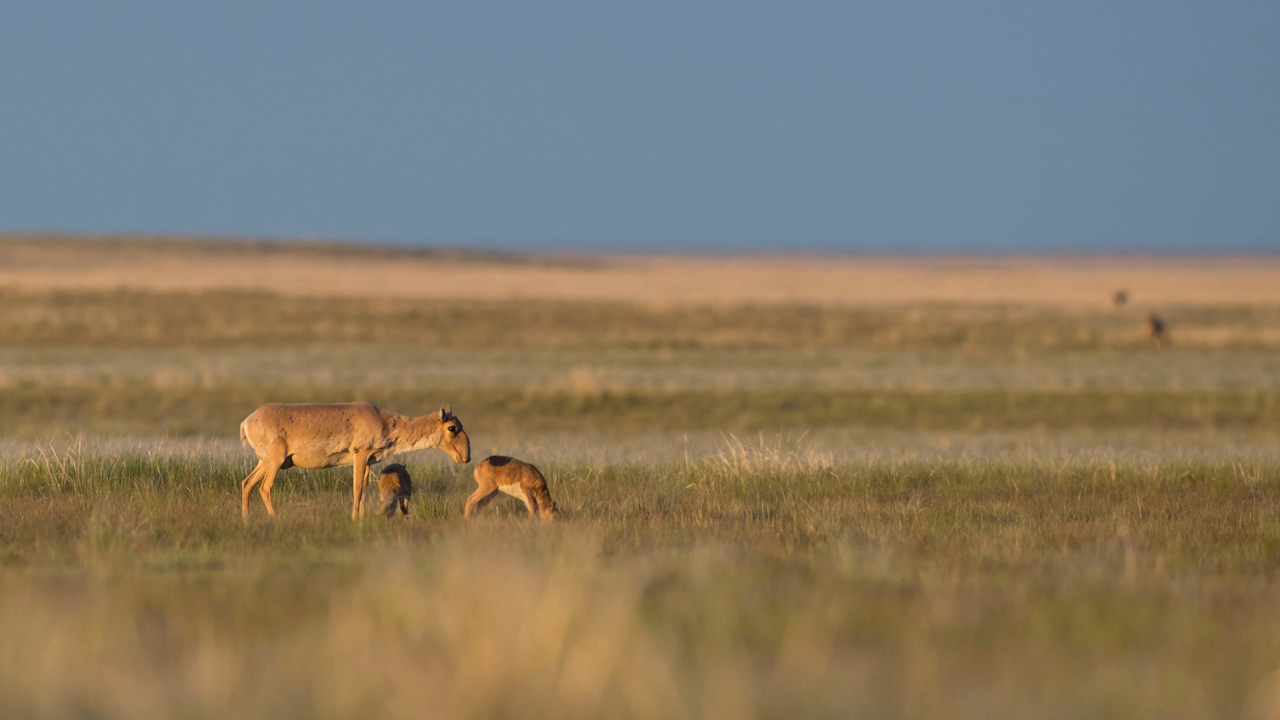
The Kazakh government launched an effort in 2005 to restore 75,000 square kilometres of steppe and semi-desert that had been damaged by overgrazing, unsustainable farming practices and climate change. Known as the Altyn Dala Conservation Initiative, the longstanding partnership has been named a UN World Restoration Flagship, an award that honours ground-breaking efforts to revive natural spaces. Conservationists focused first on bolstering populations of endangered saiga antelope and the kulan, a type of wild ass. UNEP reports that hundreds of thousands of saiga now roam the Kazakh steppe.Salemgareyev and colleagues then turned to the Przewalski’s horse. Since 2024, 22 horses have been airlifted from European zoos to the reintroduction centre. There, in a series of fenced enclosures, the animals are taught how to live in the wild, with conservationists showing them how to dig in the snow to find food, among other things. Susan Gardner, Director of the Ecosystems Division at UNEP, says: “The community-based protection of these rangelands that led to the birth of this foal is one of the great conservation success stories of the last decade.” She adds: “It shows that when we put our minds to it, we can restore ecosystems and give species a second chance.”
PC: United Nations Environment Programme
How quickly do Przewalski’s foals grow
The foals were standing and drinking from their mothers within 30 minutes of being born. A few days later they were trying to jump and gallop, and by their third week, according to Salemgareyev, they had nearly doubled in size. Przewalski’s horses live in small groups of five to 10 animals known as a harem. Over the coming weeks, conservationists will monitor how the other harem members react to the foals and track whether Tessa and Umbra show their offspring how to drink water, taste herbs for edibility and sound the alarm for predators.Both foals, who have the same father, a stallion named Zorro, will remain with their harems in a 56-hectare enclosure for now. Zorro died in 2025, and the big test will come next year, when a new stallion is introduced to the harems. In the wild, stallions have been known to harass or even kill the offspring of other males. If the transition goes well, UNEP reports, the horses should be released into the wild at the beginning of May. Conservation officials want to have 40 horses in Kazakhstan by 2029, with the end goal of establishing a stable, free-roaming population that does not need human intervention. “When you see a horse on the steppe, it looks like it belongs on the steppe,” Salemgareyev says.