










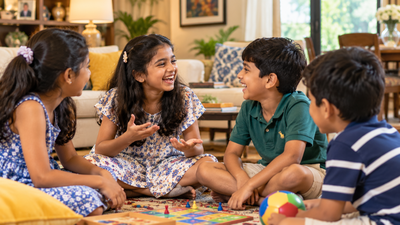
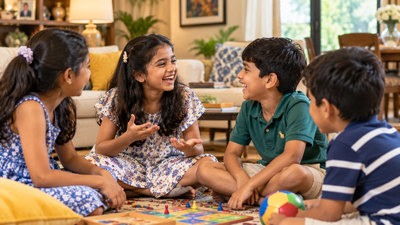
A child who talks nonstop, invents games and argues fearlessly with cousins at a family gathering may barely speak during a classroom activity. Another child who is confident among classmates may become possessive, competitive or unusually quiet when cousins come over. For parents, these contrasting behaviours can be puzzling. Is the child simply more comfortable with family, or does the difference reveal something about how they navigate relationships?The answer may lie in the fact that children do not experience every social setting in the same way. A cousin may be someone they have known since infancy, someone they see only during festivals, or a child they are constantly compared with by relatives. A classmate, meanwhile, belongs to a world of friendships, group dynamics, classroom rules and social expectations.
28 Sept 2026 | 08:18
Does your teenager tell you about their friends, or do you often have to ask? How much do you know about their social life?
Although research has not established a universal rule that children behave differently around cousins than classmates, developmental psychology offers useful insights into why their behaviour can change from one setting to another.
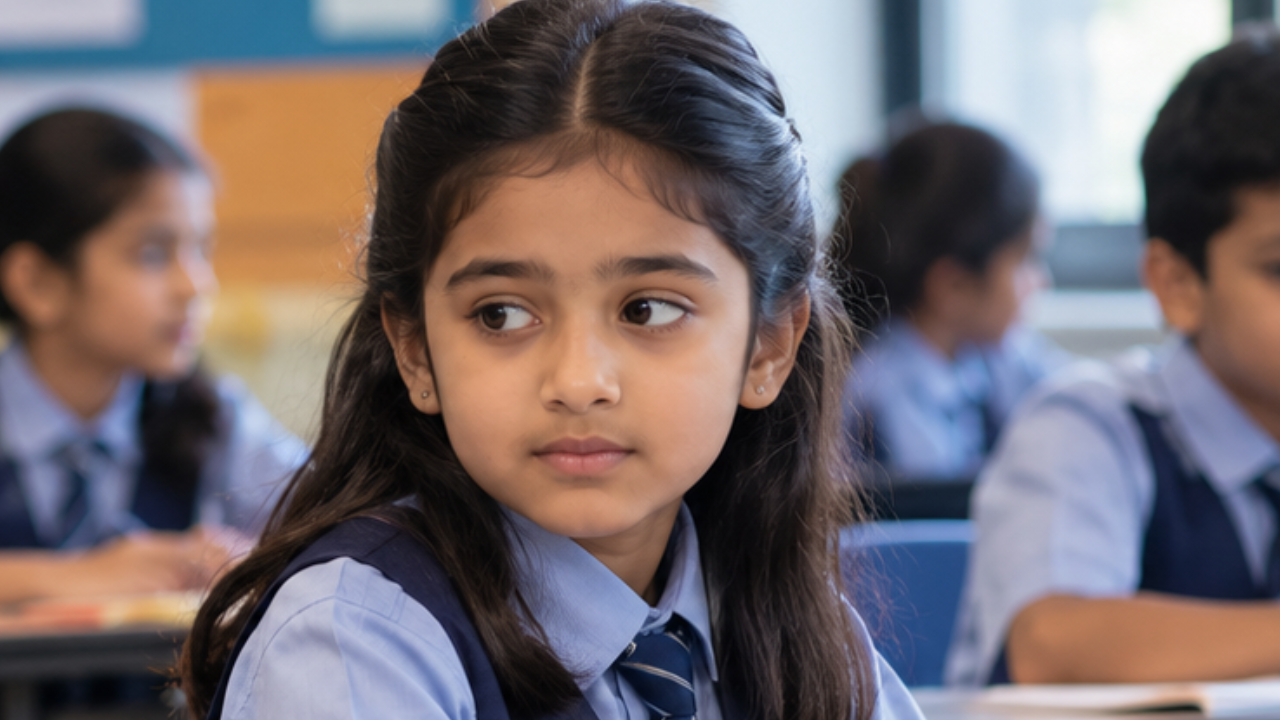
Children often adapt their behaviour to different social groups as they learn to navigate friendships, disagreements and belonging.
Cousins may feel familiar, but classmates can feel like an audience
Imagine a child who happily performs a dance in front of cousins during a Diwali gathering but refuses to participate when the teacher asks them to dance in front of classmates. It may be tempting to label the child shy at school and confident at home. However, confidence can depend on who is watching and how the child expects others to respond.With familiar relatives, children may already know the group’s humour, habits and reactions. At school, they may be more conscious of whether their peers will laugh, approve or include them.A review published in the Journal of School Psychology, titled Childhood peer relationships: social acceptance, friendships, and peer networks, examined how children’s friendships, acceptance by peers and wider social networks relate to their development and school adjustment. It highlights that relationships with peers are not all the same: having a close friend, being accepted by a group and finding one’s place in a larger social network are distinct experiences.This distinction helps explain why a child might feel comfortable with one or two cousins but become withdrawn around a whole group of classmates. The difference does not automatically mean that the child lacks social skills. The social setting may simply feel more demanding.
Cousins can bring out a child’s playful or unfiltered side
Children often experiment with humour, arguments, pretend play and different ways of expressing themselves when they interact with other children. How much freedom they feel to do so may depend on their relationship with the other child.A cousin who visits regularly may know a child’s favourite games, recurring jokes and emotional triggers. They may have a shared history of playing together, quarrelling over toys and making up afterwards. This familiarity can make interactions feel less formal.At school, children may still be figuring out what their classmates enjoy, which jokes are acceptable and how to join a group without being left out.Research on peer relations in childhood, published in the Journal of Child Psychology and Psychiatry, describes how children’s peer relationships develop from the early years, with preferences for particular peers emerging in early childhood and social skills becoming more established during the preschool years.The takeaway is that children are continually learning how to relate to different people. A child who is loud and playful around cousins but measured around classmates may be responding to the different levels of familiarity and security in those relationships.However, not every cousin relationship is comfortable. Children who rarely meet their cousins, feel excluded by them or experience frequent conflict may be more guarded at family gatherings than they are with friends.
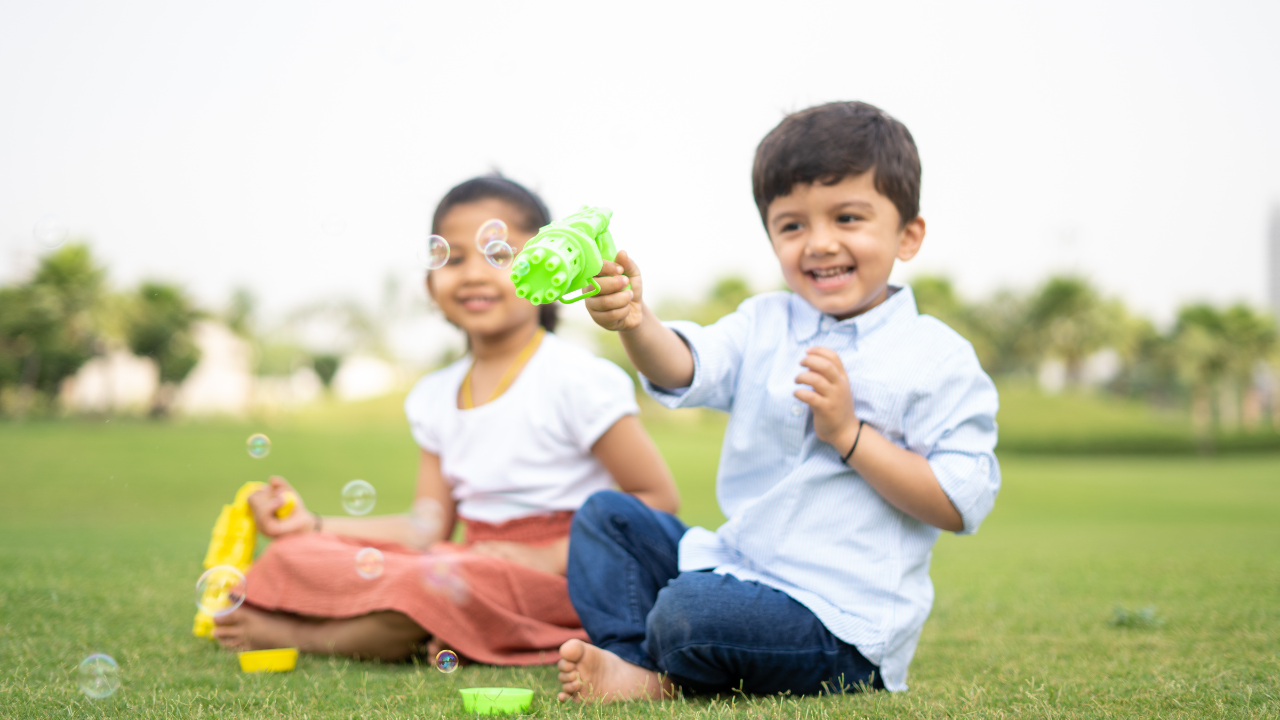
Understanding the relationships behind these differences can help parents respond with empathy rather than labels.
Family gatherings can turn cousins into competitors
In many Indian families, cousins are not just playmates. They may also be compared on school marks, sports, dancing, confidence or how well they behave around adults.A child who is relaxed with cousins in private may become unusually competitive when grandparents praise another child. They may interrupt conversations, refuse to share a favourite toy, boast about a school achievement or become upset when a cousin wins a game.These reactions do not necessarily mean the child dislikes their cousin. The relationship may carry an additional layer of comparison that is absent from some classroom friendships.Family comments such as “Look how neatly your cousin writes” or “Your cousin has already learnt to cycle” can make ordinary interactions feel like a competition. Even when adults intend to motivate children, repeated comparisons can influence how children view one another.Research on family relationships and children’s peer relations, published in the Journal of Social and Personal Relationships, reviewed links between parent-child relationships and children’s interactions with peers. It found that family experiences and children’s relationships outside the home are connected, although this does not mean that one directly determines the other.The important distinction is that a cousin relationship can combine friendship, family expectations and comparison. Classmates may bring their own competitive pressures, but the emotional meaning of a cousin’s success can be different when adults repeatedly compare the two children.What parents can do: Avoid turning cousins into benchmarks for achievement. Instead of saying, “Your cousin can do it, why can’t you?”, acknowledge each child’s progress separately. If children compete, help them learn to handle disappointment without making one child the winner in every family conversation.
Children may use different social strategies in different groups
A child may be the one who organises every game with cousins but quietly follows a classmate’s suggestions at school. Another may readily share snacks with friends but refuse to lend a toy to a cousin.Such differences can reflect the child’s position within each group. Children may take on different roles depending on whom they are with, the group’s established dynamics and what they think will help them belong.A review in the Annual Review of Psychology, Peer Relationships and Social Competence During Early and Middle Childhood, examines how children’s peer acceptance, friendships and social competence develop. It highlights the importance of understanding children’s relationships in context rather than treating social competence as a single, uniform quality.For instance, a child who is used to being the eldest among cousins may naturally take charge during play. At school, where several children have equally strong opinions, that same child may need to negotiate, take turns and compromise.The reverse is possible, too. A child who rarely gets to make decisions in a family group may feel more confident among classmates who appreciate their ideas.These differences can provide opportunities to practise cooperation, negotiation and flexibility. Parents need not insist that children behave identically in every setting, provided their behaviour remains respectful and safe.
The relationship itself matters more than the label
It is easy to assume that cousins are automatically closer because they are family. In reality, some children see their cousins every weekend, while others meet them only during holidays. Some share interests and ages; others have little in common.A child may feel safer with a classmate who listens without judging than with a cousin who teases them. Another child may prefer cousins because they have shared years of play and family experiences.A review of childhood friendships and peer networks emphasises that friendship quality, acceptance by a group and participation in peer networks are separate dimensions of children’s social lives. Simply being part of a group does not guarantee that a child feels accepted or understood.This is why parents should look beyond the family-versus-school distinction. Ask whether the child feels included, whether disagreements are resolved fairly and whether they can express their preferences without fear of ridicule.If a child consistently dreads meeting certain cousins, becomes distressed before family gatherings or reports repeated teasing, adults should take those concerns seriously rather than dismissing them with “They’re family, you should get along.”
When should parents pay attention?
Different behaviour across settings is not, by itself, a cause for concern. A child can be outgoing with familiar people and reserved in a classroom without there being anything wrong.Parents should pay closer attention when the change is intense, persistent or accompanied by signs of distress. For example, a child who regularly cries before meeting cousins, fears being mocked by classmates or feels compelled to change their behaviour to avoid rejection may need support.Rather than asking, “Why can’t you behave the same way everywhere?”, try asking specific, open-ended questions:
- “What do you enjoy doing with your cousins?”
- “Is there anything that makes you uncomfortable when you play together?”
- “Do you feel you can say no when you don’t want to play a game?”
- “Is there someone at school you feel especially comfortable with?”
Listen without immediately correcting the child’s account or insisting that they share everything with family. Their answers may help you understand whether the difference comes from familiarity, group dynamics, comparison or an uncomfortable relationship.If the distress is ongoing and affects the child’s daily life, consider discussing it with a paediatrician or child mental health professional.
The takeaway
A child who behaves differently around cousins and classmates is not necessarily being inconsistent or putting on an act. Different relationships bring different expectations, histories and feelings of belonging. For parents, the goal is not to make a child equally talkative, confident or cooperative in every setting. It is to help them feel secure enough to express themselves, respect other people and navigate disagreements.Sometimes, the child who runs around the living room with cousins and stays quiet in class is simply responding to two very different social worlds. Understanding those worlds can tell parents far more than judging the behaviour alone.