










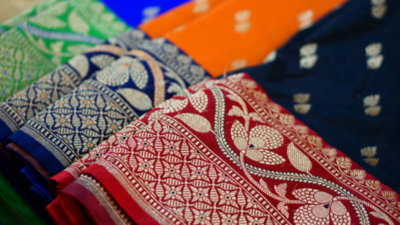
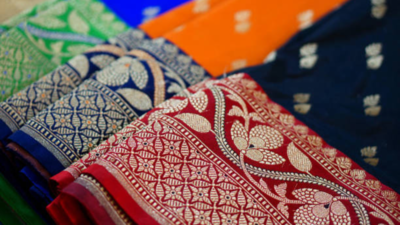
Imagine a woman standing in front of two racks of sarees. One carries the unmistakable appeal of a luxury label, its name promising exclusivity before she has even touched the fabric. The other holds a handwoven saree in a slightly uneven shade of indigo, with tiny variations in its weave that reveal the human hands behind it.She reaches for the second one.Perhaps she remembers her grandmother wearing something similar. Perhaps she likes the way the fabric falls, or knows the saree will grow softer with use. Or perhaps she simply prefers it. There is no single explanation for her choice, but the decision raises an interesting question: when a woman chooses handloom over a luxury label, is she buying a garment, or choosing what she wants her clothes to say about her?Psychology offers a way to explore that question, although it cannot tell us someone’s personality from her wardrobe alone.
What our clothes say about us
Clothing is rarely just about covering the body. It can communicate taste, social position, cultural identity and the kind of person we would like others to see.A 2025 study published in Fashion, Style & Popular Culture, based on interviews with seven women, explored how personal clothing style connects with self-perception. The researchers found that participants viewed their style as a way to express their sense of self, the person they hoped to become and their creativity. Consistency and comfort also mattered. The small sample does not represent all women, but it offers a useful insight into why clothing choices can feel deeply personal.For a woman who gravitates towards handloom, the appeal may lie in qualities that a logo cannot communicate on its own. The texture, the weave, the colours and the knowledge that a textile carries a regional tradition may matter as much as how it looks.That does not mean women who buy designer labels care less about individuality. Luxury fashion can also be a form of self-expression, artistic appreciation and personal identity. The difference lies in what each person values, not in one choice being psychologically superior to another.
The appeal of something made by hand
Handloom has a quality that is easy to miss when fashion is discussed mainly in terms of trends and labels: the process is part of the product.A handwoven saree may carry the distinctive techniques of a weaving cluster, the knowledge passed between generations and the work of people whose names are rarely as visible as a fashion brand’s. India’s handloom sector remains an important source of livelihood, with the government’s Handloom Mark scheme designed to help identify authentic handwoven products.
Why a saree can feel personal
A handloom saree may also carry memories that have little to do with fashion.A particular border might recall a mother’s wedding photographs. A cotton saree might bring back the image of a grandmother getting ready for an ordinary afternoon. A familiar weave might remind someone of a hometown she no longer lives in.This is especially relevant to clothing with cultural significance. Sarees are worn across generations and regions, with weaving traditions shaped by local materials, techniques and aesthetics. UNESCO’s tentative listing on India’s iconic saree-weaving clusters describes saree weaving as a living tradition that continues to connect historical craft with contemporary life.Of course, not every handloom saree comes with a family memory, and not every buyer has an emotional connection to tradition. Some women simply enjoy the fabric, prefer natural textures or find the colours more appealing than those of mass-produced clothing. Personal taste does not always need a deeper explanation.
Is it about rejecting status?
It is tempting to assume that a woman who prefers handloom is rejecting consumerism or refusing to be impressed by luxury labels. Sometimes, that may be true. But the evidence does not justify turning the preference into a personality diagnosis.A 2010 paper in the Journal of Consumer Psychology examined the relationship between luxury fashion, aesthetics and identity. It explored how fashion can operate as wearable art, shape ideas about the self and influence how people think about their appearance. Luxury brands, therefore, can carry meanings beyond their price tags, just as handloom can.The more useful question is not whether a woman cares about status, but which signals matter to her. One person may enjoy the recognition that comes with a famous label. Another may value the rarity of a particular weave. A third may choose a saree because it feels comfortable, lasts for years or works beautifully with jewellery she already owns.And these motivations can overlap. A woman can love handloom and luxury fashion, appreciate craftsmanship and enjoy dressing for attention. Human preferences rarely fit into neat categories.
The choice may reveal what she values most
The woman in our imagined shop may leave with the indigo saree because it reminds her of home. She may choose it because she admires the weaver’s skill. Or she may simply like the way it looks in daylight.She does not need to be making a statement about luxury, money or modern life.Sometimes, the most revealing part of a clothing choice is not what someone refuses to buy. It is what makes her stop, reach out and say, quietly, this is the one I want.