










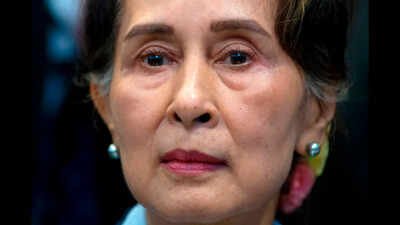
Aung San Suu Kyi, Burmese leader and Nobel Peace Prize winner, once observed that passive wishful thinking holds no real value if there was no action put behind it. She stated that she did not believe in people just hoping, insisting that people must work for what they want. She argued that no one has a right to hope without endeavor, and that true change only comes when collective work is focused on bringing about the necessary political and social conditions for a country. This perspective was not born from comfortable academic theory. It was forged through decades of intense political struggle, personal sacrifice, and confrontation against one of the most stubborn military dictatorships of the modern era.“I don’t believe in people just hoping. We work for what we want. I always say that one has no right to hope without endeavour, so we work to try and bring about the situation that is necessary for the country, and we are confident that we will get to the negotiation table at one time or another.”
Who is Aung San Suu Kyi?
Born in 1945, Aung San Suu Kyi was the daughter of General Aung San, the national hero who negotiated Burma’s independence from British colonial rule. He was assassinated in 1947 when she was just two years old. Growing up under the shadow of her father’s heroic legacy, she moved abroad for her education, studying philosophy, politics, and economics at the University of Oxford. She eventually settled into a peaceful academic life in England, marrying the British scholar Michael Aris and raising two sons. For many years, her connection to her homeland remained mostly personal rather than political.Everything changed in 1988 when she returned to Rangoon to care for her dying mother. Her arrival coincided with widespread political unrest. Longstanding public frustration with military rule, poverty, and economic mismanagement erupted into massive nationwide pro-democracy demonstrations, known as the 8888 Uprising. Tens of thousands of students, monks, and ordinary citizens took to the streets demanding freedom. Recognizing her unique position as the daughter of the nation’s founding father, the pro-democracy movement called upon her to lend her voice to the cause.In August 1988, she stood before a crowd of half a million people at the Shwedagon Pagoda and delivered her first major political speech, calling for a democratic government. Shortly afterward, she helped co-found the National League for Democracy. The military regime responded to the popular protests with brutal violence, killing thousands of demonstrators, and in 1989, they placed Aung San Suu Kyi under house arrest.
Nobel Peace Prize in 1991
For the next two decades, her life became a global symbol of nonviolent resistance. Between 1989 and 2010, she spent nearly fifteen years in detention, mostly confined to her family home on University Avenue in Rangoon. The military junta offered to release her on the condition that she leave the country, but she refused, knowing that if she left, she would never be allowed to return to lead her people. This decision came at immense personal cost. When her husband was diagnosed with terminal cancer in the late 1990s, the military government denied him a visa to visit her, and she chose not to travel to England to see him before he died, fearing permanent exile.During these long years of solitary isolation, her philosophy on work and hope solidified. She recognized that many people in Myanmar were waiting for an outside miracle, whether from international intervention or a sudden change of heart by the military generals. She continually reminded her followers that freedom could not be wished into existence. In her view, hope without action was a form of self-deception that allowed people to avoid the difficult, dangerous work of resisting tyranny. True hope was an active discipline, requiring daily acts of courage, organization, and persistent effort, even when progress seemed invisible.Her stance made her an international figure, earning her the Nobel Peace Prize in 1991. When she was finally released from house arrest in 2010, she led her party to a landslide victory in the 2015 elections. Because the military-drafted constitution barred anyone with foreign family members from becoming president, she assumed the role of State Counsellor, serving as the de facto leader of the civilian government.
Fall of Aung San Suu Kyi
Her time in power, however, brought intense global scrutiny and complex moral compromises. Her international reputation suffered severely when she defended Myanmar against charges of genocide regarding the military’s violent campaign against the Rohingya Muslim minority. Critics who had once revered her as a moral icon saw her defense of the military as a betrayal of human rights principles, while her supporters argued she was attempting to preserve a fragile democratic transition alongside a still-powerful military.In February 2021, the military staged another coup, arresting Aung San Suu Kyi and trying her on numerous politically motivated charges. She was sentenced to decades in prison, returning once again to detention.Despite the tumultuous shifts in her political journey, her words on hope remain a clear statement about human agency. Hope is not an emotion that falls upon us while we wait passively for better circumstances. Instead, hope is something earned through effort, persistence, and continuous labor toward a goal.