










Scientists at Cornell University have developed a tiny wireless device that can record brain activity while animals move freely through their surroundings. Lighter than a US dime, the device could give researchers a clearer view of how animals navigate, communicate and interact without being held back by wires or bulky equipment. Called the Wireless, Interactive, Lightweight Datalogger, or WILD, it brings together brain monitoring with information about movement and behaviour. This allows scientists to study neural activity in conditions that are much closer to the way animals actually live and behave.
The tiny wireless device records animal brains in natural settings
The WILD device was developed by a research team led by first author Zifang Zhao, with co-senior authors Azahara Oliva and Antonio Fernandez-Ruiz. The Cornell Chronicle reported that the technology was designed to address a basic problem in neuroscience which is recording brain activity without getting in the way of an animal’s normal behaviour.In many traditional experiments, animals have to remain connected to recording equipment by wires. These systems can capture detailed brain signals, but the cables can limit movement and make natural interactions more difficult. Some earlier wireless systems have also been too heavy or costly for studies outside controlled lab environments.WILD is designed to make those restrictions less of a problem. Its small and lightweight construction allows animals to move around more freely, while its protective design helps it work in conditions involving moisture and humidity. Researchers can also change the device’s modules depending on what they want to study.The research was first released as a preprint on bioRxiv. The Cornell Chronicle later reported on the work and noted its publication in Nature Methods.
The device can track several parts of animal behaviour
WILD is not limited to recording electrical activity in the brain. According to Bioengineer.org, the system can combine neural recordings with information about an animal’s movement, eye activity and sounds.Different parts of the device are used for different types of information. Flexible probes can record activity from groups of brain cells, while motion sensors track movement and orientation. A built-in camera can follow eye movements, and an ultrasonic microphone can pick up sounds outside the range of human hearing.Recording these signals together gives researchers a fuller picture of what an animal is doing. A mouse approaching another mouse, for instance, may change its brain activity, movement and vocal behaviour at the same time. Having these measurements together allows researchers to examine those changes as part of the same event.WILD can also actively influence the brain rather than simply recording it. The Cornell Chronicle reported that researchers can use pulses of light and electricity to affect brain activity. The device can also be programmed to react when it detects particular brain patterns or behaviours, allowing an experiment to respond to what the animal is doing.
Outdoor tests showed how mice use their brains while exploring
The researchers tested WILD on groups of mice in a natural field setting outside Cornell’s campus. The animals were able to explore their surroundings and interact with one another while the device recorded their brain activity.According to the Cornell Chronicle, the mice were monitored for more than two weeks at a time during the experiments. The system also allowed the researchers to identify place cells in the hippocampus, a region of the brain involved in memory and navigation.Place cells are brain cells that become active when an animal is in particular locations. They have been studied extensively in lab settings because they provide clues about how animals remember and navigate their surroundings. Watching these cells while mice explore an outdoor environment gives researchers a chance to see whether the same patterns hold up when the surroundings are less controlled.The Cornell report said the researchers identified these cells outside the lab for the first time using this approach. Their activity showed some similarities to patterns already seen in lab, while also showing differences that the researchers say need further study.Those differences could help scientists understand how animals form memories of places while dealing with the changing conditions of a more complex environment.
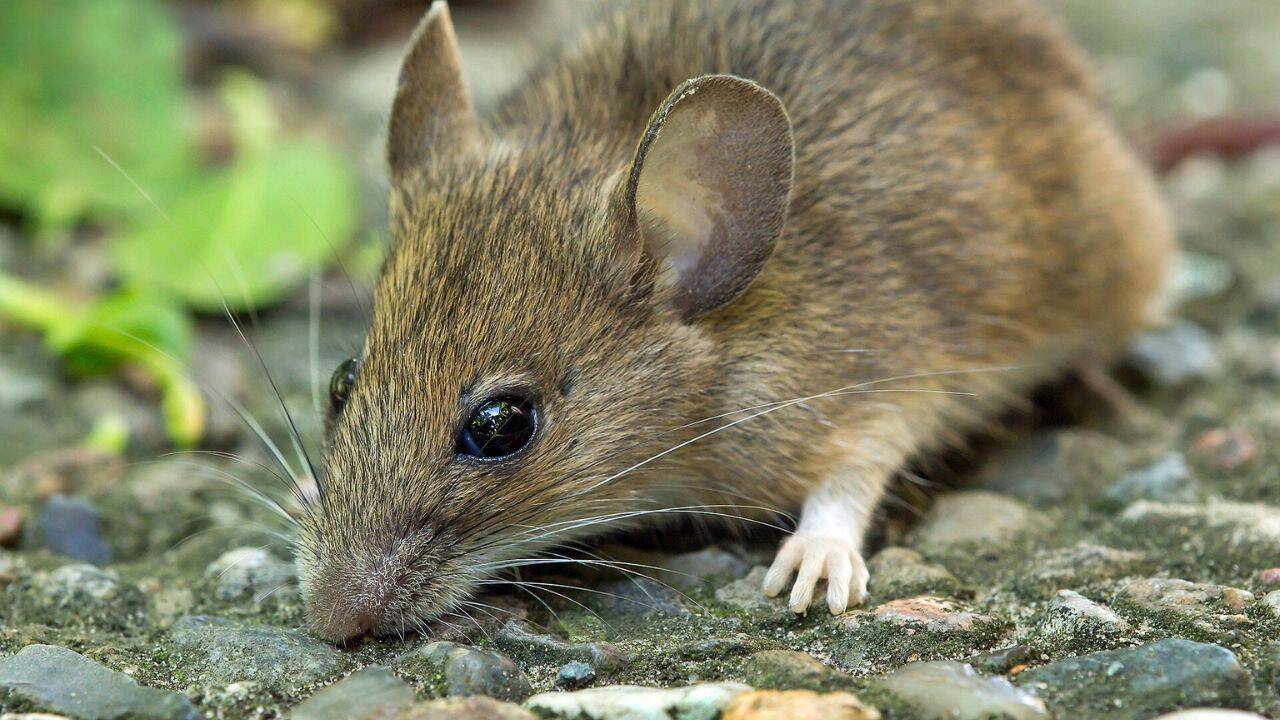
Wood Mouse. Image Credit: Wikipedia
Real-time brain control could expand future experiments
The ability to record brain activity and respond to it in real time gives WILD another useful role. Researchers can detect selected patterns of activity and trigger stimulation when those patterns appear.Bioengineer reported that this allows scientists to examine what happens when specific neural events are influenced at particular moments. Instead of simply recording what occurs, researchers can use the system to test how changes in brain activity affect behaviour.The Cornell Chronicle reported that WILD can record continuously for around 3-9 hours, depending on the battery size. Researchers can also programme it to save power when an animal is inactive, helping to extend its recording time. Because the system is modular, it can be adapted for different experiments.The researchers are already looking beyond mice. According to the Cornell Chronicle, collaborators are using the technology to study birds, bats and monkeys. The aim is to explore questions about how animals coordinate activities, respond to seasonal changes and interact with members of their own groups.
An open design could help more researchers use the technology
The team has also made the materials for the device openly available. The Cornell Chronicle reported that the researchers want other scientists to build on the technology instead of keeping it limited to their own laboratory. That open approach could allow research groups to adapt WILD for different species and experiments. Its modular construction may also make advanced brain recording more accessible to laboratories that do not have access to expensive specialised equipment.