












Diamondback moths exposed to repeated heat for 3 years evolved traits that helped their descendants develop faster and survive extreme temperatures better. A 2026 study titled ‘Experimental evolution to thermal stress indicates climate resilience in a cosmopolitan arthropod’ tested moth populations under different temperatures for dozens of generations. It was carried out to examine how they responded to prolonged thermal stress. The heat-selected population eventually showed faster development, higher female fertility and stronger survival at temperatures that caused greater mortality in moths kept under favourable conditions. The researchers also identified changes in genes, metabolism and DNA regulation linked to the insects’ ability to cope with heat.
Three years of extreme heat reshaped diamondback moths
The researchers raised diamondback moths under controlled temperature conditions for three years. The heat-selected group experienced temperatures alternating between 32°C and 27°C over a 12-hour cycle. Another group was exposed to colder conditions of 15°C and 10°C, while a third group was maintained at a constant 26°C as the ancestral comparison.The heat-selected population went through about 75 generations during the experiment. This gave natural selection many opportunities to favour characteristics that helped the insects cope with high temperatures.The researchers then compared the evolved populations with the ancestral strain to determine whether prolonged exposure had produced lasting differences.
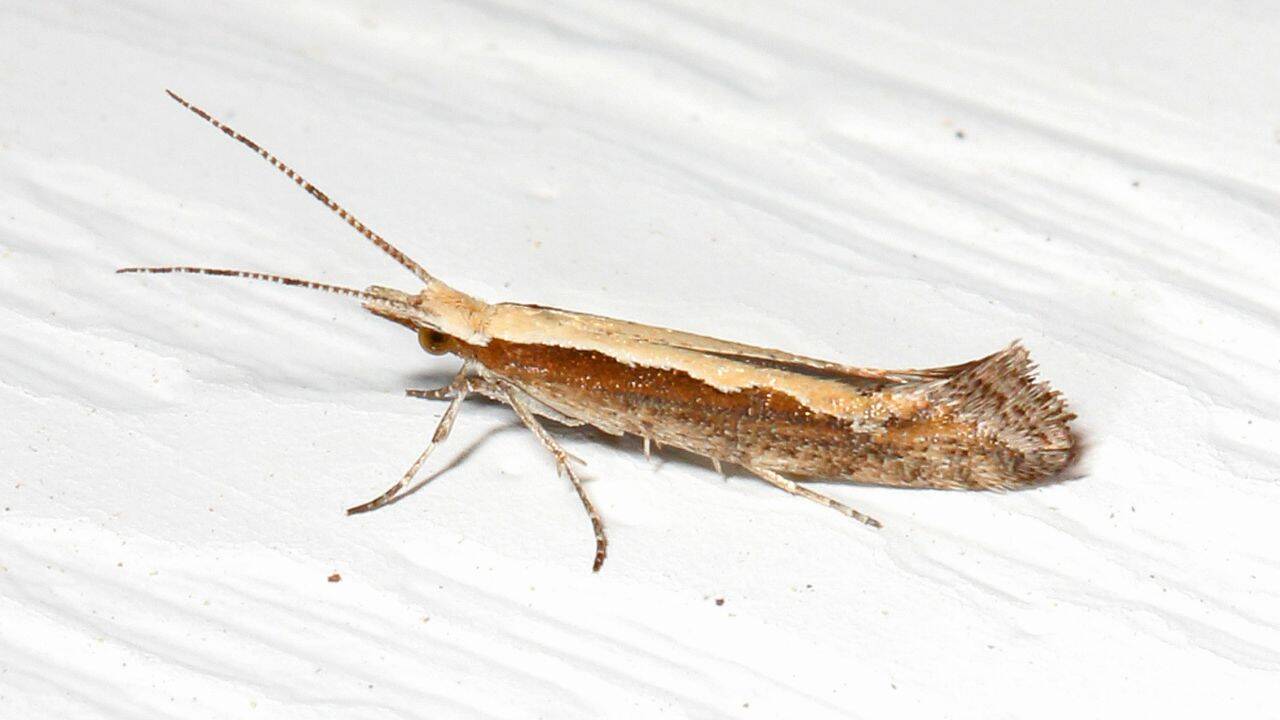
Diamondback Moth – Plutella xylostella
What changed in the heat-selected moths
The heat-selected moths completed their development more quickly than the ancestral population. They also showed higher female fertility and a greater rate of population growth.These changes could give the insects an advantage when conditions are difficult. A shorter development period allows them to reach adulthood sooner, while greater fertility can increase the number of offspring produced by a population.
How did the moths respond to extreme temperatures
The scientists exposed different life stages to temperatures higher than those during the long-term heat treatment. The heat-selected strain generally survived better than the ancestral strain at these temperatures.At 42°C, eggs, third-stage larvae and adults from the heat-selected population showed higher survival. The difference was particularly pronounced in third-stage larvae. After 120 minutes at 42°C, survival was 26.67% in the heat-selected strain compared with 13.33% in the ancestral strain, according to the study.Heat-selected pupae also survived better when exposed to 43°C and 44°C. These tests showed that the evolved population could withstand short periods of temperatures more severe than those used during its long-term selection.
Heat exposure changed the genetic makeup of the moths
The researchers examined gene activity, metabolism and DNA regulation to identify biological changes associated with the different temperatures.They found major differences in gene activity and metabolic processes between various populations. Lipid metabolism was among the affected processes. As per the study, reduced lipid metabolism could help insects manage energy demands during thermal stress.One important finding involved the PxSODC gene. It is associated with an enzyme that helps cells deal with harmful molecules produced during stress. The researchers identified a mutation in this gene in the heat-selected population and found that it improved the enzyme’s ability to remove these damaging molecules.The study also investigated DNA methylation, a chemical process that can influence how genes function. They focused on PxDnmt1, a gene involved in maintaining DNA methylation. When its activity was reduced, the moths showed changes in their responses to thermal stress.Female moths with reduced PxDnmt1 activity became less able to withstand very high temperatures, while pupae became more sensitive to cold. This suggested that changes in how their genes were controlled also helped the moths adjust to temperature stress.
What does the study reveal about the moth’s future
The study provides evidence that diamondback moth populations can respond rapidly to sustained high temperatures. Within three years of experimental evolution, the heat-selected population had developed differences in development, reproduction and tolerance to extreme heat.Because diamondback moths are important agricultural pests, such changes could have wider implications. The scientists note that thermal adaptation may affect predictions about where the species can survive and reproduce as temperatures change.However, the experiment was conducted under controlled lab conditions. Natural populations encounter many additional pressures like changing weather, food availability and other environmental factors.But still, the study demonstrates how quickly a species with short generations can respond when the same environmental pressure persists over many generations.