








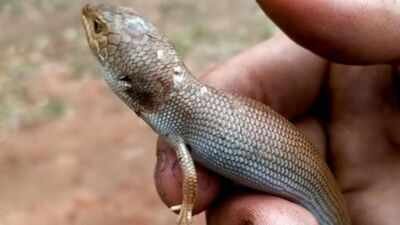
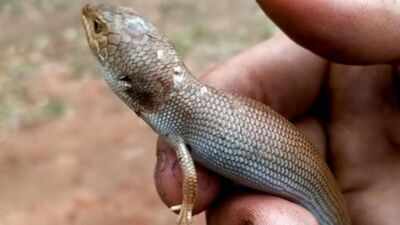
An endangered Australian lizard has responded positively to changes in livestock grazing practices on a working sheep farm, providing a possible means of reconciling wildlife conservation with agricultural production. Studies of pygmy bluetongue lizards showed that rotational grazing increased vegetation cover, an important feature of the habitat, researchers found. The study examined how the reptiles responded when a continuously grazed area was converted to rotational grazing, alongside areas where livestock were excluded. Its findings suggest that changing how sheep are moved across farmland could support the species while allowing agricultural activities to continue.
Rotational grazing benefited endangered pygmy bluetongue lizards
The study, published in Ecology and Evolution, examined the relationship between grazing management, vegetation and pygmy bluetongue lizards. The research was conducted by Kimberley H Michael, Patrick Michael, Ryan Baring and Michael G Gardner on a privately owned sheep property near Peterborough in South Australia.According to the researchers, the change from continuous grazing to rotational grazing increased vegetation cover in the experimental plots. The lizards responded well to the increase, lending support for the idea that management of grazing can influence habitat quality for the lizards.This was particularly relevant as pygmy bluetongues occur on private grazing properties and are dependent on suitable grassland conditions. “Compatible grazing practices that maintain vegetation structure are important for their continued survival,” the researchers said.
Why the researchers examined livestock grazing
Continuous grazing or set-stock grazing is where livestock are confined to one paddock for a long period of time. Researchers said the system could enable sheep to graze on preferred vegetation multiple times, potentially diminishing the availability of desired plants over time.Rotational grazing follows a different approach. Sheep move between multiple paddocks, allowing grazing pressure to be distributed more evenly across the landscape. The method aims to reduce repeated pressure on preferred grazing areas while encouraging livestock to use less favoured vegetation.However, the researchers acknowledged that rotational grazing is not automatically beneficial in every situation. Its effects can depend on how it is managed, local conditions and the intensity of grazing. That’s why they examined its effects directly on a property supporting an endangered reptile.
How the farm study compared grazing practices
The research took place approximately 300 kilometres north of Adelaide, where the property used both rotational and continuous grazing.The farm had 19 rotational grazing paddocks, each covering around 172 hectares. Sheep generally remained in each paddock for approximately one month before being moved. A separate continuously grazed paddock covered about 460 hectares, with sheep remaining there for around 10 months each year.The researchers established six plots of 30 by 30 meters in places where pygmy bluetongues were located. Three were in an area that had been rotationally grazed for over a decade and the other three were originally in the continuously grazed section.In February 2023, new fencing split the continuously grazed paddock into 3 rotational grazing areas. Two plots were subsequently fenced to exclude livestock altogether.This created three conditions for comparison, including established rotational grazing, newly introduced rotational grazing and grazing exclusion. The researchers monitored vegetation, spider burrows, lizard abundance and body condition over two years, while livestock movements continued under the landowner’s usual farming management.
What changed after grazing management was altered
The researchers found that vegetation cover increased in the newly established rotational grazing plots and in areas where livestock were excluded. The increase was particularly evident in the experimental grazing areas.They also found a positive relationship between vegetation cover and pygmy bluetongue abundance in the post-change surveys. Grazing exclusion had a significant positive effect on lizard numbers but the response was not consistent between treatments and survey times.The researchers cautioned that the newly introduced grazing arrangements did not immediately deliver the same results as established rotational grazing. The existing rotational area had been managed in this way for over a decade, suggesting that longer-term effects of grazing management may be important.They explained that vegetation changes may take time to accumulate after grazing practices are altered. Consequently, short-term observations may not fully reflect the eventual response of the reptiles to habitat improvements.
Importance of vegetation recovery for lizard condition
Pygmy bluetongues occupy vacant spider burrows and spend much of their time close to these shelters. The researchers explained that the reptiles are ambush predators, catching small ground-dwelling creatures that pass near their burrow entrances.Greater vegetation cover may help support the animals by improving the availability of these prey. Adult lizards had higher body condition in the grazing exclusion plots than the rotational and experimental grazing plots during the final November 2024 survey.The researchers also saw young lizards staying in maternal burrows among the different grazing treatments. However, young lizards were only seen establishing independent burrows in consecutive surveys in the grazing exclusion plots.Greater vegetation cover could influence how far young lizards need to move before establishing their own burrows.