










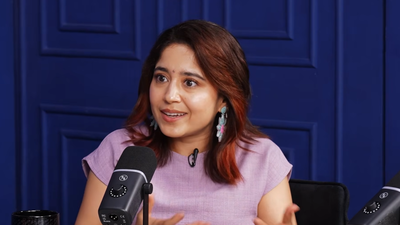
Actor Shweta Tripathi once imagined herself becoming a mother. She loved children, pictured having two of her own and even had an idea of the kind of child she wanted to raise. But over the years, her views on parenthood changed. An unhealthy relationship made her question how childcare and household responsibilities are shared, while learning that her Anti-Müllerian Hormone (AMH) levels were low left her upset for a different reason, she feared losing the freedom to decide whether she wanted a child.Speaking to Soha Ali Khan on her podcast All About Her, the Mirzapur actor spoke about how her thinking evolved and why she and her husband, Chaitanya Sharma, eventually decided to remain child-free.
5 Oct 2026 | 12:06
Parents, when your child refuses to greet relatives, do you make them say hello or respect their choice?
Shweta Tripathi once imagined having children
Shweta said she has always loved children. She recalled attending a wedding as a child and being fascinated by a young child she met there. That experience stayed with her, and she grew up finding children adorable and imagining that she would become a mother one day.She even had a playful picture of the child she wanted. “I always wanted to have a child who was like a monkey,” she said, explaining that she wanted a child who was polite and well-behaved but also curious, adventurous and independent.However, her understanding of motherhood changed as she watched friends and family members raise children. She said the experience involves much more than the emotions and happiness people usually talk about. “I think once you become a mother, you become a superhuman because I have seen my friends and my own sister-in-law,” she said.She added that she often wondered how women in earlier generations managed the responsibilities of raising children. Her friends, she said, had also told her that nobody had prepared them for the less-discussed aspects of parenting.“And the list is long. So, hats off to all the mothers because I think it takes a lot of courage, strength, and sacrifice, and it’s very tough,” she said.
An unhealthy relationship changed how she viewed parenting
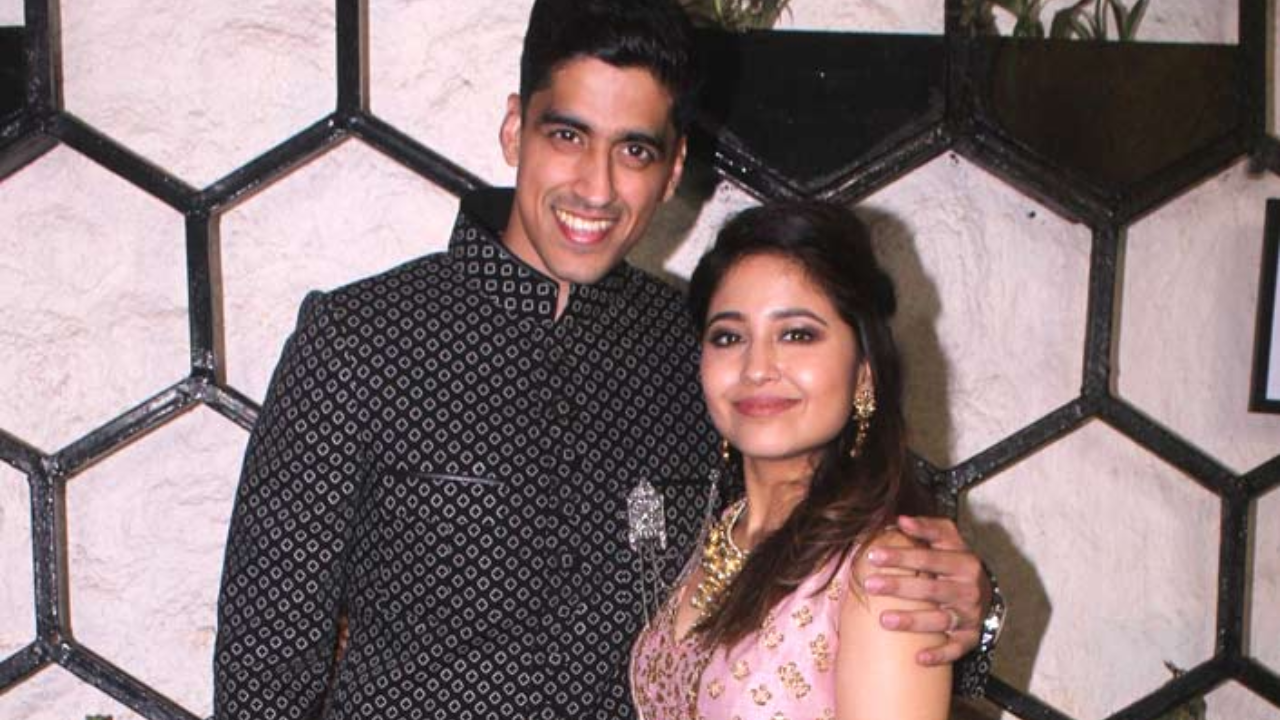
Shweta with Chaitanya.
Shweta said an experience in an unhealthy relationship made her think about the unequal distribution of responsibilities between men and women. She recalled being with someone during a difficult phase in the relationship and began considering how women can end up taking care of their partners in addition to their children and homes.“I don’t know when that switch happened for me, but I do remember one point where I was with somebody, and we were not in the best phase of our relationship,” she said. She began questioning the expectation that women would automatically take charge of most domestic and caregiving responsibilities. “Because for everything, the onus doesn’t have to be on the woman and it is not just about the child but also about taking care of the house, also taking care of the adult child. So I remember thinking, ‘I don’t want to be the only one carrying those responsibilities,’” she said.Shweta married actor, rapper and writer Chaitanya Sharma, popularly known as SlowCheeta, in June 2018. Speaking about her husband on the podcast, she described him as different from the person she had encountered in that earlier experience, calling him her best friend and favourite person.
Learning about her low AMH levels left her upset
Another moment that affected Shweta’s thinking came when she got her AMH levels tested and learnt that they were quite low. AMH, or Anti-Müllerian Hormone, is a marker doctors use as part of an assessment of ovarian reserve. Shweta said the result came as a shock because she was still trying to understand whether she wanted to become a mother.“That, for me, was a huge shock. I remember being really upset because I wanted the choice to be mine. I didn’t want somebody else telling me, ‘Oh, you can’t have a child.’ Even at that time, I was still figuring out whether I wanted to have a child or not,” she said.The news upset her not simply because of what it might mean for her fertility, but because she felt that a decision she wanted to make for herself could be taken out of her hands.
How the conversation with her husband evolved
Shweta said she and Chaitanya had discussed having children. Initially, they spoke about having two, then considered having one. Over time, the conversation changed, and they became comfortable with the idea of not having children. She described the decision as something that evolved rather than a single, deliberate choice. “It was not a conscious choice. We are happy. We are very happy,” she said.She also acknowledged that raising a child can bring a kind of joy that cannot be compared with a child-free life. At the same time, conversations with mothers she knew had given her a more complicated picture of parenthood. She recalled meeting women who loved their children but admitted that, if they could make the decision again with the experience they now had, they might choose not to become parents. “And that has nothing to do with the child. They love their children, but because they have already experienced motherhood, they might choose differently now,” she said.Shweta felt that many women were trying to balance careers with the time and emotional effort involved in raising children. She wanted women who were questioning motherhood to know that choosing a different path was also acceptable. “If you’re choosing your ambition, your career, or your personal life, it’s all right,” she said.