









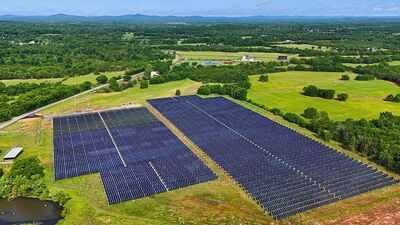
A solar farm in central Tennessee has developed a system that allows cattle to graze beneath solar panels in a way that lets panels on the ungrazed sections keep generating electricity. Silicon Ranch, which owns the 40-acre farm in Christiana, has combined slightly raised panels with software that moves them close to horizontal when cattle are grazing. The project aims to show that cattle can thrive at solar sites, where sheep have more commonly been used for grazing.According to The Associated Press, the farm has 10 cows and their calves, which workers move between paddocks every few days as of April 2026. The ungrazed sections generate roughly 5 megawatts for Middle Tennessee Electric, a rural electric co-operative.
How a Tennessee solar farm developed a moving panel system to make room for cattle
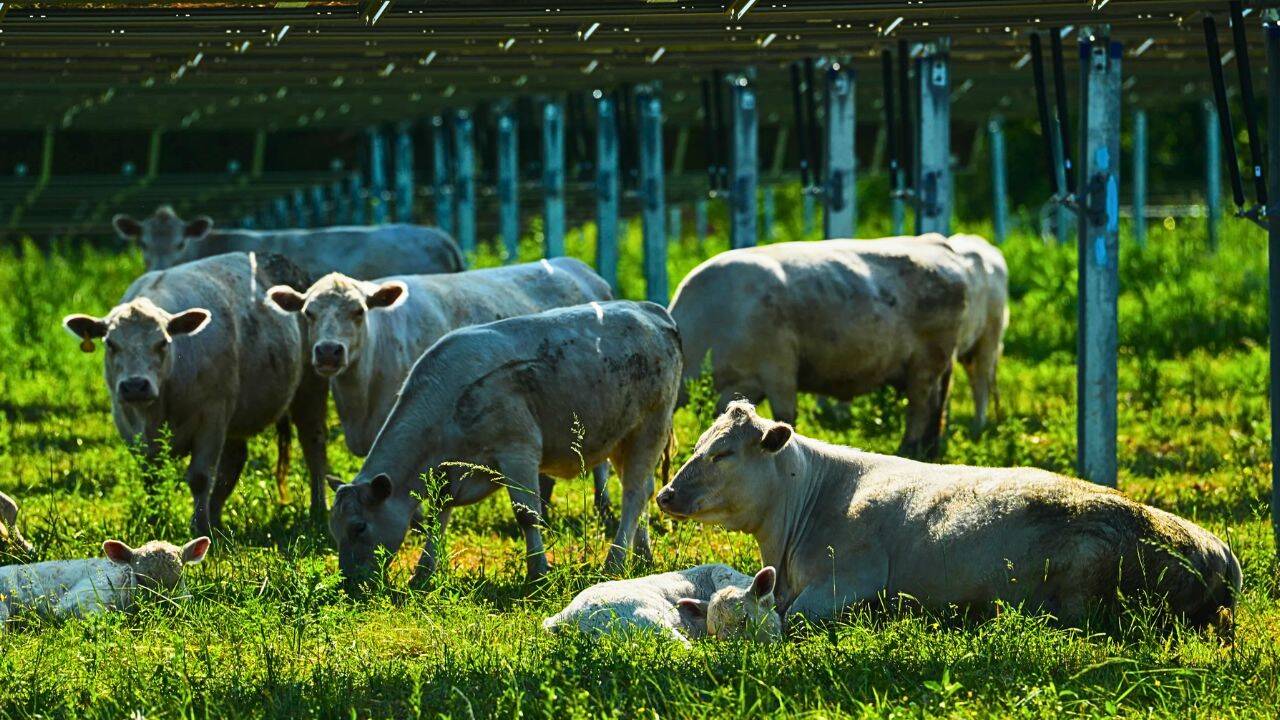
Cattle are considerably larger than sheep, creating challenges for solar farms that want to combine electricity production with grazing. Solar panels often pivot to near-vertical angles to capture sunlight, leaving little room for larger animals to move underneath. Simply raising the panels further can also be expensive because it requires more steel.Silicon Ranch addressed these challenges by slightly raising its panels and developing software workers can use to tilt them close to horizontal when cattle are grazing. Nick de Vries, the company’s chief technology officer, explained that the arrangement allows the cattle room to wander beneath the panels.
PC: Joshua A. Bickel/AP News
Ten cows and their calves graze beneath panels at Tennessee solar farm
The Christiana facility has 10 cows and their calves grazing beneath its solar panels as of April 2026. Workers rotate the animals between paddocks every few days. This arrangement allows the panels in sections without cattle to operate normally and continue generating electricity. The ungrazed sections generate roughly 5 megawatts for Middle Tennessee Electric, a rural electric co-operative.Silicon Ranch introduced the project in April 2026 and plans to spend the next year demonstrating that larger cattle can thrive at solar sites. Company officials hope the technology will eventually be adopted more widely. Nick de Vries said the company knows the system works but needs to prove it to other people.
Solar grazing creates new income opportunities for farmers and ranchers
Solar grazing could help farmers earn additional income while keeping their land in agricultural use. Ethan Winter, national smart solar director at American Farmland Trust, said, “For many agricultural stakeholders, it is offensive to see high-quality farmland getting graded and piled when that’s a farm family’s legacy.”Farmers often earn about $1,000 an acre by leasing land for solar projects, which Winter said is easily 10 times more than they historically earned through traditional agriculture.This income can help them diversify their operations, pay down debt, and purchase more land. Silicon Ranch is also working with ranchers, farmers, university researchers, and others to develop best practices for maintaining healthy soils and animals at solar grazing sites.
How can solar panels benefit cattle and grass during dry conditions
The Tennessee project is also examining how grazing beneath solar panels affects pasture and cattle. Anna Clare Monlezun, a rancher and rangeland ecosystem scientist working on the project, said pasture beneath solar panels retains more moisture, making it more drought-tolerant. The shade can also leave animals less prone to heat stress, allowing them to gain more weight and drink less water.Silicon Ranch expects to have almost 15,000 acres of pasture being grazed during 2026, mostly by sheep. Sheep have already proved suitable for solar sites, with more than 130,000 acres grazed as of 2024. However, cattle grazing still faces challenges involving site design, larger-scale operations, and appropriate economic incentives for ranchers.