







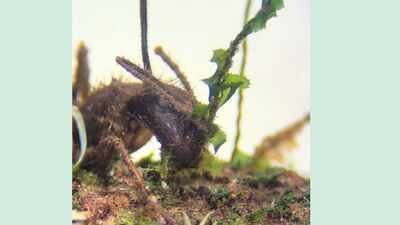
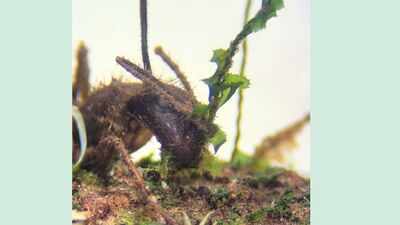
The so-called zombie-ant fungus has long fascinated scientists because of the way it takes control of infected ants, forcing them to bite plants before they die. Now, researchers in the Amazon say the fungus may have a second, hidden life stage inside mosses, and that discovery could change how scientists understand one of nature’s most eerie relationships.A team led by the National Institute for Amazonian Research (INPA) in Manaus found evidence that fungi from the genus Ophiocordyceps are not only living as parasites inside ants, but are also present inside mosses in the same forest habitat. The finding suggests that the fungus may quietly spend part of its life inside plants as an endophyte, or a microbe living within plant tissue without causing obvious harm.The study is published in the IMA Fungus journal.
What makes this fungus so famous
Ophiocordyceps is the group behind the legendary “zombie-ant” fungus. These fungi infect insects, alter their behaviour and often drive them to climb vegetation and clamp down on a leaf or stem in a pattern researchers call the “death grip.” That position helps the fungus spread its spores after the host dies.This behaviour has made the fungus famous far beyond biology circles. It sounds almost like science fiction, but it is a real example of parasitic manipulation in the natural world. Until now, though, scientists largely thought of the fungus as an insect parasite first and foremost.
A hidden stage in the forest
The new study suggests that picture is incomplete. By analyzing DNA from mosses collected at the Adolpho Ducke Forest Reserve near Manaus, the researchers detected the same parasitic fungus in the mosses where infected insects had been manipulated to bite.What makes that especially important is that the fungus was not only found right at the bite site. It also appeared in moss samples taken more than 10 meters away from any infected ant. That indicates the fungus is widespread in the surrounding bryophytes, not just present by chance at a few isolated points.In other words, the fungus may be living in the plants long before, or independently of, the moment it takes control of an ant.
Why the moss discovery matters
Scientists had already seen hints that manipulated ants often bite mosses, but the idea that the fungus might also live inside the moss itself had not been clearly shown in a tropical rainforest setting before.That changes the story in a big way. It suggests the fungus’s relationship with ants may be tied to its relationship with plants, and that the plant may play a bigger role in the manipulation process than researchers realised.The study even found the fungus in highly host-specific lineages, including species that infect particular ants such as Camponotus nidulans and Cephalotes atratus. That means the moss connection is not limited to one generalist fungus; it may be a recurring feature of several specialised Amazonian lineages.
How the researchers found it
The team used a technique called metabarcoding, which allows scientists to read the DNA of fungi from a sample all at once. In this case, the researchers collected mosses from the forest floor and surrounding vegetation, then screened them for fungal DNA.That approach revealed a surprisingly complex fungal community inside the bryophytes. Among the many fungal taxa identified, the researchers detected several entomopathogenic fungi, fungi that infect insects, including ant-specific Ophiocordyceps species.It is a powerful reminder that forests contain hidden layers of life that are easy to miss if you only look at visible symptoms, like infected ants on leaves.
A more complex life cycle
The discovery points to a more complicated life cycle than scientists had assumed. Instead of existing only as an insect parasite, the fungus may also survive in mosses as an endophyte, quietly waiting until insect hosts appear.That could help explain how the fungus survives when ants are scarce. It may also shed light on why certain fungal lineages seem so closely tied to specific moss types. If the plant hosts are part of the fungus’s life cycle, then the fungus is not just manipulating ants; it is moving through an ecological system that includes plants, insects and the forest microhabitats they share.
What the scientists say
Lead author Tales Alves Jr. said the data suggest the story is much larger than a simple fungus-ant interaction. In his words, the fungus appears to be widespread in the surrounding moss communities, revealing a much closer relationship between plant life and the behavioral manipulation of Amazonian ants.Co-author João Paulo Machado de Araújo said the manipulation may not result solely from fungus and ant alone, but from a more complex relationship among the fungus, its host and the plant where the fungus also lives silently.That is a major shift in perspective. It moves the zombie-ant fungus from a one-host story to a multi-species ecological network.
Why this is important for ecology
This study does more than add a strange new detail to a famous fungus. It may reshape how scientists think about parasite evolution, host specificity and survival in biodiverse tropical systems.If the fungus depends partly on plants to persist, then plant communities may influence when and where insect manipulation happens. That means the ecology of a forest floor, especially moss-covered areas, could help shape one of the rainforest’s most dramatic biological interactions.It also raises new questions. Does the fungus use moss as a reservoir? Does it enter ants from the plant tissue? Do certain moss species make manipulation more likely? Those are the kinds of questions this discovery now opens up.
A bigger Amazon story
The Amazon is full of hidden relationships like this one, where organisms interact in ways humans only begin to understand after close genetic or microscopic study. This fungus is a perfect example of how a species can look like one thing on the surface and something very different underneath.For now, the zombie-ant fungus remains one of the most fascinating examples of parasitic manipulation in nature. But the new study shows that its story may be rooted not just in ants, but also in the mosses beneath them.