












What if something as ordinary as a discarded tamarind seed could help tackle one of the world’s less visible pollution problems? For three Indian teenagers, that question became the starting point for an environmental innovation that has now earned international recognition.Vivaan Chhawchharia, Ariana Agarwal and Avyana Mehta, all 16, have been named the Global Winners of The Earth Prize 2026 for developing Plas-Stick, a biodegradable magnetic powder designed to remove microplastics from water. The team is the first from India to win the global title in the international environmental competition for teenagers.Reflecting on their achievement, the trio said in a statement released by The Earth Prize, “Being named the Global Winners of The Earth Prize is incredibly special for all of us, especially as the first team from India to receive this recognition.”They added, “What started as an idea between students has now been recognised among thousands of projects from around the world, which feels both surreal and deeply motivating.” For the three students, however, the project began with a problem they encountered beyond the classroom.
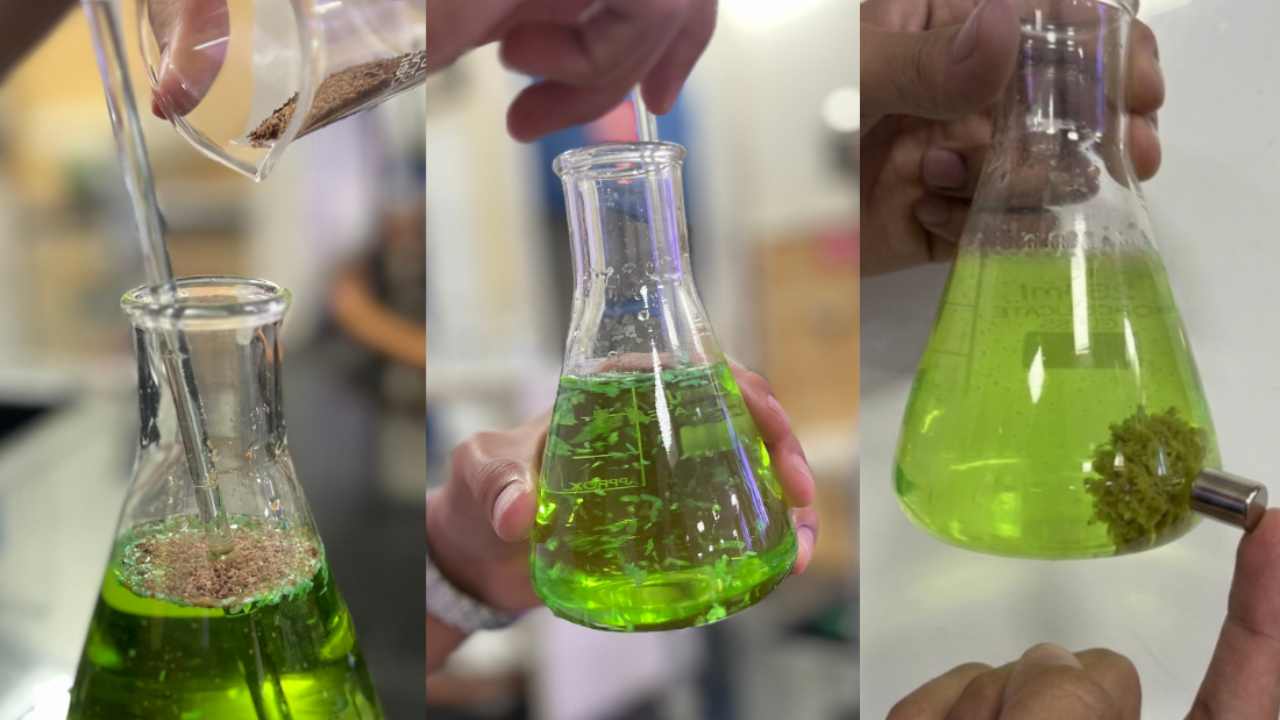
Plas-Stick uses discarded tamarind seeds to create a biodegradable magnetic powder designed to remove microplastics from water.
A visit that brought an invisible problem into focus
The idea for Plas-Stick emerged after the teenagers visited a rural community where drinking water was commonly stored in shared plastic containers. Advanced filtration systems were not readily available, making the question of water quality particularly relevant.During the visit, seeing a child drink from one of these containers made the team think about the possibility of everyday exposure to microplastics.These tiny plastic particles can enter the environment as larger plastic items break down, as well as through synthetic fibres and other sources. Their small size makes them difficult to detect and remove using some conventional approaches.The students began exploring whether a solution could be developed using materials that were inexpensive, locally available and relatively easy to work with.Rather than starting with sophisticated equipment, they turned to discarded tamarind seeds – an agricultural by-product that could serve as the basis for a biodegradable material.The resulting idea was Plas-Stick.
How does a tamarind-based powder work?
According to The Earth Prize, Plas-Stick is made from discarded tamarind seeds. When added to contaminated water, the powder attracts and binds microplastic particles, causing them to gather into visible clumps.These clumps can then be collected using a handheld magnet.The approach is designed to avoid dependence on electricity or complicated machinery, with the aim of making the process more accessible to communities that may not have advanced water-treatment infrastructure.The concept also gives agricultural waste a potential second life. Instead of treating discarded seeds as something to be thrown away, the students have explored how they might be used to address a separate environmental challenge.The invention’s promise lies in this combination of a familiar raw material and an attempt to solve a problem that is difficult to see with the naked eye.However, Plas-Stick should not yet be viewed as a ready-to-use drinking-water purifier. The technology still requires further testing and development before its effectiveness, safety and suitability for wider use can be established.
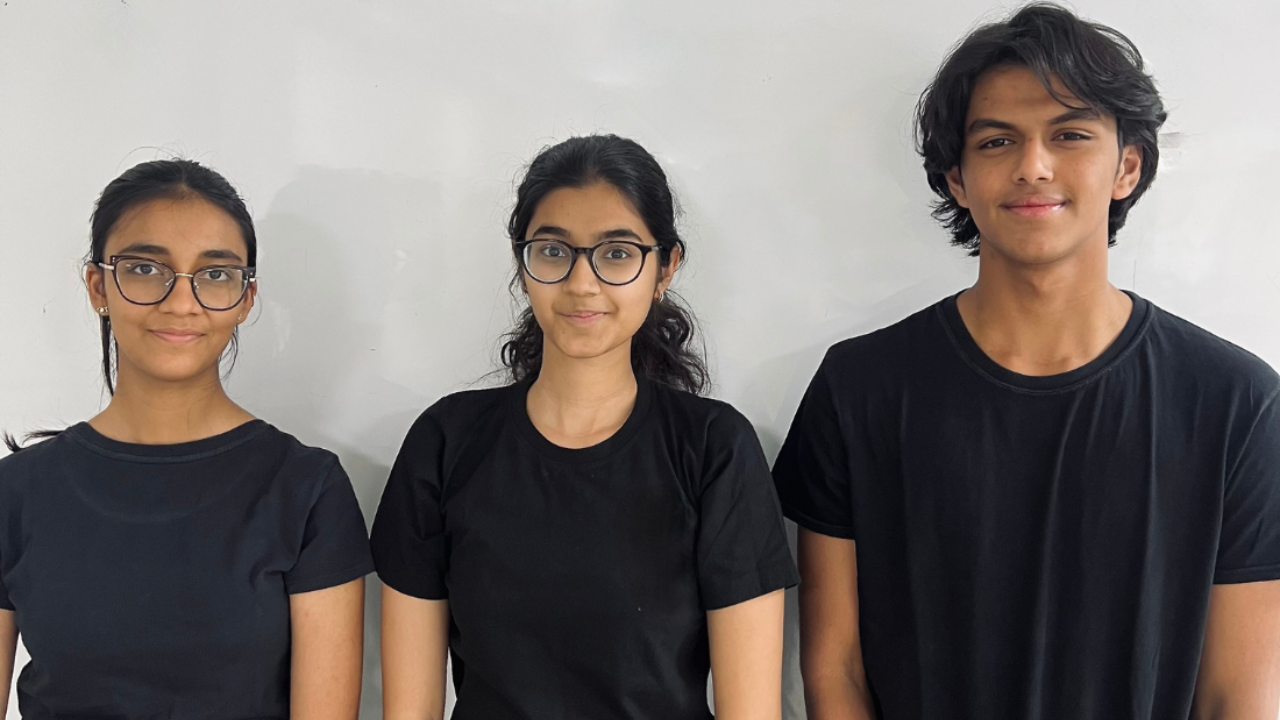
The trio became the first Indian team to win The Earth Prize global title in 2026.
From a student idea to a global win
The Earth Prize announced the Indian team’s global victory on May 29, 2026. The winner was selected through a public vote in which around 23,000 people voted for one of seven regional winners from across the world.Plas-Stick had earlier been named the Asia winner, receiving $12,500 to help develop the solution. The global recognition now gives the team a larger platform to pursue its plans.The students said they hope their achievement will encourage other young people to explore solutions to environmental problems.“We hope this not only helps us scale Plas-Stick further, but also encourages more young people to believe that their ideas can create meaningful environmental change,” the trio said in their statement.Their work has also extended beyond developing the powder. Through workshops and demonstrations, the project has reached more than 8,000 students and teachers, according to The Earth Prize.The team received guidance from Dr Rajesh Khandelwal to strengthen the testing and development of the technology.
What comes next for Plas-Stick?
Winning the competition is an important milestone, but the team’s next challenge is to move from demonstrations towards a solution that can be tested and used reliably in real-world settings.According to The Earth Prize, the teenagers plan to scale the project through decentralised production hubs and expand its reach to rural communities across India.For that ambition to become a reality, further validation will be essential. Testing will need to establish how effectively the powder removes different types of microplastics, whether the resulting clumps can be consistently separated, and whether the treated water is safe to drink.The team’s achievement nevertheless points to an important possibility: environmental innovation does not always begin with expensive equipment or a large laboratory. Sometimes, it begins with observing a problem, asking a question and looking at familiar materials differently.Peter McGarry, founder of The Earth Foundation, which runs The Earth Prize, said, “Team Plas-Stick represents exactly the kind of innovation The Earth Prize was created to elevate: solutions that are scientifically grounded, environmentally responsible and accessible to the communities that need them most.”He added that by transforming agricultural waste into a potential tool for removing microplastics from drinking water, the students were addressing a growing global challenge.For Vivaan, Ariana and Avyana, the global win is both recognition of their work and an opportunity to take it further. Their hope is that Plas-Stick can eventually reach communities where access to effective water treatment remains a challenge.As the trio put it, their achievement has left them “surreal and deeply motivating” – and they want other young people to believe that their ideas, too, can make a meaningful difference.