








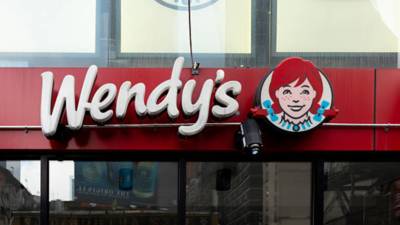
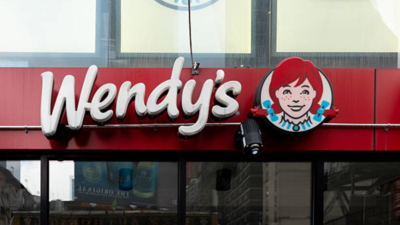
Wendy’s has rejected a $1.4 billion takeover proposal from a group led by billionaire investor Nelson Peltz, arguing that the offer significantly undervalues the struggling burger chain and its long-term growth prospects. The US fast-food company has also adopted a one-year shareholder defence plan, commonly known as a ‘poison pill’, to make it harder for the investor group to gain greater control without board approval. The decision comes as Wendy’s battles declining sales, rising operating costs and intensifying competition, while shutting hundreds of restaurants across the country.The proposal was submitted by an investor group comprising Peltz’s Trian Fund Management, restaurant operator Flynn Group and investment firms BlueFive Capital and Sixth Street Partners. The group offered $7.35 per share in cash to acquire the shares of Wendy’s that it does not already own. The offer values the proposed acquisition at approximately $1.4 billion.Wendy’s said its independent committee of directors had unanimously rejected the unsolicited, non-binding proposal after reviewing it with independent financial and legal advisers. The committee concluded that the offer substantially undervalued the company and failed to account for the potential benefits of its new turnaround strategy, called Dave’s Way.
What is Wendy’s poison pill defence?
Alongside rejecting the offer, Wendy’s announced that its board had adopted a limited-duration shareholder rights plan on November 4. The arrangement is designed to discourage an investor or group from accumulating a controlling stake without offering an appropriate premium to other shareholders. Under the plan, the rights become exercisable if an individual or group acquires 15% or more of Wendy’s outstanding shares without board approval. It also applies if an existing shareholder who already owns at least 15% purchases additional shares without approval.If the threshold is triggered, other eligible shareholders will be allowed to purchase additional shares at a discounted price, potentially diluting the ownership stake of the investor that crossed the threshold. The acquiring group would not be entitled to exercise these rights. The plan will remain effective for one year and is scheduled to expire on November 3, 2027, although the board can consider ending it earlier. Wendy’s said the arrangement is intended to give its independent committee sufficient time to assess potential takeover proposals and protect the interests of all shareholders.The defence is particularly significant because Peltz’s investor group already owns approximately 16.3% of Wendy’s shares. The company also said the group had rejected an offer to enter into a customary standstill agreement, which would have restricted certain actions involving its shareholding and influence.
Why is Wendy’s facing pressure?
The takeover dispute comes at a difficult time for the burger chain, which has been struggling to retain customers in an increasingly competitive fast-food market. Wendy’s closed 240 restaurants in 2024 and announced earlier this year that it planned to shut as many as 358 additional outlets in 2026 as part of efforts to concentrate on more profitable locations. The company has also faced pressure from rising beef prices, ageing restaurant locations and consumers cutting back on spending. Competition from established rivals such as McDonald’s and Burger King, as well as growing burger chains including In-N-Out and Five Guys, has added to its challenges.According to market research firm Technomic, Wendy’s share of US burger-chain sales declined from 11.5% in 2019 to 10.4% in 2025. The wider fast-food industry has also experienced weaker customer traffic, particularly among lower-income consumers dealing with affordability concerns and higher household expenses. Another setback came in September, when Michigan-based Meritage Hospitality Group, one of Wendy’s largest US franchise operators, filed for bankruptcy protection after the chain attempted to terminate its franchise agreement. Meritage operates 314 Wendy’s restaurants across 15 states.
New CEO bets on turnaround strategy
Wendy’s is attempting to reverse its declining fortunes under CEO Bob Wright, who joined the company in May. Wright is the fourth chief executive to lead the burger chain since 2024 and previously served as president and CEO of sandwich chain Potbelly. His turnaround programme, called Dave’s Way, is centred on improving food quality, strengthening marketing, simplifying restaurant operations and improving digital ordering. The strategy also aims to increase customer traffic, regain market share and improve profitability across its restaurants.Wendy’s is now testing thicker and crispier bacon, creamier Frosty desserts and whole-leaf lettuce in its sandwiches. It is also removing lower-selling menu items to simplify kitchen operations and allowing franchisees to make breakfast optional so they can concentrate on more profitable meal periods. Its independent committee has backed Wright’s leadership, saying the proposed acquisition does not reflect the value that could be generated through the execution of Dave’s Way.However, its latest financial performance shows the scale of the challenge. Wendy’s reported revenue of $547 million for the July-September quarter, exceeding analysts’ expectations of $531 million. Its same-store sales, which measure sales at restaurants operating for at least a year, declined 5.2%. Although the decline was smaller than the 6.4% analysts had anticipated, it highlighted the continuing difficulty of bringing customers back.
Peltz’s long association with Wendy’s
The takeover proposal also carries significance because Peltz is not a newcomer to Wendy’s. The billionaire investor previously served as chairman of the company’s board for 17 years, stepping down in 2024. His son, Bradley Peltz, continues to serve on Wendy’s board and is also a franchisee.Peltz had explored the possibility of taking Wendy’s private in 2022 but abandoned those plans in January 2023, citing improvements in the company’s business momentum at the time. His latest proposal comes as the chain faces renewed financial and operational challenges.Founded in 1969 by Dave Thomas, Wendy’s built its reputation around square-shaped hamburgers, its Frosty desserts and the iconic ‘Where’s the beef?’ advertising campaign of the 1980s. The company had 5,969 restaurants in the US and another 1,428 outlets across 38 countries at the end of 2025.