







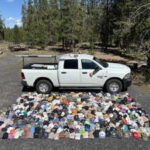


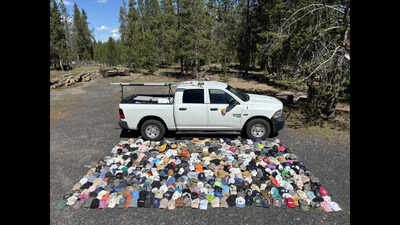
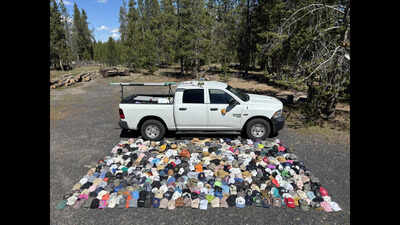
Yellowstone National Park’s geology team has pulled a record-setting amount of debris from the park’s fragile hydrothermal features so far in 2026, according to a report from the US Geological Survey’s Yellowstone Volcano Observatory.
The numbers
As of early September, crews had removed more than 20,100 pieces of paper and plastic trash, 5,600 rocks and sticks, and over 280 hats from hydrothermal areas such as the Old Faithful geyser. This marks a roughly 50 percent jump from the prior year.The surge in litter tracks with a busy tourist season: more than 2.64 million people visited Yellowstone between January and July 2026, nearly matching the park’s most-visited year in 2021. Park staff noted that heavier foot traffic in the wide-open geyser basins with narrow boardwalks tends to generate more debris.
What tourists leave behind

Yellowstone National Park’s trash haul
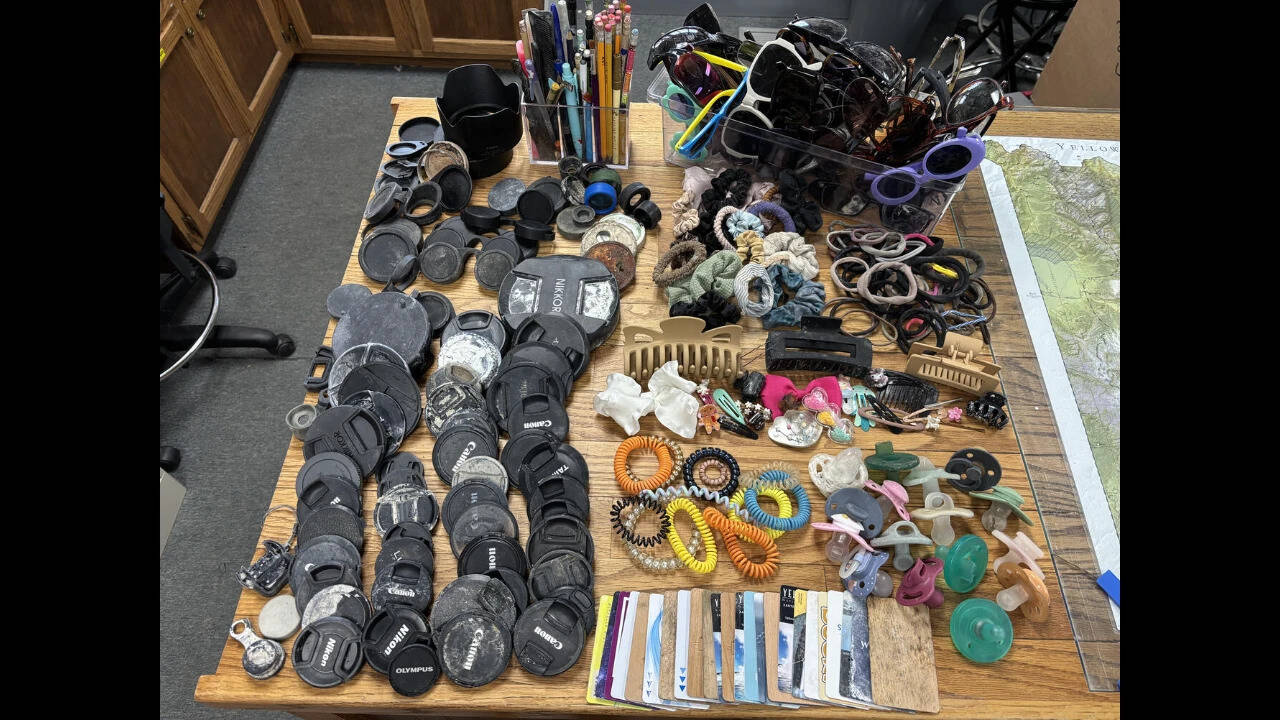
Camera covers, sunglasses, hair ties.
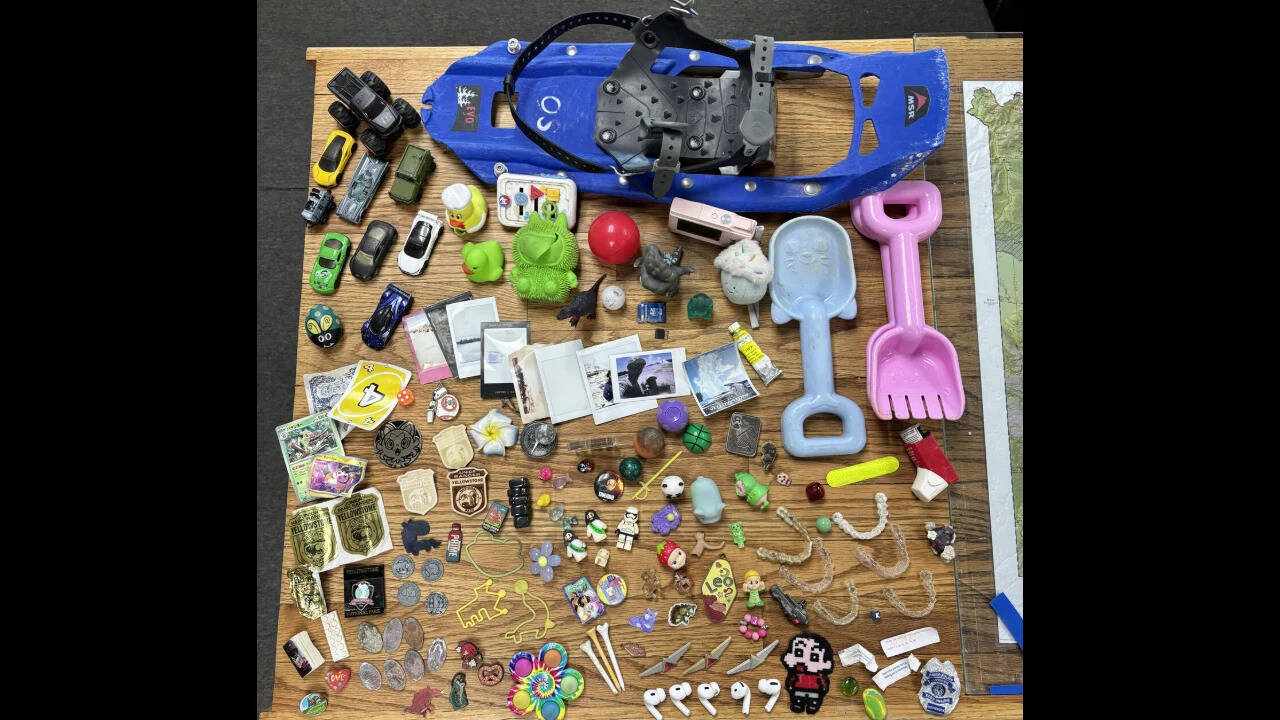
Other titbits left by tourists.
Beyond the hats, the most frequently recovered items included camera lens caps (54), hair ties (47), pacifiers (17), hotel key cards (20), pencils (42), and sunglasses (36).Some finds were stranger. The team recovered six Invisalign retainers, 15 fake nails, numerous floss picks, and a lump of pink children’s slime that had fused to geyserite sinter pieces, as well as five AirPods, three Delta Airlines flight pins, an inhaler, a few golf tees and a single Uno card. Coins recovered included more than $18 worth, including pesos, yen, euros and Canadian dollars.Among the hat haul, notable entries included a FIFA 2026 Men’s World Cup hat, a baseball cap reading “COWBOY HAT,” and a Roblox bucket hat from St. Kitts and Nevis. Collected hats are washed and donated to local organizations.
Why it matters
Park officials say the cleanup is about more than aesthetics. Margery Price, a physical science technician with the park’s Geology Program, said foreign material of any kind can damage or permanently alter a hydrothermal feature — by clogging its water supply, blocking or diverting its runoff channel, or polluting it with chemicals and sediment. She pointed to Upper Geyser Basin’s Morning Glory Pool as a cautionary example, noting it famously changed color in the twentieth century as a result of trash and items thrown in by visitors. Park staff have previously gone as far as partially draining Morning Glory Pool to remove garbage and debris.Yellowstone National Park, situated mostly in the northwest corner of Wyoming, with small portions extending into Montana and Idaho, spans roughly 2.2 million acres, or about 3,472 square miles, and draws about 4.5 million visitors annually.It was established in 1872 and is widely considered the world’s first national park.Its hydrothermal areas refer to the geothermal features scattered across the park — geysers, hot springs, mud pots, and fumaroles (steam vents). Yellowstone sits atop a massive volcanic hotspot, and this underground heat interacts with water and rock to produce these features.
- Yellowstone contains roughly 10,000 hydrothermal features — more than half of all the geysers on Earth.
- Old Faithful is the most famous geyser, known for erupting fairly predictably every 60–90 minutes.
- Grand Prismatic Spring, in the Midway Geyser Basin, is the largest hot spring in the US and known for its rainbow-like colors caused by heat-loving microbes.
- Morning Glory Pool, in the Upper Geyser Basin (near Old Faithful), is another well-known hot spring. Its color reportedly changed over the 20th century due to debris thrown in by visitors.