










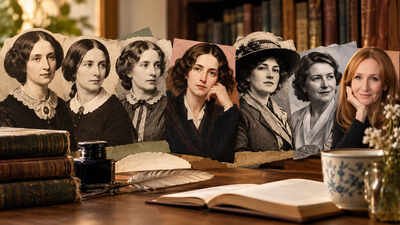
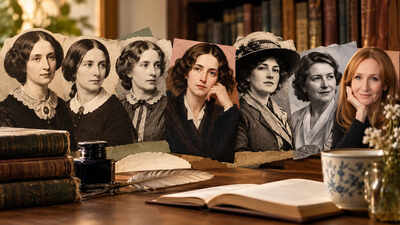
A name on a book cover can shape how readers judge the story inside. For centuries, women writers faced a publishing world that treated male authors more seriously, especially in fields such as politics, philosophy and literary fiction. Some women responded by hiding behind male names. Others chose them to protect their privacy or create a separate literary identity. Their stories reveal how an author’s gender could influence the chances of being read, reviewed and remembered.
George Eliot (Mary Ann Evans)
Mary Ann Evans adopted the pen name George Eliot before publishing her major works. Writing under a male name helped her establish herself as a serious novelist in Victorian England. Her novels, including Middlemarch and The Mill on the Floss, explored human relationships, moral choices and the pressures of society. Eliot’s work eventually earned her a place among the most respected writers in English literature.
The Brontë sisters (Currer, Ellis and Acton Bell)
Charlotte, Emily and Anne Brontë initially published under the names Currer, Ellis and Acton Bell. Their shared surname concealed their identities, while the initials and names avoided immediately identifying them as women. Charlotte wrote Jane Eyre, Emily wrote Wuthering Heights, and Anne wrote Agnes Grey. Their success challenged the narrow expectations placed on women writers in the 19th century.
Louisa May Alcott (A. M. Barnard)
Best known for Little Women, Louisa May Alcott also wrote sensational stories under the name A. M. Barnard. These tales explored crime, revenge, passion and morally complicated characters, subjects that differed from the family-centred fiction for which she became famous. The pseudonym allowed Alcott to explore another side of her writing and earn money without tying those stories directly to her established public image.
George Sand (Amantine Lucile Aurore Dupin)
French novelist George Sand used a masculine pen name to publish her work in the 19th century. Born Amantine Lucile Aurore Dupin, she became known for novels such as Indiana and Consuelo. Sand also challenged social expectations through her public life and views on women’s independence. Her name became a literary identity in its own right, showing that a pseudonym could offer more than anonymity.
Andre Norton (Alice Mary Norton)
Alice Mary Norton became Andre Norton, a name that helped her establish a career in science fiction and fantasy. Her publishers encouraged a masculine-sounding name at a time when these genres were widely associated with male writers. Norton went on to write influential works, including The Witch World series. Her career showed that women could shape entire literary worlds, even when readers did not know who was behind them.
James Tiptree Jr. (Alice Bradley Sheldon)
Alice Bradley Sheldon published science fiction under the name James Tiptree Jr. She used the pseudonym partly to keep her writing separate from her personal and professional life. Her stories often examined gender, power and human behaviour. For years, many readers believed Tiptree was a man. Her identity became public in 1977, prompting fresh discussion about how assumptions about an author’s gender influence literary criticism.
Robert Galbraith (J. K. Rowling)
J. K. Rowling, the author of the Harry Potter series, adopted the name Robert Galbraith for her crime novels. She wanted to publish a new series without the immediate expectations attached to her famous name. Her first Galbraith novel, The Cuckoo’s Calling, appeared in 2013, and her identity was revealed later that year. Unlike earlier women who faced strong barriers to publication, Rowling used a male pen name to give a new body of work room to develop independently.
Why these names still matter
These writers had different reasons for choosing male pen names. Some sought a fairer chance in a male-dominated publishing industry. Others wanted privacy, creative freedom or distance from their established reputations. Their experiences show that a name can shape a book’s reception before anyone reads its first page. The lasting achievement, however, lies in the writing itself.Disclaimer: This article draws on established biographical and literary accounts. The reasons for adopting pseudonyms varied among authors and should not be assumed to be identical.