









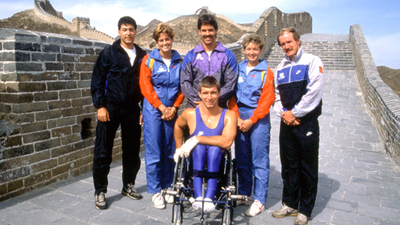
What began as one man pushing his wheelchair across the world became a movement that continues four decades later. On March 21, 1985, Canadian athlete Rick Hansen set out from Vancouver on what would become the Man In Motion World Tour, a 26-month journey through 34 countries and across more than 40,000 kilometres. According to the Rick Hansen Foundation, Hansen and his team ultimately covered 40,075 kilometres and raised $26 million, while drawing global attention to the potential of people with disabilities. In 2026, the foundation is marking the tour’s 40th-anniversary legacy by renewing its call for a world without barriers.
The journey that started a movement
Hansen was already an accomplished wheelchair athlete when he began planning the journey. His goal was not simply to complete an extraordinary physical challenge. He wanted to change how society viewed people with disabilities and demonstrate what could be achieved when barriers were removed. The tour began in Vancouver on March 21, 1985. Hansen and his team travelled through 34 countries across four continents, eventually returning to Vancouver on May 22, 1987. The official Rick Hansen Foundation account records the total distance as 40,075 kilometres, roughly the circumference of the Earth. Hansen averaged about 85 kilometres a day and spent an average of eight hours a day wheeling.The journey was physically demanding, involving long stretches of road, difficult terrain and changing weather conditions. But the larger challenge was social. Hansen wanted the tour to draw attention to the abilities and potential of people with disabilities while highlighting the physical and attitudinal barriers that prevented many from participating fully in everyday life.
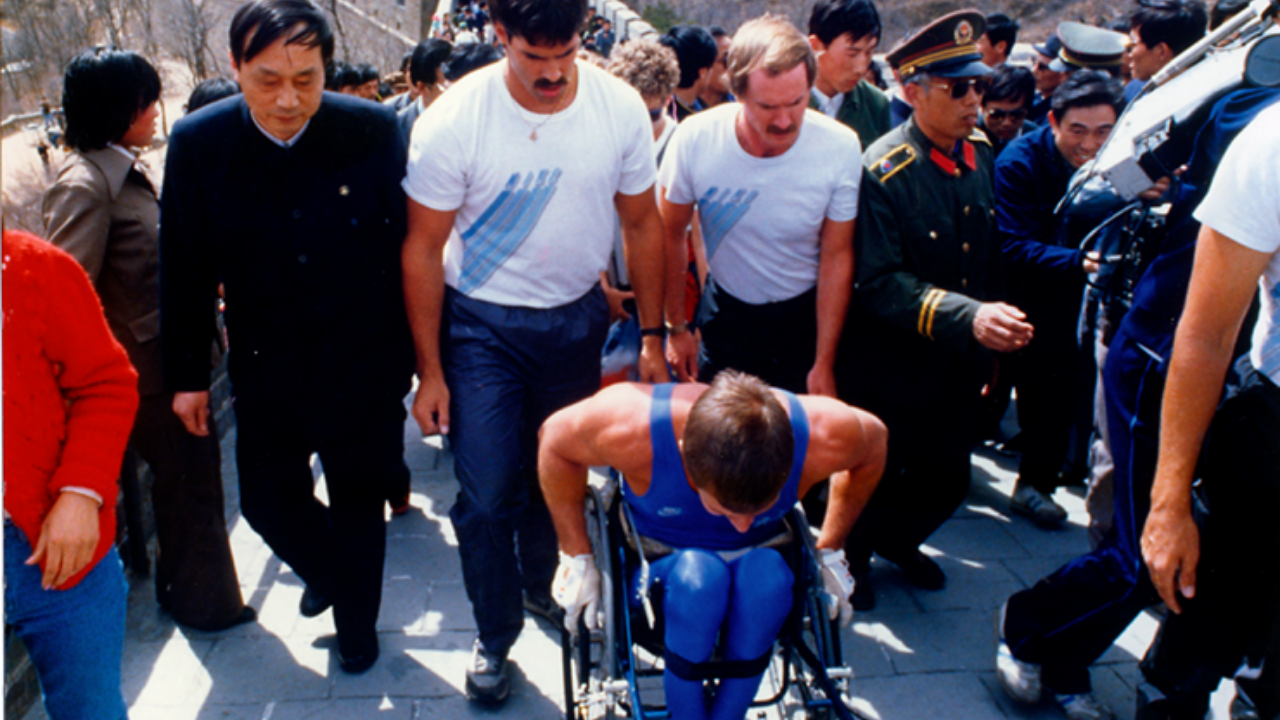
40 years later, Rick Hansen’s foundation is renewing the push for a world without barriers (Image Credit: Rick Hansen Foundation)
$26 million raised and a lasting legacy
When Hansen completed the tour in 1987, it had become much more than an athletic achievement. The journey raised $26 million and helped generate widespread discussion about disability, accessibility and inclusion. The foundation says the tour helped change perceptions of people with disabilities and contributed to a broader public conversation around making communities more accessible. The legacy continued after Hansen returned home. In 1988, the organisation that grew out of the Man In Motion movement was established and later became the Rick Hansen Foundation. Its work expanded beyond awareness campaigns to include accessibility initiatives, leadership programmes, scholarships and support for spinal cord injury research and care.The foundation’s focus today is built around a broader understanding of accessibility. Physical barriers remain an important concern, but the organisation also identifies attitudinal barriers and outdated systems, laws and policies as obstacles that can prevent people with disabilities from participating fully in society.
From one journey to a wider accessibility movement
Four decades after Hansen first set out, the central idea behind the journey remains relevant. According to the Rick Hansen Foundation, people with disabilities continue to encounter barriers in places where they live, work, learn and play. Its current work includes an Accessibility Certification programme designed to help businesses and communities improve the meaningful accessibility of the built environment. The foundation also runs programmes aimed at young people, supports leadership and scholarships, and has expanded its work into areas such as outdoor accessibility.The 40th-anniversary campaign, a continuation of the movement sparked by the Man In Motion World Tour, is built around the idea that accessibility is an ongoing effort rather than a problem that can be solved through a single achievement. The organisation is encouraging supporters to help remove barriers and create spaces where people of all abilities can participate fully. The anniversary also offers a chance to look back at how far the movement has come. Hansen’s journey helped put disability inclusion into a much wider public conversation, while the foundation has spent the years since working to turn that awareness into practical changes.
The journey is still in motion
The significance of the Man In Motion World Tour lies not only in the distance Hansen travelled, but in what the journey represented. He set out in 1985 with the belief that barriers could be challenged by showing the world what people with disabilities could accomplish. More than 40 years later, that message remains at the centre of the foundation’s work.The original tour eventually ended in Vancouver, but its larger journey did not. From accessibility in buildings and public spaces to changing attitudes and creating more inclusive communities, the push for a world without barriers continues. Hansen’s 40,075-kilometre journey therefore remains more than a remarkable chapter in sporting history; it became the starting point for a movement that is still working to make inclusion part of everyday life.