











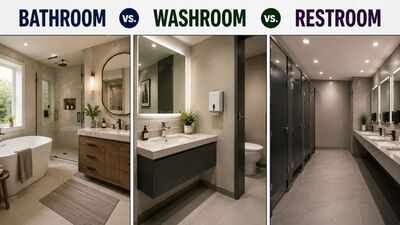
The terms bathroom, washroom, and restroom are often used interchangeably, but they don’t always refer to the same type of space. While all three are associated with personal hygiene, their meaning varies depending on the location, available facilities, and regional language. For example, a bathroom is typically found in homes and hotels and usually includes bathing amenities, whereas washrooms and restrooms are more commonly associated with public or commercial buildings. The preferred terminology also differs across countries, with “washroom” widely used in Canada and the UK and “restroom” more common in the United States. Understanding these differences can help you communicate more clearly, whether you’re discussing home renovations, commercial facilities, travel, or simply using the correct term in everyday conversations.
Bathroom, washroom and restroom: Comparing location, features and more
What is the difference between bathroom, washroom and restroom
1. LocationOne of the easiest ways to distinguish these terms is by where they are typically found. Bathrooms are usually located inside private residences or hotel rooms. Washrooms are commonly found in commercial buildings and public institutions. Restrooms are also public facilities but are the preferred term in the United States.2. PurposeBathrooms are designed for complete personal hygiene, including bathing and grooming. Washrooms and restrooms mainly provide access to toilets and handwashing facilities. Their purpose is to serve large numbers of people efficiently rather than offer bathing facilities.3. FixturesBathrooms contain a wider range of fixtures, including bathtubs or showers alongside toilets and sinks. Washrooms and restrooms generally include toilets, sinks, cubicles, and sometimes urinals. Their layouts are intended to maximise usability and simplify maintenance.4. Bathing FacilitiesA defining feature of a bathroom is the presence of a bathtub, shower, or both. Washrooms and restrooms rarely include bathing facilities because they are intended for short visits focused on hygiene rather than personal bathing.5. Regional TerminologyThe choice of word often depends on the country. Bathroom is the standard term for residential spaces in most English-speaking countries. Washroom is widely used in the UK and Canada when referring to public facilities. Restroom is the preferred American English term for public toilet facilities. This regional variation explains why different people may describe the same facility using different names.6. Design PrioritiesBathrooms are designed to provide privacy, comfort, and an attractive appearance. Many homeowners invest in premium fittings and decorative finishes to create a relaxing environment. Washrooms are built to withstand constant use. They prioritise hygiene, durability, and efficient maintenance using materials that are easy to clean. Restrooms also focus on functionality but place greater emphasis on accessibility, convenience, and accommodating high volumes of visitors.7. UsersBathrooms are intended for private use by residents, family members, or hotel guests. Washrooms serve employees, students, shoppers, and visitors in commercial and institutional settings. Restrooms are designed for public use, providing convenient toilet facilities wherever large numbers of people gather.
How location and purpose determine whether it is a bathroom, washroom, or restroom
Ultimately, the difference between a bathroom, washroom, and restroom comes down to their purpose, location, and regional usage. A bathroom is primarily a private space equipped for bathing and personal care, while washrooms and restrooms are designed to provide convenient toilet and handwashing facilities in public or commercial settings. Although these terms are often used interchangeably, understanding their distinct meanings can help you communicate more accurately, whether you’re travelling, renovating a property, or discussing public amenities. Knowing when and where to use each term ensures clearer conversations and avoids confusion across different English-speaking regions.