




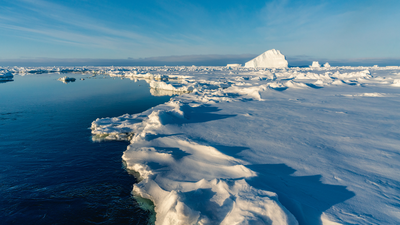
Arctic ice had been expanding for at least 1,000 years before reaching its greatest extent around 1960; researchers say greenhouse warming then reversed a natural slide toward another ice age

Arctic ice had been expanding for at least 1,000 years before reaching its greatest extent around 1960; researchers say greenhouse warming then reversed a natural slide toward another ice age

Reducing ice cap due to global warming. A new study suggests that the Arctic was already moving towards another glaciation nearly 2,000 years ago, before rising greenhouse gas emissions reversed the trend. Researchers found that the Barnes Ice Cap in Canada’s Arctic began expanding again around that time, reaching its greatest extent in this advance…
Read More
In the 1940s, Ohio built a 200-foot dam to supply water to a village; more than 80 years later, crews have begun removing it to restore a 14-mile creek and reconnect habitat across its tributary network

In the 1940s, Ohio built a 200-foot dam to supply water to a village; more than 80 years later, crews have begun removing it to restore a 14-mile creek and reconnect habitat across its tributary network

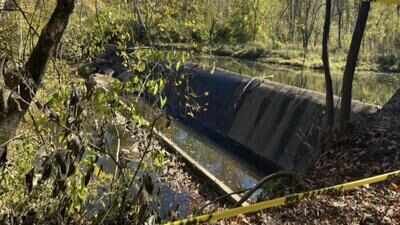
The dam roped off to discourage people (PC: Isabel Nissley/WVXU) For over 80 years, a concrete dam in Ohio did what it was built for: supplied water to a village. Now, the aging structure is being removed as part of a major restoration project. The aim of the project is bringing a creek back to…

Read More
An Australian wildlife conservancy bought 200 hectares on King Island to protect threatened species; one native bird it hopes to save has fewer than 100 individuals remaining |

An Australian wildlife conservancy bought 200 hectares on King Island to protect threatened species; one native bird it hopes to save has fewer than 100 individuals remaining |

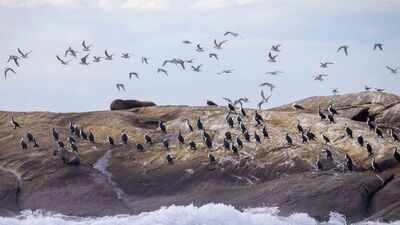
PC: Brad Leue/ Australian Wildlife Conservancy The Australian Wildlife Conservancy (AWC) has purchased 200 hectares of land on King Island, Tasmania, to protect threatened wildlife, including a critically endangered bird with fewer than 100 individuals remaining. The acquisition marks the organisation’s first conservation project in Tasmania and creates an opportunity to expand efforts to protect…

Read More
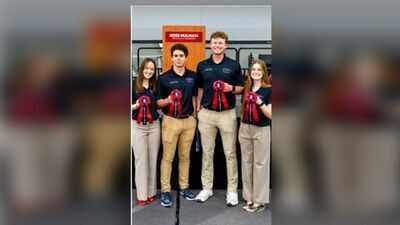
Meet the Rose-Hulman students who developed PneumaNode, a device designed to continuously monitor babies in intensive care |

Meet the Rose-Hulman students who developed PneumaNode, a device designed to continuously monitor babies in intensive care |

PC: Rose-Hulman Institute of Technology Four biology and biomedical engineering students at Rose-Hulman Institute of Technology developed PneumaNode, a small sensor patch designed to continuously monitor the vital signs of babies in neonatal intensive care units (NICUs). The device was created as part of their senior design capstone project after medical device startup ResperCare LLC…

Read More
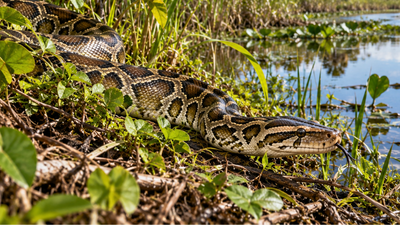
Scientists tracked 142 Burmese pythons for 20 years and found that only four expelled their implanted transmitters |

Scientists tracked 142 Burmese pythons for 20 years and found that only four expelled their implanted transmitters |

Scientists tracking Burmese pythons in southern Florida found that only four implanted radio transmitters were expelled over 20 years. The researchers implanted 305 transmitters in 142 adult snakes between 2005 and 2024 to study their behaviour, movement and ecology. The devices were used to follow the pythons in the wild and collect information about their…

Read More
Researchers who analysed data from nearly 200,000 people found that eating late at night was linked to up to a 30% higher risk of liver disease, adding to evidence that the timing of meals matters as well as what is eaten

Researchers who analysed data from nearly 200,000 people found that eating late at night was linked to up to a 30% higher risk of liver disease, adding to evidence that the timing of meals matters as well as what is eaten

A late-night snack may do more than add extra calories to your day. Researchers analysing data from nearly 200,000 people found that eating after dinner or around bedtime was associated with a higher risk of developing liver disease, including fatty liver disease and cirrhosis. The findings, reported by Oregon Health & Science University (OHSU) and…

Read More
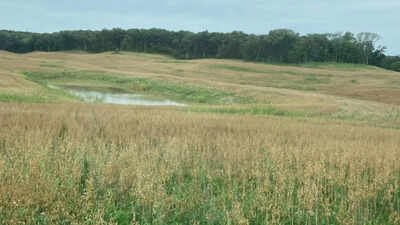
Iowa has begun a $4.9 million effort to reclaim 150 acres of abandoned coal mines, where dangerous embankments and acidic soils remain; the state says earlier work has already restored 7,195 acres

Iowa has begun a $4.9 million effort to reclaim 150 acres of abandoned coal mines, where dangerous embankments and acidic soils remain; the state says earlier work has already restored 7,195 acres

(Image credit: Facebook/Iowa department of agriculture and land stewardship) The environmental impact of coal mining does not end immediately when the last piece of coal is extracted. Even when coal mining on a land has ended, the land needs repair because there may still be steep slopes, deep pits filled with water, exposed soil and…

Read More
World Polio Day: The last two countries with polio: Why Pakistan and Afghanistan are struggling to eliminate it

World Polio Day: The last two countries with polio: Why Pakistan and Afghanistan are struggling to eliminate it

This is an AI image, used for representational purposes only As countries mark World Polio Day, the disease remains entrenched in Pakistan and Afghanistan, even as it has been eliminated from almost every other part of the world. The Global Polio Eradication Initiative (GPEI) is marking the day with a plain message: political commitment matters…

Read More
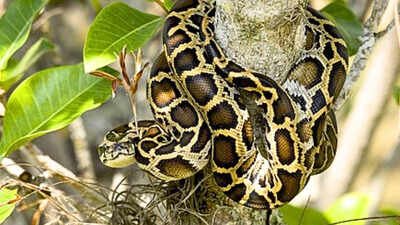
Burmese pythons have established a new breeding hotspot on Florida’s Gulf Coast; wildlife experts suspect escaped or released pets helped create the population |

Burmese pythons have established a new breeding hotspot on Florida’s Gulf Coast; wildlife experts suspect escaped or released pets helped create the population |

Burmese pythons, an invasive snake species linked to significant declines in native wildlife in Florida, have established a new population along the state’s Gulf Coast, raising concerns among wildlife officials about their potential spread and ecological impact. The Florida Fish and Wildlife Conservation Commission (FWC) confirmed that the snakes are established in part of western…

Read More
Australian vegetable grower backs a $291 million bioenergy facility that will turn discarded vegetables and farm waste into renewable energy for up to 31,000 homes in a paddock-to-power first |

Australian vegetable grower backs a $291 million bioenergy facility that will turn discarded vegetables and farm waste into renewable energy for up to 31,000 homes in a paddock-to-power first |

An Australian vegetable grower is backing a $291 million bioenergy and food precinct in Queensland that will turn agricultural and food waste into renewable energy and bio-fertilisers. Led by Kalfresh, the Scenic Rim Agricultural Industrial Precinct in Kalbar, south-west of Brisbane, has secured $80 million in joint investment from Queensland Investment Corporation and Wollemi Capital….

Read More
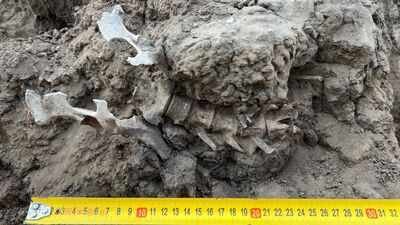
A 1,000-year-old dingo was deliberately buried by Indigenous Australians; archaeologists found people kept ‘feeding’ it for centuries |

A 1,000-year-old dingo was deliberately buried by Indigenous Australians; archaeologists found people kept ‘feeding’ it for centuries |

Dingo skeleton at the site. Image Credit: Dr Amy Way/University of Sydney New perspectives on the relationship between Indigenous Australians and animals they shared their environment with are emerging from the discovery of a dingo buried nearly 1,000 years ago in western New South Wales. The animal, known as Garli in the Barkindji language, was…

Read More
Jason Momoa launched a water brand to fight plastic pollution; after reporting more than 6 million plastic bottles removed, his company introduced hotel machines that can refill up to 500 bottles an hour

Jason Momoa launched a water brand to fight plastic pollution; after reporting more than 6 million plastic bottles removed, his company introduced hotel machines that can refill up to 500 bottles an hour

Jason Momoa launched Mananalu in 2019 with a clear goal: challenge the bottled-water industry to move away from single-use plastic. The Hawaiian water brand began with aluminium bottles and a “buy one, remove one” programme that funded the removal of plastic bottles from the ocean. According to PR Newswire, that effort has resulted in more…

Read More