








In 1935, black drongos were introduced on Rota to control crop pests; decades later the aggressive birds spread to Guam and became a threat to native birds

In 1935, black drongos were introduced on Rota to control crop pests; decades later the aggressive birds spread to Guam and became a threat to native birds

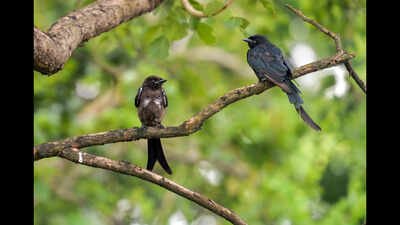
A juvenile and an adult Black Drongo perch on a tree branch (ANI Photo) In 1935, the Japanese South Seas Development Company made a decision that would have repercussions for Mariana Islands’ ecosystems for nearly 100 years. In search of a natural method for controlling agricultural pests, they imported black drongos (Dicrurus macrocercus) from Taiwan…


Read More
Meet Max Hung Nguyen, the 17-year-old California student who used Nasa data and AI to predict which stars are most likely to have giant planets |

Meet Max Hung Nguyen, the 17-year-old California student who used Nasa data and AI to predict which stars are most likely to have giant planets |

Max Hung Nguyen was 17 when he began looking at a problem that astronomers have been studying for decades: whether the chemical make-up of a star can offer clues about the planets that form around it. The Leland High School student from San Jose used data from Nasa’s Exoplanet Archive and the Hypatia Catalogue for…

Read More
Scientists discover how ancient Chinese paintings used blood to survive for 2,000 Years |

Scientists discover how ancient Chinese paintings used blood to survive for 2,000 Years |

Detail of the main Huashan Rock art. Image Credit: Rolfmueller/Wikipedia Ancient paintings covering limestone cliffs in southern China may owe their remarkable survival to an unexpected ingredient known as ‘blood.’ A new study of the ‘Huashan rock art’ in Guangxi published in the ‘Journal of Archaeological Science’ suggests that the artists used a mixture containing…

Read More
Meet Kiefer Chow and Amelia Chow: The California siblings who are copying beavers to build dams that restore habitats and reduce wildfire risk |

Meet Kiefer Chow and Amelia Chow: The California siblings who are copying beavers to build dams that restore habitats and reduce wildfire risk |

Growing up along Adobe Creek in Mountain View, Kiefer Chow spent his childhood afternoons doing something most people would call child’s play: stacking sticks and mud into makeshift dams. Years later, that same instinct would grow into something far more consequential. Alongside his sister Amelia, Kiefer founded Eco-Engineering In Action, a youth-led non-profit built on…

Read More
Quote of the day by Marie Curie: “We must believe that we are gifted for something, and that this thing, at whatever cost, must be...” |

Quote of the day by Marie Curie: “We must believe that we are gifted for something, and that this thing, at whatever cost, must be…” |

Marie Curie once offered a powerful message about self-belief, perseverance and the importance of finding a purpose in life: “We must believe that we are gifted for something, and that this thing, at whatever cost, must be attained.” Curie wrote these words in a letter to her brother Joseph on March 18, 1894, when she…

Read More
Quote of the day by Stephen Hawking: "However difficult life may seem, there is always…" - a lesson on resilience, perspective and finding what remains possible |

Quote of the day by Stephen Hawking: “However difficult life may seem, there is always…” – a lesson on resilience, perspective and finding what remains possible |

Stephen Hawking‘s words offer a genuinely powerful reminder that a difficult situation rarely means every single possibility has actually disappeared. “However difficult life may seem, there is always something you can do and succeed at,” he said. “It matters that you don’t just give up.” He said this in a speech to the Oxford Union…

Read More
Atolls can take up to 30 million years to form, but these tiny coral islands now support 31 million seabirds across the Indo-Pacific |

Atolls can take up to 30 million years to form, but these tiny coral islands now support 31 million seabirds across the Indo-Pacific |

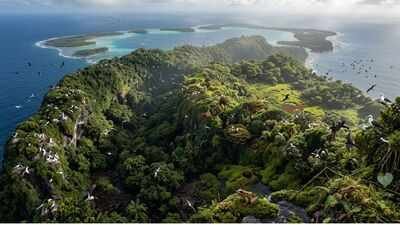
Atolls can take up to 30 million years to form, but these tiny coral islands now support 31 million seabirds across the Indo-Pacific (PC: AI Generated) Atolls may look like tiny rings of sand and coral scattered across warm tropical oceans, but they are far more important than their small land areas. These unusual natural…

Read More
Scientists found 31 new species in the ocean's vast midwater zone, including nine new jellyfish using underwater robots and new imaging technology |

Scientists found 31 new species in the ocean’s vast midwater zone, including nine new jellyfish using underwater robots and new imaging technology |

Remotely Operated Vehicle (ROV) SuBastian is deployed from the research vessel Falkor (too) in the South Atlantic during the expedition. Image Credit: Alex Ingle / Schmidt Ocean Institute An international team of marine scientists has discovered 31 new species in the ocean’s vast midwater zone during an expedition in the tropical South Atlantic off the…

Read More
Meet Astrid Eeuwes: The Dutch amateur astronomer who studies tiny space dust and now has an asteroid named after her |

Meet Astrid Eeuwes: The Dutch amateur astronomer who studies tiny space dust and now has an asteroid named after her |

Representative Image of asteroid (585349) Eeuwes traveling through the main asteroid belt between Mars and Jupiter (AI-generated image) A 1.5-kilometre asteroid orbiting the Sun between Mars and Jupiter now carries the name of Astrid Eeuwes, a Dutch amateur astronomer from Nijmegen who spends much of her time studying micrometeorites, tiny particles of space material that…

Read More
Scientists found genetically unusual avocados in Nicaragua that may preserve clues to a 5,000-year-old human journey from South America  |

Scientists found genetically unusual avocados in Nicaragua that may preserve clues to a 5,000-year-old human journey from South America  |

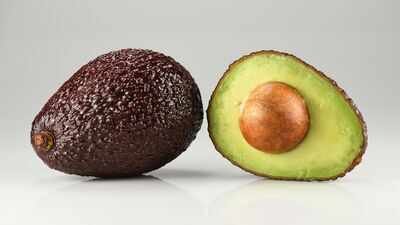
Avocado (single and halved). Image Credit: Ivar Leidus/Wikipedia Avocados growing in Nicaragua may carry a remarkable record of ancient human migration across the Americas. A new study published in ‘Plants, People, Planet’ has found that several avocado varieties growing in Nicaragua are genetically distinct from the commercial varieties commonly found today and are more closely…

Read More