










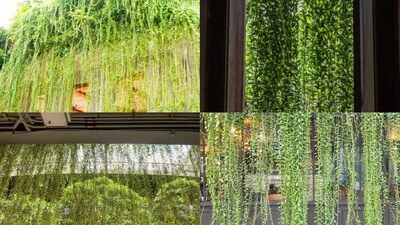
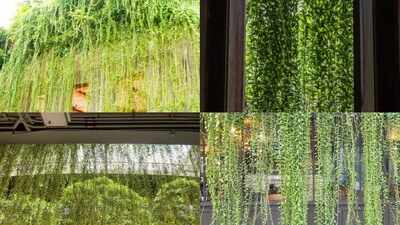
There’s a particular kind of charm to a window framed not by fabric, but by a cascade of trailing green leaves, catching the light differently throughout the day and quietly turning an ordinary window into the most interesting feature in the room. This is the idea behind a living curtain, using hanging or climbing plants in place of traditional drapes to create a natural, textured screen that still lets light filter through. It’s become a genuine trend among plant lovers looking for something more alive than fabric, and the good news is it’s a project almost anyone can pull off, rented apartment or not. Here’s how to build one properly.
Start by reading your window’s light
Before buying a single plant, spend a few days actually observing how much light your chosen window gets, since this decides almost everything that follows. Bright, south-facing windows suit sun-loving plants well, while east- or west-facing spots work for most general houseplants, and north-facing windows need genuinely low-light-tolerant varieties. The good news is there’s a suitable plant for nearly every light condition, so a dim window isn’t a dealbreaker; it just narrows your options rather than ruling the whole idea out entirely.
Choose the right hanging system for your space
An existing curtain rod is the easiest starting point, simply hang plants from it using S-hooks or macrame hangers rather than curtains. For more room to work with, swap in a clothing rod instead, since it extends further from the wall and comfortably fits more plants side by side. Renters without drilling options can use no-damage tension rods or clip-on brackets that grip the window frame directly, while anyone wanting a heavier-duty setup can install proper screw-in ceiling hooks rated to support real weight.
Pick trailing plants suited to your light levels
For lower-light windows, pothos, philodendron, and spider plants are dependable, hardy choices that tolerate less-than-ideal conditions while still cascading beautifully. If your window gets brighter, indirect light, string of pearls or a string of nickels creates a delicate, waterfall-like effect that’s genuinely striking once established. For something bolder and more textured, a mini monstera fills a window quickly with larger, more dramatic foliage. Worth noting, pothos and philodendron are both toxic if ingested, so factor that in if you share your home with pets or small children.
Decide between hanging pots or training vines upward
There are two genuinely different approaches here, and both work well depending on the look you want. The simplest is hanging a pot or two at the top of the window frame and letting trailing plants cascade downward naturally, choosing a species with thick, full foliage for the most curtain-like coverage. Alternatively, some gardeners train climbing vines upward instead, tying young growth to vertical strings or thin dowels so the plant gradually fills the entire window from the bottom as it climbs, creating a denser, more deliberate green screen over time.
Layer plants at different heights for a fuller look
A single hanging pot rarely creates the lush, layered look most people picture when they imagine a living curtain. Stagger several plants at varying heights across the width of your rod instead, mixing pot sizes and trailing lengths so the greenery fills the window unevenly rather than in one flat, uniform row. This layered approach mimics how plants actually grow in nature and gives the finished curtain considerably more depth and visual interest than a neatly matched row of identical plants ever could.
Keep it practical, not just pretty
A living curtain still needs to function like one. Mount your rod or hooks so pots can be easily lifted down or slid aside for watering, rather than building something so fixed you can’t reach the plants without a struggle. It’s also worth being able to “part” the curtain occasionally, pushing plants to either side, the same way you would regular drapes, whenever a room needs a bit more direct daylight streaming through.
Disclaimer:
This article is intended for general informational purposes only. Ensure any rod, hook, or bracket used is rated to support the full weight of potted plants, especially once the soil is watered and heavier. Some common trailing houseplants, including pothos and philodendron, are toxic if ingested by pets or children, so choose plant varieties carefully if they’ll be within reach.