










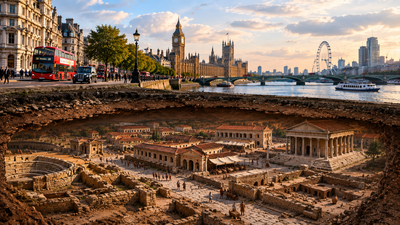
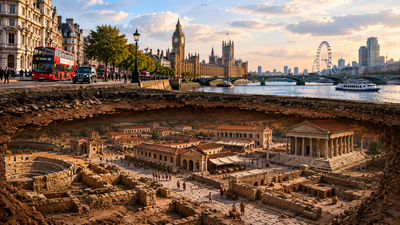
Walk through the streets of Rome, London, Jerusalem or Delhi and you may be standing above a city that is hundreds or even thousands of years older. In Rome, archaeological deposits beneath the modern city can reach several metres in thickness. In London, Roman remains have been found beneath modern streets and buildings. In Jerusalem, archaeologists have documented multiple layers of occupation, with some areas containing many metres of accumulated earth and building debris.This is not a coincidence. Ancient cities were usually built in places that offered advantages like access to water, trade routes, defensible ground, fertile land or political importance. Those advantages did not disappear simply because one civilization declined. So, in many cases, the next population returned to the same location, repaired what remained, demolished older structures or built directly over them. Over centuries, the ground itself rose.
Cities rarely disappeared completely
A study on Rome notes that the modern urban centre is built over as much as 10 metres of human-made deposits in some areas.
The idea of an ancient city being “buried” can be misleading. In many cases, nobody deliberately buried the city. Instead, cities changed layer by layer. A building collapsed. Another structure was built over its remains. A street was raised and repaved. Walls were demolished and their stones reused. Floods deposited sediment. Fires left debris. People dumped waste and rubble into abandoned spaces. New foundations cut through older ones. The process repeated for generations.Archaeologists call the resulting sequence stratigraphy. Each layer can contain evidence from a different period, allowing researchers to reconstruct how a settlement changed over time. A study on Rome notes that the modern urban centre is built over as much as 10 metres of human-made deposits in some areas. These layers were created by centuries of construction,The Archaeological Survey of India has similarly described ancient cities such as Troy, Lachish, Gezer, Rome and London as places that were repeatedly rebuilt, producing successive archaeological layers. Its account of Jerusalem notes that some valleys inside the city’s walls were gradually filled with earth and ruined masonry to depths of 40 to 50 feet.
What’s the biggest reason
Ancient people did not choose city sites randomly. Early urban settlements often developed close to rivers and other reliable sources of water. Rivers also provided transport, food, fertile agricultural land and routes for exchanging goods. Research on the emergence of early cities in Mesopotamia, for example, links urban growth in the Tigris-Euphrates region to the ecological conditions of the river plains and the ease of moving commodities through natural and artificial waterways.The same broad principle can be seen in South Asia. Research on the Indus civilization shows that its urban settlements were closely associated with the river systems of the northwest, although the relationship between settlements and ancient river courses was more complicated than simply living beside a modern river. Once a location had a good water supply, transport links, agricultural hinterland and established trading connections, abandoning it was not necessarily an attractive option. The infrastructure itself became an advantage.
Roads and markets made old locations even more valuable
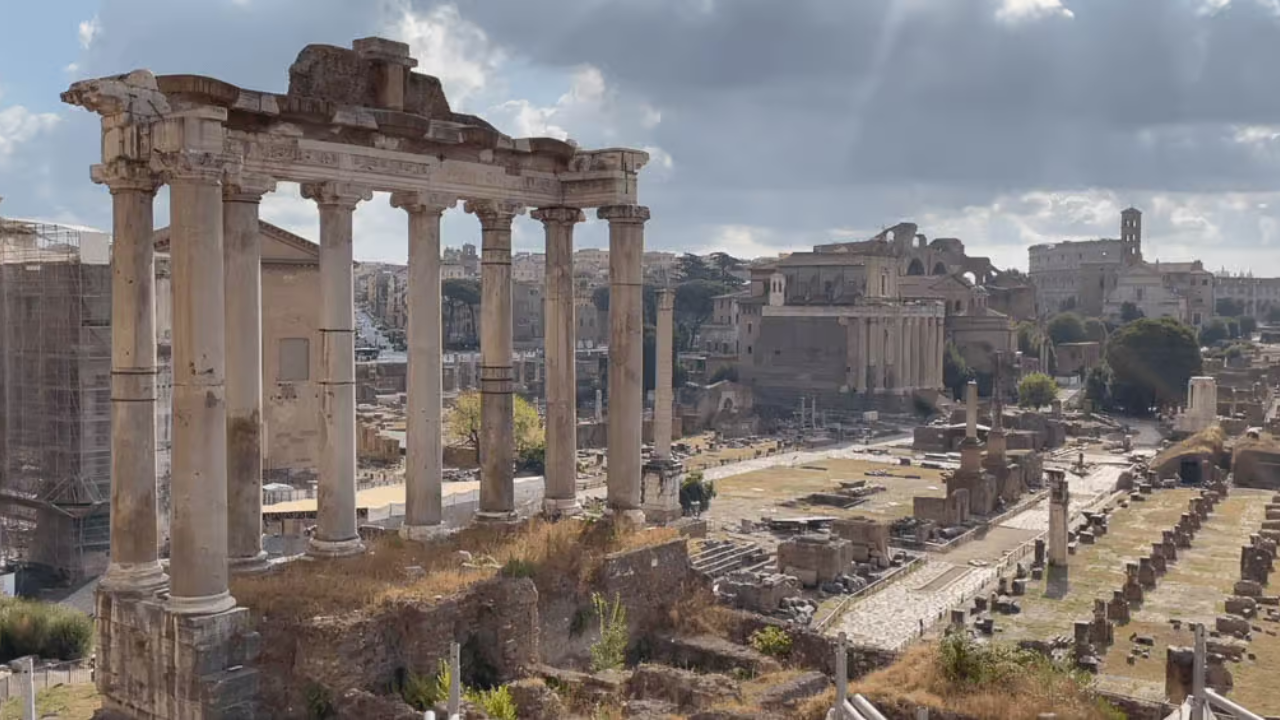
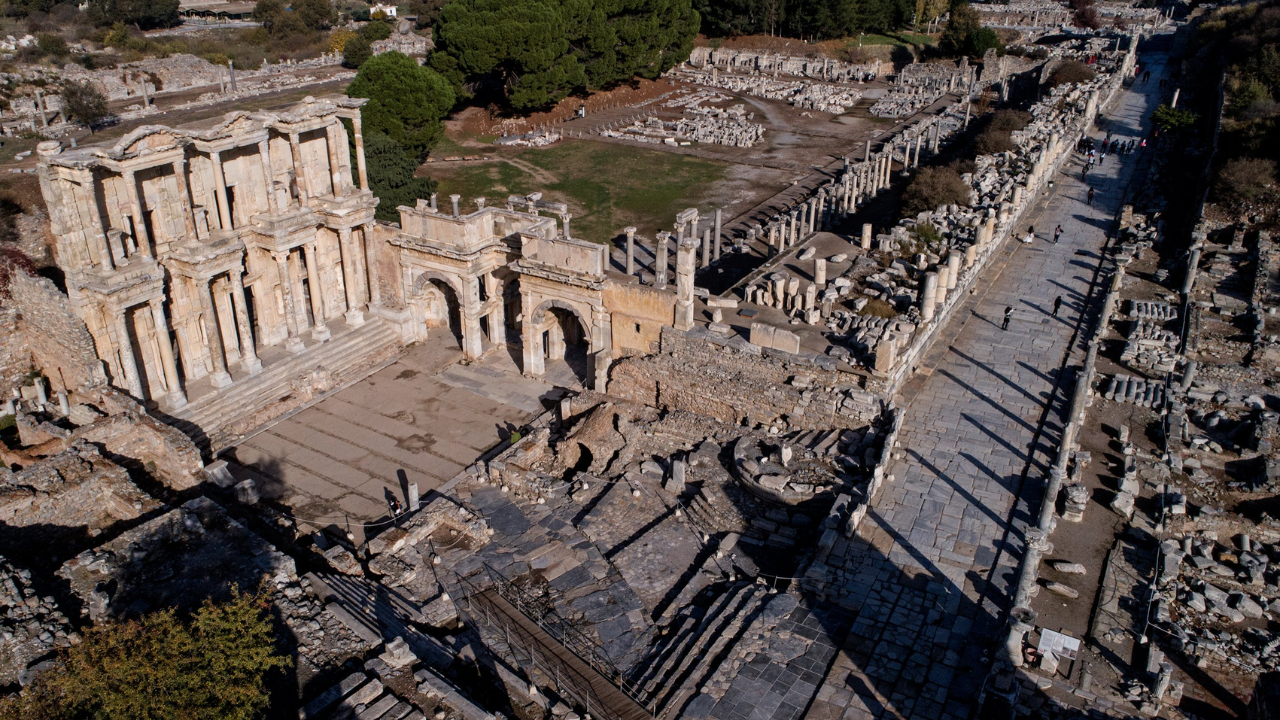
Beneath today’s Rome are remains of houses, roads, drainage systems, walls, temples and other structures from different periods.
A successful settlement creates its own network. Roads connect it to other settlements. Markets attract traders. Warehouses, ports and workshops develop. Administrative buildings appear. Religious centres gain importance. Houses and neighbourhoods grow around them. A later population inheriting such a location did not have to start from zero.London provides a clear example. Roman Londinium was established around AD 43 in what is now the City of London. By the middle of the second century, the settlement had become a major centre of Roman Britain. Later settlements developed in and around the same broad area, and modern London eventually grew around these earlier urban landscapes. London’s archaeology shows how Roman structures survive beneath the modern city.
Delhi shows another version of the same process
Delhi is particularly useful for understanding the idea because its history involves several major urban centres occupying the same wider region. UNESCO’s tentative-list documentation describes archaeological findings showing cultural layers from approximately the 3rd-4th centuries BC to the Mughal period, along with pottery fragments dating to around 1000-500 BC.Several historic cities associated with Delhi were not simply built directly on top of one another. According to UNESCO, Lal Kot was founded in the 11th century. It was later extended into Qila Rai Pithora. The Delhi Sultanate subsequently established Siri, followed by Tughlaqabad. Muhammad bin Tughlaq connected older settlements to create Jahanpanah, while Firoz Shah Tughlaq established Firozabad. Later came Dinpanah and Shahjahanabad. New Delhi was eventually built to the south-west of Shahjahanabad during British rule.So Delhi’s story is not simply about one city being buried underneath another. It is about successive urban centres developing within the same strategically important region.
Rome is perhaps the clearest example
Rome has been occupied and rebuilt for so long that modern streets can conceal structures from very different periods. Research published by archaeologists working on Rome describes the city’s archaeological record as a dense accumulation of layers produced by repeated urban transformation. Excavating these layers is difficult because modern buildings, roads and infrastructure sit directly above earlier remainsThis is why the famous Roman ruins are not necessarily the whole story. Beneath today’s Rome are remains of houses, roads, drainage systems, walls, temples and other structures from different periods. Some structures were abandoned and gradually covered. Others were deliberately demolished. Some were incorporated into later buildings. The city did not simply vanish and then get rediscovered. It kept changing.
Sometimes the ground itself rises
There is another important part of the explanation. It is that human activity changes the ground level. Imagine a street being rebuilt several times. The old pavement may not always be removed. A new surface can be placed above it. Now multiply that process by hundreds of years. Add collapsed buildings, construction rubble, soil, waste, sediment and material deliberately used to raise or level an area.Eventually, the modern surface can sit significantly higher than the original ancient ground. This is one reason archaeologists sometimes have to dig several metres below present-day streets before reaching an earlier settlement. In Rome, researchers have measured substantial thicknesses of anthropogenic, or human-made, deposits created by repeated construction and deposition.
Destruction did not always mean abandonment
Sometimes older walls were reused because stone was expensive and transporting new building material was difficult.
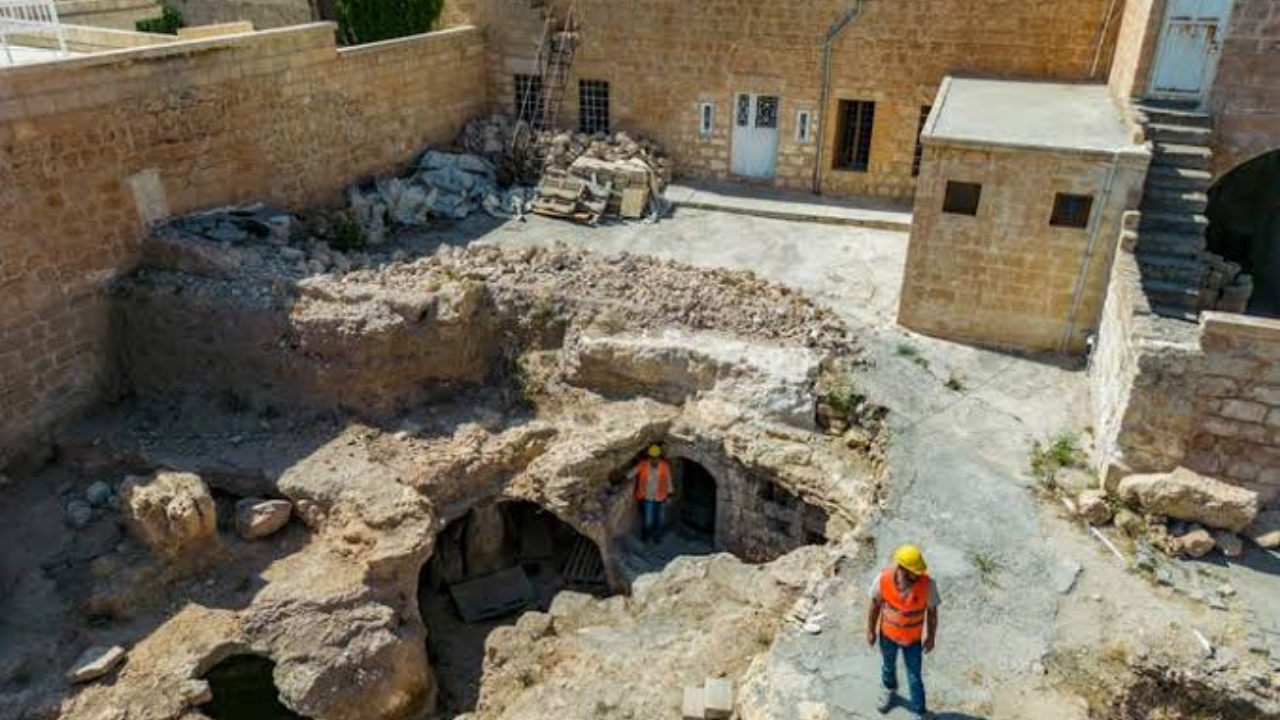
Wars, fires, earthquakes and political changes could destroy parts of a city. But destruction did not automatically mean that everyone moved away permanently. Sometimes older walls were reused because stone was expensive and transporting new building material was difficult. This created another layer of urban history.London offers a good example. In 2025, archaeological investigations connected with a new development at 85 Gracechurch Street uncovered substantial remains of London’s Roman Forum and Basilica, including foundations and walls several metres deep.
Jerusalem has some of the deepest layers
Jerusalem is another striking example of long-term urban occupation. The city has been repeatedly rebuilt, expanded and altered by different communities and political powers. Archaeological investigations have identified successive occupation layers, while earth and collapsed masonry accumulated in parts of the historic city. An Archaeological Survey of India account notes that in parts of Jerusalem, accumulated earth and ruined masonry reached depths of 40 to 50 feet, with multiple successive cities represented in the archaeological layers.Why don’t modern cities simply move somewhere else?Sometimes they do. Ancient settlements were abandoned for many reasons: changing rivers, environmental conditions, warfare, economic decline, political shifts and the loss of important trade routes. But if the basic advantages of a location remained, there was little reason for later inhabitants to move far away. And once a city has accumulated infrastructure and economic connections, rebuilding in the same area can be easier than starting somewhere completely new. That is why ancient and modern cities so often overlap.
Archaeologists are not always digging beneath today’s streets
There is one more misconception worth clearing up. Archaeologists do not need to excavate an entire modern city to find its ancient past. Modern archaeology uses excavation alongside aerial photography, satellite imagery, ground-penetrating radar, geophysical surveys, historical maps, boreholes and digital mapping.
The city above the city
Ancient cities are often found beneath modern ones for a fairly practical reason: people tend to value the same good locations across generations. A reliable water source, a useful harbour, a defensible hill, a fertile plain or an important trade route could make a place attractive 2,000 years ago and still make it attractive today. Once people settled there, every generation added something like a road, a house, a wall, a pavement, a drainage channel, a market, a new building.Some structures disappeared. Others survived. New ones were placed over them. Eventually, the city became a physical record of its own history. That is why, in places such as Rome, London, Delhi and Jerusalem, the ground beneath a modern street can contain evidence of people who lived there long before the present city existed.The ancient city was not necessarily lost. In many cases, it was simply built over.